Abstract
Ginger (Zingiber officinale Roscoe) is an important medicinal crop grown for its aromatic rhizome which is used as a spice, food, flavouring agent and medicine. It has been characterised for its hypoglycemic, hypotensive, antioxidant and antibiotic properties. This study was conducted to determine the impact of plant growth-promoting potential of bacterial strain Bacillus subtilis L2 on plant growth and physiological properties of ginger. The experiment was carried out in randomised block design with three replications in pot experiments. The plants were grown in greenhouse conditions for three months. The results showed that at 8 and 12 weeks after planting (WAP) bacterial inoculation increased plant height, leaf length, number of leaves per plant and leaf width. Inoculation with B. subtilis L2 significantly increased plant height by 16, 20 and 18% compared to control at 4, 8 and 12 WAP. At 8 and 12 WAP, leaf length significantly raised by B. subtilis L2 as compared to uninoculated control. B. subtilis L2 significantly increased the number of leaves per plant and leaf width by 30 and 21% respectively when comparing with non-inoculated plants at 8 WAP. The percentage increase in chlorophyll content resulted from the inoculation with B. subtilis L2 over the control was 10.5%, 15.5% and 18.4% at 4, 8 and 12 WAP respectively. It is concluded that there is a significant positive effect of inoculation with B. subtilis L2 on the growth of ginger. B. subtilis L2 strain can be used as a potential agent or bio-fertiliser for stimulation of ginger growth.
Abstract from the paper’s OpenAlex record; open copy licensed cc-by. Read at the source ↗
The text the model read, with the source record’s inline markup (italics, sub- and superscripts) rendered and its character entities decoded; quote offsets refer to the raw text.
Claims 7
Claim · model-written summary
Bacterial inoculation increased ginger height, leaf length, leaf number and leaf width at 8 and 12 weeks after planting.
- Taxon
- ginger
 Zingiber officinalee1
- Treatment
- bacterial inoculatione0
- Outcome
- plant height, leaf length, number of leaves per plant and leaf widthe0
- Direction
- increasede0
- Qualifier
- at 8 and 12 weeks after planting (WAP)e0
Not reportedComparator
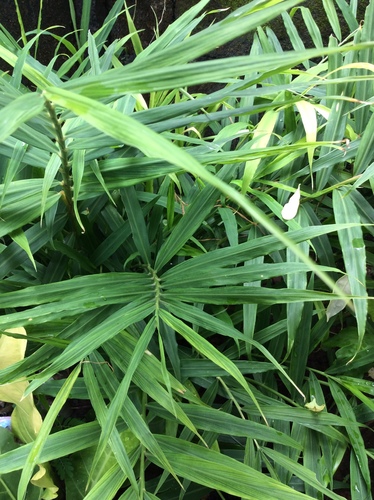
Organisms pictured · Representative pictures of the matched species, not figures from the paper.
Verbatim
e0“at 8 and 12 weeks after planting (WAP) bacterial inoculation increased plant height, leaf length, number of leaves per plant and leaf width”
e1“growth and physiological properties of ginger”
Claim · model-written summary
B. subtilis L2 increased ginger plant height by 16%, 20% and 18% at 4, 8 and 12 WAP, respectively, versus control.
- Taxon
- gingerZingiber officinalee1
- Treatment
- Inoculation with B. subtilis L2e0
- Interactor
- B. subtilis L2
 Bacillus subtilise0symbiont
- Outcome
- plant heighte0
- Direction
- increasede0
- Value
- 16, 20 and 18%e0
- Qualifier
- at 4, 8 and 12 WAPe0
- Comparator
- controle0
Organisms pictured · Representative pictures of the matched species, not figures from the paper.

Verbatim
e0“Inoculation with B. subtilis L2 significantly increased plant height by 16, 20 and 18% compared to control at 4, 8 and 12 WAP”
e1“growth of ginger”
Claim · model-written summary
B. subtilis L2 significantly increased ginger leaf length at 8 and 12 WAP compared with uninoculated control.
- Taxon
- gingerZingiber officinalee1
- Treatment
- B. subtilis L2e0
- Interactor
- B. subtilis L2Bacillus subtilise0symbiont
- Outcome
- leaf lengthe0
- Direction
- raisede0
- Qualifier
- At 8 and 12 WAPe0
- Comparator
- uninoculated controle0
Organisms pictured · Representative pictures of the matched species, not figures from the paper.
Verbatim
e0“At 8 and 12 WAP, leaf length significantly raised by B. subtilis L2 as compared to uninoculated control”
e1“growth of ginger”
Claim · model-written summary
B. subtilis L2 increased ginger leaves per plant by 30% at 8 WAP compared with non-inoculated plants.
- Taxon
- gingerZingiber officinalee1
- Treatment
- B. subtilis L2e0
- Interactor
- B. subtilis L2Bacillus subtilise0symbiont
- Outcome
- number of leaves per plante0
- Direction
- increasede0
- Value
- 30e0
- Qualifier
- at 8 WAPe0
- Comparator
- non-inoculated plantse0
Organisms pictured · Representative pictures of the matched species, not figures from the paper.
Verbatim
e0“B. subtilis L2 significantly increased the number of leaves per plant and leaf width by 30 and 21% respectively when comparing with non-inoculated plants at 8 WAP”
e1“growth of ginger”
Claim · model-written summary
B. subtilis L2 increased ginger leaf width by 21% at 8 WAP compared with non-inoculated plants.
- Taxon
- gingerZingiber officinalee1
- Treatment
- B. subtilis L2e0
- Interactor
- B. subtilis L2Bacillus subtilise0symbiont
- Outcome
- leaf widthe0
- Direction
- increasede0
- Value
- 21%e0
- Qualifier
- at 8 WAPe0
- Comparator
- non-inoculated plantse0
Organisms pictured · Representative pictures of the matched species, not figures from the paper.
Verbatim
e0“B. subtilis L2 significantly increased the number of leaves per plant and leaf width by 30 and 21% respectively when comparing with non-inoculated plants at 8 WAP”
e1“growth of ginger”
Claim · model-written summary
B. subtilis L2 inoculation increased ginger chlorophyll content by 10.5%, 15.5% and 18.4% at 4, 8 and 12 WAP relative to control.
- Taxon
- gingerZingiber officinalee1
- Treatment
- inoculation with B. subtilis L2e0
- Interactor
- B. subtilis L2Bacillus subtilise0symbiont
- Outcome
- chlorophyll contente0
- Direction
- increasee0
- Value
- 10.5%, 15.5% and 18.4%e0
- Qualifier
- at 4, 8 and 12 WAP respectivelye0
- Comparator
- controle0
Organisms pictured · Representative pictures of the matched species, not figures from the paper.
Verbatim
e0“The percentage increase in chlorophyll content resulted from the inoculation with B. subtilis L2 over the control was 10.5%, 15.5% and 18.4% at 4, 8 and 12 WAP respectively”
e1“growth of ginger”
Claim · model-written summary
The authors suggest B. subtilis L2 as a bio-fertiliser to stimulate ginger growth.
- Taxon
- gingerZingiber officinalee0
- Interactor
- B. subtilis L2Bacillus subtilise0symbiont
- Outcome
- stimulation of ginger growthe0
Organisms pictured · Representative pictures of the matched species, not figures from the paper.
Verbatim
e0“B. subtilis L2 strain can be used as a potential agent or bio-fertiliser for stimulation of ginger growth”
The same questions in other papers
inoculation · physiology: pigments · Zingiber officinale (ginger)Positive and negative results
1 paper in the same direction as this paper · 2 in the opposite direction
- positive
- negative
- negative
inoculation · growth · Zingiber officinale (ginger)Positive and negative results
3 papers in the same direction as this paper · 1 in the opposite direction
- positive
- no effect
- positive
1 paper more in this group
See all 5 papers →inoculation · yield · Zingiber officinale (ginger)Results agree
6 papers in the same direction as this paper
- positive
- positive
- positive
3 papers more in this group
See all 7 papers →Claims are grouped by organism, treatment and what was measured or targeted. A paper counts as positive when any of its claims in the group is positive.