Abstract
Ginger (Zingiber officinale) is an herbaceous perennial in the Zingiberaceae family grown primarily in tropical to subtropical biomes as a culinary spice, a traditional medicine, and a landscaping plant. While ginger grows at soil temperatures above 20°C, several farmers in the upper Midwestern US farmers grows short-season ginger in high tunnels. In 2023 and 2024, growers in southeastern Minnesota reported a new disease of ginger. USDA traced the origin of the ginger rhizomes imported by these growers to Peru (Soto-Heredia et al., 2024). Plants exhibited wilting, chlorosis, pseudostem collapse, and plant death. Rhizomes were squishy with a fetid, rotting odor. Disease incidence ranged from scattered plants to 50% of the crop. Symptomatic samples tested positive for Ralstonia solanacearum species complex (RSSC) using AgDia ImmunoStrips. Rhizome tissue extracts plated onto CPG + 1% tetrazolium chloride agar and mSMSA agar produced irregular, round-to-fluidal white colonies with pink centers after 48 h of incubation at 28°C (Kelman 1954; Engelbrecht 1994). Diagnostic RSSC phylotype-specific multiplex PCR primers Nmult21:1F, Nmult21:2F, Nmult23:AF, Nmult22:InF, Nmult22:RR, and 759f/760r confirmed isolate identity; two isolates (UMN24-1, UMN24-2) yielded bands at 280 bp and 144 bp, identifying them as RSSC and phylotype I respectively (Fegan and Prior 2005; Opina et al. 1997). Additionally, 16S rRNA PCR of these isolates was sequenced using primers 27F (5'-AGAGTTTGATCMTGGCTCAG-3')/1492R (5'-TACGGYTACCTTGTTACGACTT-3') and shared >99% identity (isolate UMN24-1: 99.00% 27F, 99.53% 1492R; UMN24-2: 99.32% 1492R) with R. pseudosolanacearum (Rps) strain Gj707 (GenBank CP104497.1). Eight ginger plants in individual pots were grown in a Conviron growth chamber (28°C, 250 μmol/m2/s, 16 h photoperiod) and inoculated at the six-leaf stage (6 weeks old) by pipetting 109 CFU of the isolate, UMN24-1, suspended in sterile water into a 30°angled 1 cm incision on the pseudostem. We scored disease incidence based on wilted leaves per total leaves on each plant for 14 days post inoculation (dpi). While control plants remained healthy, inoculated plants showed symptoms (wilting, vascular discoloration, chlorosis) at 4 dpi, were 100% wilted by 6 dpi, and all pseudostems completely collapsed by 11 dpi (Fig. S1). Bacteria recovered from the inoculated plants matched the original isolate in appearance and positively identified as RSSC phylotype I using the PCR analyses described above. To confirm taxonomic identification of UMN24-1, the complete genome of this isolate was sequenced using hybrid Illumina and Oxford Nanopore sequencing (NCBI BioProject ID PRJNA1178296, release date upon publication) (Fig. S2). Average nucleotide identity (ANI) analysis of UMN24-1 using KBase's FastANI app reported 99.8% identity shared with Japanese RSSC phylotype I strain MAFF311693 (GenBank GCF 015698385.1). We also sequenced UMN24-2, and its phylogenetic analysis revealed that the two isolates are clonal (Fig. S2). Hence, we did not submit its sequence to the NCBI. This marks the first documented case of Rps in ginger in the United States. Similar to bacterial wilt in ginger closely related crop like turmeric has been repeatedly reported in northern Europe in recent years (EPPO 2024). While RSSC phylotype I is geographically limited by its minimal cold tolerance, the emergence of a pathogen with a potentially broad host range has worrying implications in a changing climate.
Abstract from the paper’s OpenAlex record, shown for indexing and research. Copyright remains with the authors or the publisher. Read at the source ↗
The text the model read, with the source record’s inline markup (italics, sub- and superscripts) rendered and its character entities decoded; quote offsets refer to the raw text.
Claims 14
Claim · model-written summary
Affected plants showed wilting, chlorosis, pseudostem collapse and death.
- Taxon
- Ginger
 Zingiber officinalet0
- Interactor
- Ralstonia pseudosolanacearumRalstonia pseudosolanacearumt0pathogen
- Outcome
- wilting, chlorosis, pseudostem collapse, and plant deathe0
Not reportedDirection
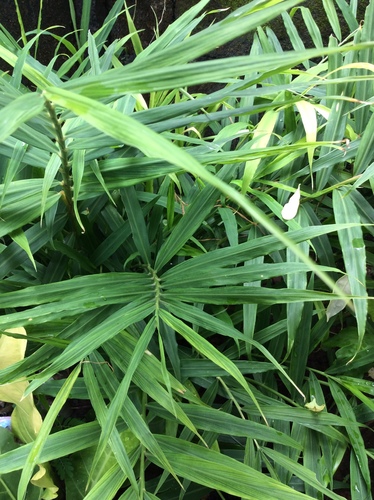
Organisms pictured · Representative pictures of the matched species, not figures from the paper.
Verbatim
e0“Plants exhibited wilting, chlorosis, pseudostem collapse, and plant death”
t0“Ginger Caused by Ralstonia pseudosolanacearum”
Claim · model-written summary
Affected rhizomes were soft and smelled rotten.
- Taxon
- GingerZingiber officinalet0
- Organ / stage
- Rhizomese0
- Outcome
- squishy with a fetid, rotting odore0
Not reportedDirection
Organisms pictured · Representative pictures of the matched species, not figures from the paper.
Verbatim
e0“Rhizomes were squishy with a fetid, rotting odor”
t0“Ginger”
Claim · model-written summary
Disease incidence reached 50% of crop.
- Taxon
- GingerZingiber officinalet0
- Outcome
- Disease incidencee0
- Direction
- rangede0
- Value
- 50% of the crope0
Organisms pictured · Representative pictures of the matched species, not figures from the paper.
Verbatim
e0“Disease incidence ranged from scattered plants to 50% of the crop”
t0“Ginger”
Claim · model-written summary
Symptomatic samples tested positive for the Ralstonia solanacearum complex.
- Taxon
- GingerZingiber officinalet0
- Interactor
- Ralstonia solanacearum
 Ralstonia solanacearume0pathogen
- Outcome
- tested positive for Ralstonia solanacearum species complex (RSSC)e0
- Value
- RSSCe0
Organisms pictured · Representative pictures of the matched species, not figures from the paper.

Verbatim
e0“Symptomatic samples tested positive for Ralstonia solanacearum species complex (RSSC) using AgDia ImmunoStrips”
t0“Ginger”
Claim · model-written summary
Culture of rhizome tissue yielded characteristic white colonies with pink centers.
- Taxon
- GingerZingiber officinalet0
- Organ / stage
- Rhizomee0
- Outcome
- irregular, round-to-fluidal white colonies with pink centerse0
Not reportedDirection
Organisms pictured · Representative pictures of the matched species, not figures from the paper.
Verbatim
e0“Rhizome tissue extracts plated onto CPG + 1% tetrazolium chloride agar and mSMSA agar produced irregular, round-to-fluidal white colonies with pink centers after 48 h of incubation at 28°C”
t0“Ginger”
Claim · model-written summary
PCR identified both isolates as RSSC phylotype I.
- Taxon
- GingerZingiber officinalet0
- Material
- UMN24-1, UMN24-2e0
- Outcome
- RSSC and phylotype Ie0
- Value
- 280 bp and 144 bpe0
Organisms pictured · Representative pictures of the matched species, not figures from the paper.
Verbatim
e0“two isolates (UMN24-1, UMN24-2) yielded bands at 280 bp and 144 bp, identifying them as RSSC and phylotype I respectively”
t0“Ginger”
Claim · model-written summary
The isolates shared more than 99% 16S identity with R. pseudosolanacearum Gj707.
- Taxon
- GingerZingiber officinalet0
- Outcome
- identitye0
- Value
- >99%e0
- Comparator
- R. pseudosolanacearum (Rps) strain Gj707e0
Organisms pictured · Representative pictures of the matched species, not figures from the paper.
Verbatim
e0“shared >99% identity (isolate UMN24-1: 99.00% 27F, 99.53% 1492R; UMN24-2: 99.32% 1492R) with R. pseudosolanacearum (Rps) strain Gj707”
t0“Ginger”
Claim · model-written summary
Inoculated ginger showed wilt, discoloration and chlorosis by day four while controls stayed healthy.
- Taxon
- GingerZingiber officinalet0
- Treatment
- inoculated plantse0
- Outcome
- wilting, vascular discoloration, chlorosise0
- Qualifier
- 4 dpie0
- Comparator
- control plantse0
Not reportedDirection
Organisms pictured · Representative pictures of the matched species, not figures from the paper.
Verbatim
e0“While control plants remained healthy, inoculated plants showed symptoms (wilting, vascular discoloration, chlorosis) at 4 dpi”
t0“Ginger”
Claim · model-written summary
Inoculated ginger was fully wilted by day six.
- Taxon
- GingerZingiber officinalet0
- Outcome
- wiltede0
- Value
- 100%e0
- Qualifier
- 6 dpie0
Not reportedDirection
Organisms pictured · Representative pictures of the matched species, not figures from the paper.
Verbatim
e0“were 100% wilted by 6 dpi”
t0“Ginger”
Claim · model-written summary
All inoculated pseudostems collapsed by day eleven.
- Taxon
- GingerZingiber officinalet0
- Outcome
- all pseudostems completely collapsede0
- Qualifier
- 11 dpie0
Not reportedDirection
Organisms pictured · Representative pictures of the matched species, not figures from the paper.
Verbatim
e0“all pseudostems completely collapsed by 11 dpi”
t0“Ginger”
Claim · model-written summary
Recovered bacteria matched the original isolate and were PCR identified as phylotype I.
- Taxon
- GingerZingiber officinalet0
- Outcome
- matched the original isolate in appearance and positively identified as RSSC phylotype Ie0
Not reportedDirection
Organisms pictured · Representative pictures of the matched species, not figures from the paper.
Verbatim
e0“Bacteria recovered from the inoculated plants matched the original isolate in appearance and positively identified as RSSC phylotype I”
t0“Ginger”
Claim · model-written summary
UMN24-1 had 99.8% genomic identity with a Japanese phylotype I strain.
- Taxon
- GingerZingiber officinalet0
- Outcome
- identitye0
- Value
- 99.8%e0
- Comparator
- Japanese RSSC phylotype I strain MAFF311693e0
Organisms pictured · Representative pictures of the matched species, not figures from the paper.
Verbatim
e0“99.8% identity shared with Japanese RSSC phylotype I strain MAFF311693”
t0“Ginger”
Claim · model-written summary
Phylogenetic analysis found the two isolates clonal.
- Taxon
- GingerZingiber officinalet0
- Outcome
- two isolates are clonale0
Not reportedDirection
Organisms pictured · Representative pictures of the matched species, not figures from the paper.
Verbatim
e0“phylogenetic analysis revealed that the two isolates are clonal”
t0“Ginger”
Claim · model-written summary
The case was reported as the first Rps in ginger in the United States.
- Taxon
- gingerZingiber officinalee0
- Interactor
- Rpse0pathogen
- Outcome
- first documented case of Rps in gingere0
- Setting
- United Statese0
Not reportedDirection
Organisms pictured · Representative pictures of the matched species, not figures from the paper.
Verbatim
e0“This marks the first documented case of Rps in ginger in the United States”
The same questions in other papers
inoculation · physiology: pigments · Zingiber officinale (ginger)Positive and negative results
1 paper in the same direction as this paper · 2 in the opposite direction
- positive
- positive
- negative
Claims are grouped by organism, treatment and what was measured or targeted. A paper counts as positive when any of its claims in the group is positive.