Abstract
1. The seeds used in this study comprise 9 grass, 26 weed, and 7 woody species of Utah range plants. Twenty-three of the 42 species studied gave little or no germination at temperatures of 22⚬ to 29⚬C. Other conditions must be used for them before the effect of alternate moistening and drying can satisfactorily be determined. 2. The effect of alternate moistening and drying on the germination of seeds varies with the individual species. Of the 19 species which germinated at 22⚬ to 29⚬C., alternate moistening and drying had little effect upon the germination of Bromus polyanthus. It increased the germination of Stipa lettermani, Artemisia incompta, Lepidium densiflorum, and Plantago tweedyi. It decreased the germination of Geranium viscosissimum, Pseudocymopterus montanus, Chrysothamnus lanceolatus, and Stipa columbiana (slightly). 3. Rapid drying had little effect upon the germination of Poa interior, P. secunda, and Chenopodium album, but increased the germination of Achillea lanulosa, Androsace diffusa, Pentslemon rydbergii, and Rumex mexicanus; in all of these species slow drying decreased the percentage of germination. Rapid drying decreased the germination of Bromus anomalus, Lupinus parviflorus, and Rudbeckia occidentalis, while slow drying increased the germination of Rudbeckia but had little effect upon Bromus anomalus and Lupinus. 4. Increased germination was usually accompanied by a hastening of the germinative process and decreased germination was accompanied by a retardation. In five species, however, Poa secunda no. 1, Androsace, Plantago, Rudbeckia, and Rumex, retardation was followed by increased germination. 5. Some seeds after they have absorbed water will withstand short periods of alternate drying and moistening, and some will withstand a long period of drying without injury. The time at which drying begins in relation to the stage of development of the germinating seed is a very important factor in determining whether drying is harmful or beneficial. The effect of drying is also influenced by the rate at which drying takes place.
Abstract from the paper’s OpenAlex record, shown for indexing and research. Copyright remains with the authors or the publisher. Read at the source ↗
The text the model read, with the source record’s inline markup (italics, sub- and superscripts) rendered and its character entities decoded; quote offsets refer to the raw text.
Claims 16
Claim · model-written summary
Twenty-three of 42 species showed little or no germination at 22⚬ to 29⚬C.
Verbatim
t0“Western Range Plants”
e0“Twenty-three of the 42 species studied gave little or no germination at temperatures of 22⚬ to 29⚬C”
Claim · model-written summary
Alternating moistening and drying had little effect on Bromus polyanthus germination.
- Taxon
- Bromus polyanthus
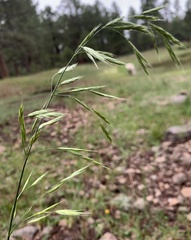 Bromus polyanthuse0
- Treatment
- alternate moistening and dryinge0
- Outcome
- germinatione0
- Direction
- little effecte0
Not reportedComparator
Organisms pictured · Representative pictures of the matched species, not figures from the paper.
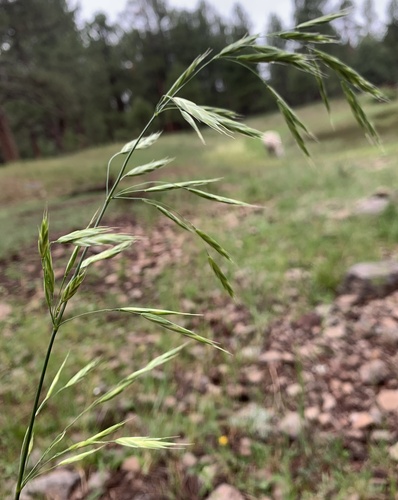
Verbatim
e0“alternate moistening and drying had little effect upon the germination of Bromus polyanthus”
Claim · model-written summary
Alternating moistening and drying increased germination of four named species.
- Taxon
- Stipa lettermani, Artemisia incompta, Lepidium densiflorum, and Plantago tweedyie0
- Outcome
- germinatione0
- Direction
- increasede0
Not reportedTreatmentComparator
Verbatim
e0“It increased the germination of Stipa lettermani, Artemisia incompta, Lepidium densiflorum, and Plantago tweedyi”
Claim · model-written summary
Alternating moistening and drying decreased germination of four named species.
- Taxon
- Geranium viscosissimum, Pseudocymopterus montanus, Chrysothamnus lanceolatus, and Stipa columbianae0
- Outcome
- germinatione0
- Direction
- decreasede0
Not reportedTreatmentComparator
Verbatim
e0“It decreased the germination of Geranium viscosissimum, Pseudocymopterus montanus, Chrysothamnus lanceolatus, and Stipa columbiana (slightly)”
Claim · model-written summary
Rapid drying had little effect on germination of Poa interior, P. secunda and Chenopodium album.
- Taxon
- Poa interior, P. secunda, and Chenopodium album
 Chenopodium album
 Poa secunda
 Poa interiore0
- Treatment
- Rapid dryinge0
- Outcome
- germinatione0
- Direction
- little effecte0
Not reportedComparator
Organisms pictured · Representative pictures of the matched species, not figures from the paper.


Verbatim
e0“Rapid drying had little effect upon the germination of Poa interior, P. secunda, and Chenopodium album”
Claim · model-written summary
Rapid drying increased germination of Achillea lanulosa, Androsace diffusa and Pentslemon rydbergii.
- Taxon
- Achillea lanulosa, Androsace diffusa, Pentslemon rydbergiie0
- Outcome
- germinatione0
- Direction
- increasede0
Not reportedTreatmentComparator
Verbatim
e0“increased the germination of Achillea lanulosa, Androsace diffusa, Pentslemon rydbergii, and Rumex mexicanus”
Claim · model-written summary
Rapid drying increased Rumex mexicanus germination.
- Taxon
- Rumex mexicanusRumex mexicanuse0
- Treatment
- Rapid dryinge0
- Outcome
- germinatione0
- Direction
- increasede0
Not reportedComparator
Verbatim
e0“Rapid drying had little effect upon the germination of Poa interior, P. secunda, and Chenopodium album, but increased the germination of Achillea lanulosa, Androsace diffusa, Pentslemon rydbergii, and Rumex mexicanus”
Claim · model-written summary
Slow drying decreased germination percentage in the four species whose germination rose after rapid drying.
Not reportedTaxonComparator
Verbatim
e0“in all of these species slow drying decreased the percentage of germination”
Claim · model-written summary
Rapid drying decreased germination of Bromus anomalus, Lupinus parviflorus and Rudbeckia occidentalis.
- Taxon
- Bromus anomalus, Lupinus parviflorus, and Rudbeckia occidentalis
 Rudbeckia occidentalis
 Bromus anomalus
 Lupinus argenteus var. parvifloruse0
- Treatment
- Rapid dryinge0
- Outcome
- germinatione0
- Direction
- decreasede0
Not reportedComparator
Organisms pictured · Representative pictures of the matched species, not figures from the paper.


Verbatim
e0“Rapid drying decreased the germination of Bromus anomalus, Lupinus parviflorus, and Rudbeckia occidentalis”
Claim · model-written summary
Slow drying increased Rudbeckia germination.
Not reportedComparator
Organisms pictured · Representative pictures of the matched species, not figures from the paper.

Verbatim
e0“slow drying increased the germination of Rudbeckia”
Claim · model-written summary
Slow drying had little effect on Bromus anomalus and Lupinus germination.
- Taxon
- Bromus anomalus and Lupinus
 LupinusBromus anomaluse0
- Treatment
- slow dryinge0
- Outcome
- little effecte0
- Direction
- little effecte0
Not reportedComparator
Organisms pictured · Representative pictures of the matched species, not figures from the paper.

Verbatim
e0“slow drying increased the germination of Rudbeckia but had little effect upon Bromus anomalus and Lupinus”
Claim · model-written summary
Higher germination was usually accompanied by faster germination, and lower germination by slower germination.
Verbatim
e0“Increased germination was usually accompanied by a hastening of the germinative process and decreased germination was accompanied by a retardation”
t0“Western Range Plants”
Claim · model-written summary
In five species, retardation preceded increased germination.
- Taxon
- Poa secunda no. 1, Androsace, Plantago, Rudbeckia, and Rumex
 Rumex
 Plantago
 Rudbeckia
 AndrosacePoa secundae0
- Outcome
- retardation was followed by increased germinatione0
Organisms pictured · Representative pictures of the matched species, not figures from the paper.


Verbatim
e0“In five species, however, Poa secunda no. 1, Androsace, Plantago, Rudbeckia, and Rumex, retardation was followed by increased germination”
Claim · model-written summary
Some water-absorbed seeds tolerated brief alternating drying and moistening; others tolerated prolonged drying without injury.
Verbatim
e0“Some seeds after they have absorbed water will withstand short periods of alternate drying and moistening, and some will withstand a long period of drying without injury”
t0“Western Range Plants”
Claim · model-written summary
The developmental timing of drying determined whether drying was harmful or beneficial.
- Taxon
- Western Range Plantst0
- Organ / stage
- stage of development of the germinating seede0
- Outcome
- whether drying is harmful or beneficiale0
Not reportedDirection
Verbatim
e0“The time at which drying begins in relation to the stage of development of the germinating seed is a very important factor in determining whether drying is harmful or beneficial”
t0“Western Range Plants”
Claim · model-written summary
Drying rate influenced drying effects on germination.
Not reportedDirection
Verbatim
e0“The effect of drying is also influenced by the rate at which drying takes place”
t0“Western Range Plants”
The same questions in other papers
processing · growth · Chenopodium album (common lambsquarters)Positive and negative results
2 in the opposite direction
- positive
- positive
processing · growth · Poa secunda (big bluegrass)Results agree
1 paper in the same direction as this paper
- negative
Claims are grouped by organism, treatment and what was measured or targeted. A paper counts as positive when any of its claims in the group is positive.