Abstract
Recent research has indicated that increasing species diversity of the pastures might improve sward productivity and stability. The present experiment evaluates the effect of dandelion ( Taraxacum officinale Weber) as a potential pasture species on the performance of a perennial ryegrass ( Lolium perenne L.)–white clover ( Trifolium repens L.) mixture in terms of total herbage yield, weed infestation, and nitrogen (N) yield in a replacement‐series experiment over three harvest years. The three species were grown in monocultures and in all possible binary and three‐species mixtures under two N fertilization levels (0 and 200 kg N ha −1 ). Herbage yield and N yield of the three‐species mixture were not significantly different from the ryegrass–white clover mixture over the 3 yr. The contribution of dandelion to the total herbage yield increased over years, which improved yield stability. A competition analysis, performed by calculating relative yield and relative yield total, indicated that ryegrass had a competitive advantage over white clover in fertilized and unfertilized swards, but over dandelion only when the sward was fertilized. Nitrogen application reduced the nonsown species yield in all mixtures, except that of white clover–dandelion. Our results indicate that dandelion might have the potential of contributing to herbage yield, nutritive value, and resistance to invasions of ryegrass–white clover pastures.
Abstract from the paper’s OpenAlex record; open copy licensed cc-by. Read at the source ↗
The text the model read, with the source record’s inline markup (italics, sub- and superscripts) rendered and its character entities decoded; quote offsets refer to the raw text.
Claims 7
Claim · model-written summary
Three-species and ryegrass–clover mixtures had similar herbage yield.
- Outcome
- Herbage yielde0
- Direction
- not significantly differente0
- Comparator
- ryegrass–white clover mixturee0
Not reportedTaxon
Verbatim
e0“Herbage yield and N yield of the three‐species mixture were not significantly different from the ryegrass–white clover mixture over the 3 yr.”
Claim · model-written summary
Three-species and ryegrass–clover mixtures had similar N yield.
Not reportedTaxon
Verbatim
e0“Herbage yield and N yield of the three‐species mixture were not significantly different from the ryegrass–white clover mixture over the 3 yr.”
Claim · model-written summary
Dandelion contribution to yield rose over time, improving stability.
- Taxon
- dandelion
 Taraxacum officinalee0
- Outcome
- contribution of dandelion to the total herbage yielde0
- Direction
- increasede0
- Setting
- over yearse0
Organisms pictured · Representative pictures of the matched species, not figures from the paper.
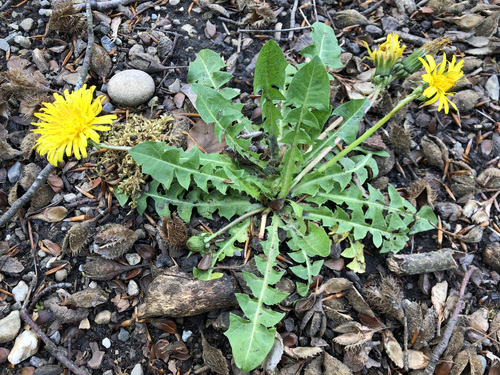
Verbatim
e0“The contribution of dandelion to the total herbage yield increased over years, which improved yield stability.”
Claim · model-written summary
Ryegrass had a competitive advantage over white clover under either fertilizer condition.
 Lolium
Organisms pictured · Representative pictures of the matched species, not figures from the paper.

Verbatim
e0“ryegrass had a competitive advantage over white clover in fertilized and unfertilized swards”
Claim · model-written summary
Ryegrass outcompeted dandelion only with fertilization.
- Taxon
- dandelionTaraxacum officinalee0
- Outcome
- over dandelione0
- Qualifier
- when the sward was fertilizede0
Organisms pictured · Representative pictures of the matched species, not figures from the paper.
Verbatim
e0“but over dandelion only when the sward was fertilized.”
Claim · model-written summary
Nitrogen reduced nonsown species yield except in the white clover–dandelion mixture.
- Taxon
- white clover
 Trifolium repense0
- Treatment
- Nitrogen applicatione0
- Outcome
- nonsown species yielde0
- Direction
- reducede0
Not reportedComparator
Organisms pictured · Representative pictures of the matched species, not figures from the paper.

Verbatim
e0“Nitrogen application reduced the nonsown species yield in all mixtures, except that of white clover–dandelion.”
Claim · model-written summary
Dandelion may contribute yield, nutritive value and invasion resistance.
- Taxon
- dandelionTaraxacum officinalee0
- Outcome
- herbage yield, nutritive value, and resistance to invasionse0
Organisms pictured · Representative pictures of the matched species, not figures from the paper.
Verbatim
e0“dandelion might have the potential of contributing to herbage yield, nutritive value, and resistance to invasions of ryegrass–white clover pastures.”
The same questions in other papers
nitrogen · yield · Trifolium repens (white clover)Results differ
10 papers in the same direction as this paper · 11 in the opposite direction · 2 reporting no difference from an alternative
- negative
- negative
- negative
20 papers more in this group
See all 24 papers →Claims are grouped by organism, treatment and what was measured or targeted. A paper counts as positive when any of its claims in the group is positive.