Abstract
Water‐deficit stress (–1.0 MPa through polyethylene glycol 6000 for 2 h) decreased the relative water content (RWC) and leaf water potential (LWP) in the two jute species Corchorus capsularis L. (cv. JRC 212) and C. olitorius L. (cv. JRO 632), more so in the latter. Pretreatment of seeds with 5 m M CaCl 2 improved the water uptake capacity without altering stomatal movement, whereas foliar spraying with 0.01 m M ABA reduced transpiration through the reduction of stomatal aperture. A combination of both treatments, i.e. seed treatment followed by foliar spraying, additively improved the water status under water‐deficit stress. Efflux of K + from the guard cells followed by stomatal closure was more rapid in C. capsularis than in C. olitorius under water‐deficit stress. Uptake of [ 32 P]‐phosphate under water‐deficit stress decreased more in C. olitorius than in C. capsularis and treatment of seeds with Ca 2+ counteracted this decrease more markedly in the former species. These findings indicate that C. olitorius is more susceptible than C. capsularis to water‐deficit stress.
Abstract from the paper’s OpenAlex record, shown for indexing and research. Copyright remains with the authors or the publisher. Read at the source ↗
The text the model read, with the source record’s inline markup (italics, sub- and superscripts) rendered and its character entities decoded; quote offsets refer to the raw text.
Claims 10
Claim · model-written summary
Water-deficit stress decreased relative water content and leaf water potential in both jute species.
- Taxon
- jute
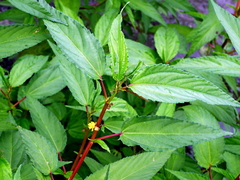 Corchorus capsularise1
- Treatment
- 1.0 MPa through polyethylene glycol 6000 for 2 he1
- Outcome
- relative water content (RWC) and leaf water potential (LWP)e1
- Direction
- decreasede1
Not reportedComparator
Organisms pictured · Representative pictures of the matched species, not figures from the paper.
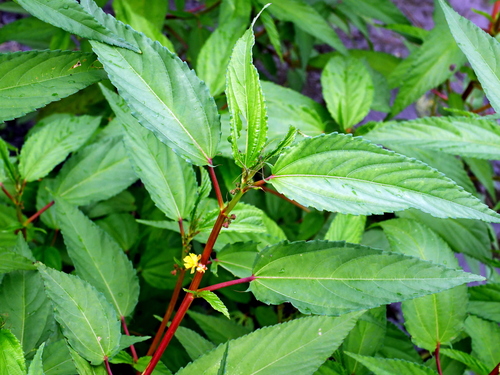
Verbatim
e1“1.0 MPa through polyethylene glycol 6000 for 2 h) decreased the relative water content (RWC) and leaf water potential (LWP) in the two jute species Corchorus capsularis L. (cv. JRC 212) and C. olitorius L. (cv. JRO 632), more so in the latter”
Claim · model-written summary
The decrease in RWC and LWP was larger in C. olitorius than in C. capsularis.
- Taxon
- C. olitorius L.
 Corchorus olitoriuse1
- Outcome
- relative water content (RWC) and leaf water potential (LWP)e1
- Direction
- more soe1
- Comparator
- Corchorus capsularis L.e1
Organisms pictured · Representative pictures of the matched species, not figures from the paper.

Verbatim
e1“decreased the relative water content (RWC) and leaf water potential (LWP) in the two jute species Corchorus capsularis L. (cv. JRC 212) and C. olitorius L. (cv. JRO 632), more so in the latter”
Claim · model-written summary
Pretreatment of seeds with 5 mM CaCl2 improved water uptake capacity.
- Taxon
- juteCorchorus capsularise0
- Treatment
- Pretreatment of seeds with 5 m M CaCl 2e1
- Outcome
- water uptake capacitye1
- Direction
- improvede1
Not reportedComparator
Organisms pictured · Representative pictures of the matched species, not figures from the paper.
Verbatim
e0“the two jute species Corchorus capsularis L. (cv. JRC 212) and C. olitorius L. (cv. JRO 632)”
e1“Pretreatment of seeds with 5 m M CaCl 2 improved the water uptake capacity”
Claim · model-written summary
Seed pretreatment with CaCl2 did not alter stomatal movement.
- Taxon
- juteCorchorus capsularise0
- Treatment
- Pretreatment of seeds with 5 m M CaCl 2e1
- Outcome
- stomatal movemente1
- Direction
- without alteringe1
Not reportedComparator
Organisms pictured · Representative pictures of the matched species, not figures from the paper.
Verbatim
e0“the two jute species Corchorus capsularis L. (cv. JRC 212) and C. olitorius L. (cv. JRO 632)”
e1“Pretreatment of seeds with 5 m M CaCl 2 improved the water uptake capacity without altering stomatal movement”
Claim · model-written summary
Foliar spraying with 0.01 mM ABA reduced transpiration through reduction of stomatal aperture.
- Taxon
- juteCorchorus capsularise0
- Treatment
- foliar spraying with 0.01 m M ABAe1
- Outcome
- transpiratione1
- Direction
- reducede1
- Qualifier
- through the reduction of stomatal aperturee1
Not reportedComparator
Organisms pictured · Representative pictures of the matched species, not figures from the paper.
Verbatim
e0“the two jute species Corchorus capsularis L. (cv. JRC 212) and C. olitorius L. (cv. JRO 632)”
e1“foliar spraying with 0.01 m M ABA reduced transpiration through the reduction of stomatal aperture”
Claim · model-written summary
Seed treatment followed by foliar spraying additively improved water status under water-deficit stress.
- Taxon
- juteCorchorus capsularise0
- Treatment
- A combination of both treatments, i.e. seed treatment followed by foliar sprayinge1
- Outcome
- water statuse1
- Direction
- improvede1
Not reportedComparator
Organisms pictured · Representative pictures of the matched species, not figures from the paper.
Verbatim
e0“the two jute species Corchorus capsularis L. (cv. JRC 212) and C. olitorius L. (cv. JRO 632)”
e1“A combination of both treatments, i.e. seed treatment followed by foliar spraying, additively improved the water status under water‐deficit stress”
Claim · model-written summary
Under water-deficit stress, K+ efflux from guard cells followed by stomatal closure was more rapid in C. capsularis than in C. olitorius.
- Taxon
- C. capsularisCorchorus capsularise1
- Treatment
- water‐deficit stresse1
- Outcome
- Efflux of K + from the guard cells followed by stomatal closuree1
- Direction
- more rapide1
- Comparator
- C. olitoriuse1
Organisms pictured · Representative pictures of the matched species, not figures from the paper.
Verbatim
e1“Efflux of K + from the guard cells followed by stomatal closure was more rapid in C. capsularis than in C. olitorius under water‐deficit stress”
Claim · model-written summary
Under water-deficit stress, uptake of 32P-phosphate decreased more in C. olitorius than in C. capsularis.
- Taxon
- C. olitoriusCorchorus olitoriuse1
- Treatment
- water‐deficit stresse1
- Outcome
- Uptake of [ 32 P]‐phosphatee1
- Direction
- decreased moree1
- Comparator
- C. capsularise1
Organisms pictured · Representative pictures of the matched species, not figures from the paper.
Verbatim
e1“Uptake of [ 32 P]‐phosphate under water‐deficit stress decreased more in C. olitorius than in C. capsularis”
Claim · model-written summary
Seed treatment with Ca2+ counteracted the decrease in phosphate uptake more markedly in C. olitorius.
- Taxon
- juteCorchorus capsularise0
- Treatment
- treatment of seeds with Ca 2+e1
- Outcome
- this decreasee1
- Direction
- counteractede1
- Qualifier
- more markedly in the former speciese1
Not reportedComparator
Organisms pictured · Representative pictures of the matched species, not figures from the paper.
Verbatim
e0“the two jute species Corchorus capsularis L. (cv. JRC 212) and C. olitorius L. (cv. JRO 632)”
e1“treatment of seeds with Ca 2+ counteracted this decrease more markedly in the former species”
Claim · model-written summary
The authors conclude that C. olitorius is more susceptible than C. capsularis to water-deficit stress.
- Taxon
- C. olitoriusCorchorus olitoriuse1
- Treatment
- water‐deficit stresse1
- Outcome
- susceptiblee1
- Direction
- more susceptiblee1
- Comparator
- C. capsularise1
Organisms pictured · Representative pictures of the matched species, not figures from the paper.
Verbatim
e1“C. olitorius is more susceptible than C. capsularis to water‐deficit stress”