Abstract
Clavigerin A ( 1) was isolated from the New Zealand liverwort Lepidolaena clavigera and shown to be a polyoxygenated bergamotane sesquiterpene with an unusual ring system. L. clavigera shows infraspecific variation, since 1 was the only clavigerin detected in a North Island collection, whereas the previously reported clavigerins B ( 2) and C ( 3) were found in South Island collections with no sign of 1. Three new clavigerins, 4- 6, were identified, but these are artifacts formed by alcoholysis of the acetoxy acetal group of the clavigerins 2 and 3, with either the extraction solvent ethanol or the RP column eluent methanol. The insect antifeedant and cytotoxic activities of these compounds are reported, and it is proposed that they act as hidden 1,4-dicarbonyl compounds.
Abstract from the paper’s OpenAlex record, shown for indexing and research. Copyright remains with the authors or the publisher. Read at the source ↗
The text the model read, with the source record’s inline markup (italics, sub- and superscripts) rendered and its character entities decoded; quote offsets refer to the raw text.
Claims 4
Claim · model-written summary
Clavigerin A was the only clavigerin detected in a North Island collection of Lepidolaena clavigera.
- Taxon
- Lepidolaena clavigera
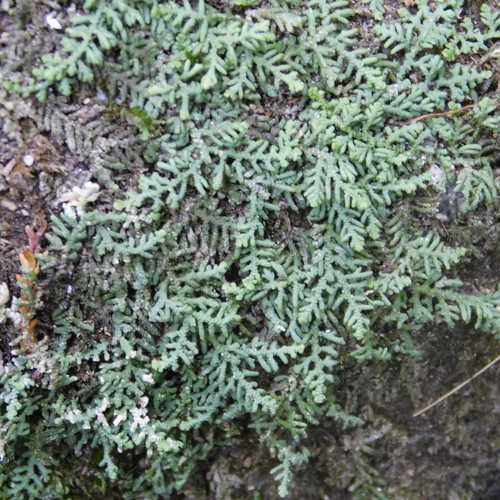
 Lepidolaena clavigerae1
- Outcome
- clavigerin detectede2
- Setting
- North Island collectione2
Organisms pictured · Representative pictures of the matched species, not figures from the paper.
Verbatim
e1“Lepidolaena clavigera”
e2“1 was the only clavigerin detected in a North Island collection”
Claim · model-written summary
Clavigerins B and C were found in South Island collections of Lepidolaena clavigera, with no sign of clavigerin A.
- Taxon
- Lepidolaena clavigeraLepidolaena clavigerae1
- Outcome
- clavigerins B ( 2) and C ( 3) were founde2
- Qualifier
- with no sign of 1e2
- Setting
- South Island collectionse2
Organisms pictured · Representative pictures of the matched species, not figures from the paper.
Verbatim
e1“Lepidolaena clavigera”
e2“the previously reported clavigerins B ( 2) and C ( 3) were found in South Island collections with no sign of 1”
Claim · model-written summary
Three new clavigerins, 4-6, were identified; they are artifacts formed by alcoholysis of clavigerins 2 and 3 with the extraction or eluent solvent.
- Taxon
- Lepidolaena clavigeraLepidolaena clavigerae1
- Compound
- clavigerins 2 and 3e2
- Outcome
- Three new clavigerins, 4- 6, were identifiede2
- Qualifier
- artifacts formed by alcoholysis of the acetoxy acetal groupe2
Organisms pictured · Representative pictures of the matched species, not figures from the paper.
Verbatim
e1“Lepidolaena clavigera”
e2“Three new clavigerins, 4- 6, were identified, but these are artifacts formed by alcoholysis of the acetoxy acetal group of the clavigerins 2 and 3”
Claim · model-written summary
The clavigerin artifacts are proposed to act as hidden 1,4-dicarbonyl compounds.
- Taxon
- Lepidolaena clavigeraLepidolaena clavigerat0
- Outcome
- act as hidden 1,4-dicarbonyl compoundse1
- Qualifier
- it is proposed thate1
Organisms pictured · Representative pictures of the matched species, not figures from the paper.
Verbatim
t0“Lepidolaena clavigera”
e1“it is proposed that they act as hidden 1,4-dicarbonyl compounds”