Abstract
The nutritive value of Beta vulgaris L. result mainly from its high content of protein gathered both in leaf blades and in petioles, and from high content of mineral salts, mainly iron and calcium, as well as vitamins C, A, B1, B2. Purpose of the research was to determine the effect of type potassium fertilizer (potassium chloride, potassium sulphate and potassium chloride + potassium sulphate in 1:1 K ratio) and different dose of potassium (0.6; 1.2; 1.8 g·dm-3) on the yield and chemical composition of Beta vulgaris L. The plants were cultivated in a greenhouse, in pots filled deacidified highmoor peat. Regardless of the type of potassium fertilizer, the yield of Beta leaves was the highest with the application of 0.6 g K·dm-3. Leaves of Beta vulgaris L. fertilized with potassium chloride contained least nitrates, whereas plants fertilized with K2SO4 and KCl + K2SO4 contained much more nitrates. Increasing doses of potassium had a positive effect on the content of vitamin C in the leaves. The research revealed a negative effect of increasing potassium dose on the plant unit weight, leaf length and percentage content of total nitrogen, protein and dry weight in leaves, especially at application of potassium chloride and potassium sulphate. The research showed the growth of potassium and total salt concentration content in bedding as the effect of increasing potassium doses at the application of KCl and K2SO4. In cultivation of Beta vulgaris L., the application of 0.6 g K·dm-3 bedding leads to the highest yield of leaf fresh weight, while application of 1.8 g K·dm-3 bedding leads to the highest content of vitamin C in fresh mass.
Abstract from the paper’s OpenAlex record; open copy licensed cc-by. Read at the source ↗
The text the model read, with the source record’s inline markup (italics, sub- and superscripts) rendered and its character entities decoded; quote offsets refer to the raw text.
Claims 7
Claim · model-written summary
Leaf yield was highest with 0.6 g K·dm-3.
- Taxon
- Beta vulgaris L.
 Beta vulgarise1
- Treatment
- application of 0.6 g K·dm-3e0
- Outcome
- yield of Beta leavese0
- Direction
- higheste0
Not reportedComparator
Organisms pictured · Representative pictures of the matched species, not figures from the paper.
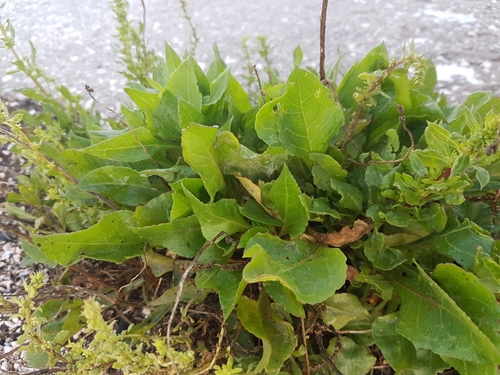
Verbatim
e0“Regardless of the type of potassium fertilizer, the yield of Beta leaves was the highest with the application of 0.6 g K·dm-3”
e1“Beta vulgaris L.”
Claim · model-written summary
Potassium chloride produced the least leaf nitrate.
- Taxon
- Beta vulgaris L.Beta vulgarise0
- Treatment
- potassium chloridee0
- Outcome
- nitratese0
- Direction
- leaste0
- Comparator
- K2SO4 and KCl + K2SO4e0
Organisms pictured · Representative pictures of the matched species, not figures from the paper.
Verbatim
e0“Leaves of Beta vulgaris L. fertilized with potassium chloride contained least nitrates, whereas plants fertilized with K2SO4 and KCl + K2SO4 contained much more nitrates”
Claim · model-written summary
Higher potassium doses increased leaf vitamin C.
- Taxon
- Beta vulgaris L.Beta vulgarise1
- Treatment
- Increasing doses of potassiume0
- Outcome
- content of vitamin C in the leavese0
Not reportedComparatorDirection
Organisms pictured · Representative pictures of the matched species, not figures from the paper.
Verbatim
e0“Increasing doses of potassium had a positive effect on the content of vitamin C in the leaves”
e1“Beta vulgaris L.”
Claim · model-written summary
Increasing potassium dose reduced plant unit weight and leaf length.
- Taxon
- Beta vulgaris L.Beta vulgarise1
- Treatment
- increasing potassium dosee0
- Outcome
- plant unit weight, leaf lengthe0
Not reportedComparatorDirection
Organisms pictured · Representative pictures of the matched species, not figures from the paper.
Verbatim
e0“negative effect of increasing potassium dose on the plant unit weight, leaf length”
e1“Beta vulgaris L.”
Claim · model-written summary
Increasing potassium dose reduced leaf nitrogen, protein and dry weight percentages.
- Taxon
- Beta vulgaris L.Beta vulgarise1
- Treatment
- increasing potassium dosee0
- Outcome
- percentage content of total nitrogen, protein and dry weight in leavese0
Not reportedComparatorDirection
Organisms pictured · Representative pictures of the matched species, not figures from the paper.
Verbatim
e0“negative effect of increasing potassium dose on the plant unit weight, leaf length and percentage content of total nitrogen, protein and dry weight in leaves, especially at application of potassium chloride and potassium sulphate”
e1“Beta vulgaris L.”
Claim · model-written summary
Increasing potassium doses raised potassium and total salt concentration in bedding.
- Taxon
- Beta vulgaris L.Beta vulgarise1
- Treatment
- increasing potassium dosese0
- Outcome
- potassium and total salt concentration content in beddinge0
- Direction
- growthe0
Not reportedComparator
Organisms pictured · Representative pictures of the matched species, not figures from the paper.
Verbatim
e0“growth of potassium and total salt concentration content in bedding as the effect of increasing potassium doses at the application of KCl and K2SO4”
e1“Beta vulgaris L.”
Claim · model-written summary
At 1.8 g K·dm-3, leaf vitamin C content was highest.
- Taxon
- Beta vulgaris L.Beta vulgarise1
- Treatment
- application of 1.8 g K·dm-3e0
- Outcome
- content of vitamin C in fresh masse0
- Direction
- higheste0
Not reportedComparator
Organisms pictured · Representative pictures of the matched species, not figures from the paper.
Verbatim
e0“application of 1.8 g K·dm-3 bedding leads to the highest content of vitamin C in fresh mass”
e1“Beta vulgaris L.”
The same questions in other papers
potassium · quality: protein · Beta vulgaris (beet)Positive and negative results
1 paper in the same direction as this paper · 2 in the opposite direction
- positive
- positive
- negative
potassium · growth · Beta vulgaris (beet)Positive and negative results
3 papers in the same direction as this paper · 36 in the opposite direction
- positive
- positive
- positive
36 papers more in this group
See all 40 papers →Claims are grouped by organism, treatment and what was measured or targeted. A paper counts as positive when any of its claims in the group is positive.