Abstract
BACKGROUND: The application of beneficial microorganisms at transplanting can promote rapid transplant establishment (starter effect) for achieving early and high yields. The aim of this study was to evaluate the biostimulant effects of Glomus intraradices BEG72 (G) and Trichoderma atroviride MUCL 45632 (T) alone or in combination on plant growth parameters, yield, chlorophyll index (SPAD), chlorophyll fluorescence and mineral composition of several vegetable crops. RESULTS: The T. atroviride strain was capable of producing siderophores and auxin-like compounds under a wide range of substrate pH conditions (5.5-8.0). The highest shoot, root dry weight, SPAD and chlorophyll fluorescence in lettuce, tomato and zucchini was observed in the G + T combination, followed by a single inoculation of G or T, whereas the lowest values were recorded in the uninoculated plants. Under greenhouse conditions, the shoot dry weight was significantly increased by 167%, 56%, 115%, 68% and 58% in lettuce, melon, pepper, tomato and zucchini, respectively, when supplied with both beneficial microorganisms in comparison with the control. This increase in root and shoot weight was associated with an increased level of nutrient uptake (e.g. P, Mg, Fe, Zn and B). Under open field conditions, the lettuce shoot and root dry weight increased by 61% and 57%, respectively, with biostimulant microorganism application in field conditions. For zucchini, early and total yields were significantly increased by 59% and 15%, respectively, when plants were inoculated with both microorganisms. CONCLUSION: The application of the biostimulant tablet containing both G and T can promote transplant establishment and vegetable crop productivity in a sustainable way.
Abstract from the paper’s OpenAlex record, shown for indexing and research. Copyright remains with the authors or the publisher. Read at the source ↗
The text the model read, with the source record’s inline markup (italics, sub- and superscripts) rendered and its character entities decoded; quote offsets refer to the raw text.
Claims 16
Claim · model-written summary
Trichoderma atroviride produced siderophores across substrate pH 5.5-8.0.
- Taxon
- vegetable cropst0
- Interactor
- T. atroviride
 Trichoderma atroviridee0biocontrol_agent
- Outcome
- T. atroviride strain was capable of producing siderophorese0
- Qualifier
- (5.5-8.0)e0
Organisms pictured · Representative pictures of the matched species, not figures from the paper.
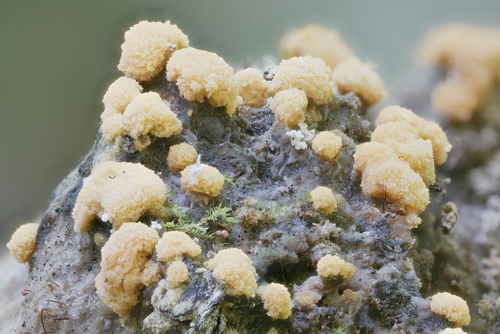
Verbatim
e0“The T. atroviride strain was capable of producing siderophores and auxin-like compounds under a wide range of substrate pH conditions (5.5-8.0).”
t0“vegetable crops”
Claim · model-written summary
Trichoderma atroviride produced auxin-like compounds across substrate pH 5.5-8.0.
- Taxon
- vegetable cropst0
- Interactor
- T. atrovirideTrichoderma atroviridee0biocontrol_agent
- Outcome
- T. atroviride strain was capable of producing siderophores and auxin-like compoundse0
- Qualifier
- (5.5-8.0)e0
Organisms pictured · Representative pictures of the matched species, not figures from the paper.
Verbatim
e0“The T. atroviride strain was capable of producing siderophores and auxin-like compounds under a wide range of substrate pH conditions (5.5-8.0).”
t0“vegetable crops”
Claim · model-written summary
Combined inoculation gave the highest shoot and root dry weight, SPAD and chlorophyll fluorescence in lettuce.
- Taxon
- lettuce
 Lactuca sativae0
- Treatment
- G + T combinatione0
- Interactor
- Ge0symbiont
- Second interactor
- Te0biocontrol_agent
- Outcome
- shoot, root dry weight, SPAD and chlorophyll fluorescencee0
- Direction
- higheste0
- Comparator
- uninoculated plantse0
Organisms pictured · Representative pictures of the matched species, not figures from the paper.

Verbatim
e0“The highest shoot, root dry weight, SPAD and chlorophyll fluorescence in lettuce, tomato and zucchini was observed in the G + T combination, followed by a single inoculation of G or T, whereas the lowest values were recorded in the uninoculated plants.”
Claim · model-written summary
Combined inoculation gave the highest shoot and root dry weight, SPAD and chlorophyll fluorescence in tomato.
- Taxon
- tomato
 Solanum lycopersicume0
- Treatment
- G + T combinatione0
- Interactor
- Ge0symbiont
- Second interactor
- Te0biocontrol_agent
- Outcome
- shoot, root dry weight, SPAD and chlorophyll fluorescencee0
- Direction
- higheste0
- Comparator
- uninoculated plantse0
Organisms pictured · Representative pictures of the matched species, not figures from the paper.

Verbatim
e0“The highest shoot, root dry weight, SPAD and chlorophyll fluorescence in lettuce, tomato and zucchini was observed in the G + T combination, followed by a single inoculation of G or T, whereas the lowest values were recorded in the uninoculated plants.”
Claim · model-written summary
Combined inoculation gave the highest shoot and root dry weight, SPAD and chlorophyll fluorescence in zucchini.
- Taxon
- zucchini
 Cucurbita pepo subsp. pepoe0
- Treatment
- G + T combinatione0
- Interactor
- Ge0symbiont
- Second interactor
- Te0biocontrol_agent
- Outcome
- shoot, root dry weight, SPAD and chlorophyll fluorescencee0
- Direction
- higheste0
- Comparator
- uninoculated plantse0
Organisms pictured · Representative pictures of the matched species, not figures from the paper.

Verbatim
e0“The highest shoot, root dry weight, SPAD and chlorophyll fluorescence in lettuce, tomato and zucchini was observed in the G + T combination, followed by a single inoculation of G or T, whereas the lowest values were recorded in the uninoculated plants.”
Claim · model-written summary
Co-inoculation increased greenhouse shoot dry weight of lettuce by 167% versus control.
- Taxon
- lettuceLactuca sativae0
- Treatment
- both beneficial microorganismse0
- Outcome
- shoot dry weighte0
- Direction
- increasede0
- Value
- 167%e0
- Comparator
- the controle0
Not reportedSetting
Organisms pictured · Representative pictures of the matched species, not figures from the paper.
Verbatim
e0“The shoot dry weight was significantly increased by 167%, 56%, 115%, 68% and 58% in lettuce, melon, pepper, tomato and zucchini, respectively, when supplied with both beneficial microorganisms in comparison with the control.”
Claim · model-written summary
Co-inoculation increased greenhouse shoot dry weight of melon by 56% versus control.
- Taxon
- melon
 Cucumis meloe0
- Treatment
- both beneficial microorganismse0
- Outcome
- shoot dry weighte0
- Direction
- increasede0
- Value
- 56%e0
- Comparator
- the controle0
Not reportedSetting
Organisms pictured · Representative pictures of the matched species, not figures from the paper.

Verbatim
e0“The shoot dry weight was significantly increased by 167%, 56%, 115%, 68% and 58% in lettuce, melon, pepper, tomato and zucchini, respectively, when supplied with both beneficial microorganisms in comparison with the control.”
Claim · model-written summary
Co-inoculation increased greenhouse shoot dry weight of pepper by 115% versus control.
- Taxon
- peppere0
- Treatment
- both beneficial microorganismse0
- Outcome
- shoot dry weighte0
- Direction
- increasede0
- Value
- 115%e0
- Comparator
- the controle0
Not reportedSetting
Verbatim
e0“The shoot dry weight was significantly increased by 167%, 56%, 115%, 68% and 58% in lettuce, melon, pepper, tomato and zucchini, respectively, when supplied with both beneficial microorganisms in comparison with the control.”
Claim · model-written summary
Co-inoculation increased greenhouse shoot dry weight of tomato by 68% versus control.
- Taxon
- tomatoSolanum lycopersicume0
- Treatment
- both beneficial microorganismse0
- Outcome
- shoot dry weighte0
- Direction
- increasede0
- Value
- 68%e0
- Comparator
- the controle0
Not reportedSetting
Organisms pictured · Representative pictures of the matched species, not figures from the paper.
Verbatim
e0“The shoot dry weight was significantly increased by 167%, 56%, 115%, 68% and 58% in lettuce, melon, pepper, tomato and zucchini, respectively, when supplied with both beneficial microorganisms in comparison with the control.”
Claim · model-written summary
Co-inoculation increased greenhouse shoot dry weight of zucchini by 58% versus control.
- Taxon
- zucchiniCucurbita pepo subsp. pepoe0
- Treatment
- both beneficial microorganismse0
- Outcome
- shoot dry weighte0
- Direction
- increasede0
- Value
- 58%e0
- Comparator
- the controle0
Not reportedSetting
Organisms pictured · Representative pictures of the matched species, not figures from the paper.
Verbatim
e0“The shoot dry weight was significantly increased by 167%, 56%, 115%, 68% and 58% in lettuce, melon, pepper, tomato and zucchini, respectively, when supplied with both beneficial microorganisms in comparison with the control.”
Claim · model-written summary
Greater root and shoot weight was associated with increased nutrient uptake.
Verbatim
e0“This increase in root and shoot weight was associated with an increased level of nutrient uptake (e.g. P, Mg, Fe, Zn and B).”
t0“vegetable crops”
Claim · model-written summary
Lettuce shoot dry weight rose 61% with biostimulant application in the field.
- Taxon
- lettuceLactuca sativae0
- Treatment
- biostimulant microorganism applicatione0
- Outcome
- shoote0
- Direction
- increasede0
- Value
- 61%e0
- Setting
- field conditionse0
Not reportedComparator
Organisms pictured · Representative pictures of the matched species, not figures from the paper.
Verbatim
e0“the lettuce shoot and root dry weight increased by 61% and 57%, respectively, with biostimulant microorganism application in field conditions.”
Claim · model-written summary
Lettuce root dry weight rose 57% with biostimulant application in the field.
- Taxon
- lettuceLactuca sativae0
- Treatment
- biostimulant microorganism applicatione0
- Outcome
- root dry weighte0
- Direction
- increasede0
- Value
- 57%e0
- Setting
- field conditionse0
Not reportedComparator
Organisms pictured · Representative pictures of the matched species, not figures from the paper.
Verbatim
e0“the lettuce shoot and root dry weight increased by 61% and 57%, respectively, with biostimulant microorganism application in field conditions.”
Claim · model-written summary
Co-inoculation increased zucchini early yield by 59%.
- Taxon
- zucchiniCucurbita pepo subsp. pepoe0
- Treatment
- inoculated with both microorganismse0
- Outcome
- earlye0
- Direction
- increasede0
- Value
- 59%e0
Not reportedComparator
Organisms pictured · Representative pictures of the matched species, not figures from the paper.
Verbatim
e0“For zucchini, early and total yields were significantly increased by 59% and 15%, respectively, when plants were inoculated with both microorganisms.”
Claim · model-written summary
Co-inoculation increased zucchini total yield by 15%.
- Taxon
- zucchiniCucurbita pepo subsp. pepoe0
- Treatment
- inoculated with both microorganismse0
- Outcome
- total yieldse0
- Direction
- increasede0
- Value
- 15%e0
Not reportedComparator
Organisms pictured · Representative pictures of the matched species, not figures from the paper.
Verbatim
e0“For zucchini, early and total yields were significantly increased by 59% and 15%, respectively, when plants were inoculated with both microorganisms.”
Claim · model-written summary
Authors conclude the combined biostimulant tablet can promote transplant establishment and vegetable productivity.
Verbatim
e0“The application of the biostimulant tablet containing both G and T can promote transplant establishment and vegetable crop productivity in a sustainable way.”
t0“vegetable crops”
The same questions in other papers
inoculation · growth · Cucumis melo (muskmelon)Positive and negative results
14 papers in the same direction as this paper · 6 in the opposite direction
- negative
- no effect
- negative
17 papers more in this group
See all 21 papers →other · growth · Lactuca sativa (garden lettuce)Positive and negative results
65 papers in the same direction as this paper · 12 in the opposite direction
- no effect
- positive
- no effect
74 papers more in this group
See all 78 papers →inoculation · growth · Lactuca sativa (garden lettuce)Positive and negative results
96 papers in the same direction as this paper · 12 in the opposite direction · 2 reporting no difference from an alternative
- no effect
- negative
- negative
107 papers more in this group
See all 111 papers →inoculation · growth · Solanum lycopersicum (tomato)Positive and negative results
386 papers in the same direction as this paper · 53 in the opposite direction · 1 reporting no difference from an alternative
- positive
- no effect
- no effect
437 papers more in this group
See all 441 papers →inoculation · yield · Cucurbita pepoResults agree
4 papers in the same direction as this paper
- positive
- positive
- positive
1 paper more in this group
See all 5 papers →inoculation · growth · Cucurbita pepoResults agree
11 papers in the same direction as this paper
- positive
- positive
- positive
8 papers more in this group
See all 12 papers →Claims are grouped by organism, treatment and what was measured or targeted. A paper counts as positive when any of its claims in the group is positive.