Abstract
Abstract The objective of this research was to determine the effects of varying levels of N, P, and K fertilizer and light intensity on nitrate accumulation in species grown for human consumption. In greenhouse experiments, table beets ( Beta vulgaris L.) and spinach ( Spinacia oleracea L.) were grown in fine sandy loam soil at three levels of N, P, and K fertilizer in a 3 3 factorial design. Plants were grown under two light intensities, 1.08 ✕ 10 4 lux or 3.23 ✕ 10 4 lux. Nitrate, total N, P, and K were determined on freeze dried table beet leaf blades and roots and on spinach leaves. Fertilizer N had the greatest influence on NO 3 accumulation in all three tissues studied. Varying the rate of fertilizer P had no effect on NO 3 accumulation. Plants of both species grown with the highest rate of K and under the lower light intensity accumulated significantly more NO 3 ‐N than other plants receiving less K. Table beet leaf blades contained three times more NO 3 than roots. Lowering the light intensity from 3.23 to 1.08 ✕ 10 4 resulted in a significant increase in NO 3 ‐N in all tissues tested. Total N concentration increased in all tissues with an addition of N fertilizer or by a reduction in light intensity. In spinach, total N was lower in plants receiving K fertilizer. P and K were lower in beet and spinach leaves that received N fertilizer. Light intensity had no influence on P concentration, while all tissues grown at 1.08 ✕ 10 4 lux contained more K than tissue grown at 3.23 ✕ 10 4 lux. Any factor which increased the total N concentration of the tissue resulted in a corresponding increment in the NO 3 concentration.
Abstract from the paper’s OpenAlex record, shown for indexing and research. Copyright remains with the authors or the publisher. Read at the source ↗
The text the model read, with the source record’s inline markup (italics, sub- and superscripts) rendered and its character entities decoded; quote offsets refer to the raw text.
Claims 11
Claim · model-written summary
Fertilizer N had the greatest influence on nitrate accumulation in all three tissues studied.
- Taxon
- table beets
 Beta vulgaris subsp. vulgarise0
- Treatment
- Fertilizer Ne1
- Outcome
- NO 3 accumulatione1
- Direction
- greatest influencee1
- Qualifier
- in all three tissues studiede1
Not reportedComparator
Organisms pictured · Representative pictures of the matched species, not figures from the paper.

Verbatim
e0“In greenhouse experiments, table beets ( Beta vulgaris L.) and spinach ( Spinacia oleracea L.) were grown in fine sandy loam soil at three levels of N, P, and K fertilizer in a 3 3 factorial design”
e1“Fertilizer N had the greatest influence on NO 3 accumulation in all three tissues studied”
Claim · model-written summary
Varying the rate of fertilizer P had no effect on nitrate accumulation.
- Taxon
- table beetsBeta vulgaris subsp. vulgarise0
- Treatment
- rate of fertilizer Pe2
- Outcome
- NO 3 accumulatione2
- Direction
- no effecte2
Not reportedComparator
Organisms pictured · Representative pictures of the matched species, not figures from the paper.
Verbatim
e0“In greenhouse experiments, table beets ( Beta vulgaris L.) and spinach ( Spinacia oleracea L.) were grown in fine sandy loam soil at three levels of N, P, and K fertilizer in a 3 3 factorial design”
e2“Varying the rate of fertilizer P had no effect on NO 3 accumulation”
Claim · model-written summary
Highest K with lower light significantly increased NO 3 ‐N compared with plants receiving less K.
- Taxon
- table beetsBeta vulgaris subsp. vulgarise0
- Treatment
- highest rate of K and under the lower light intensitye3
- Outcome
- NO 3 ‐Ne3
- Direction
- moree3
- Comparator
- other plants receiving less Ke3
Organisms pictured · Representative pictures of the matched species, not figures from the paper.
Verbatim
e0“In greenhouse experiments, table beets ( Beta vulgaris L.) and spinach ( Spinacia oleracea L.) were grown in fine sandy loam soil at three levels of N, P, and K fertilizer in a 3 3 factorial design”
e3“Plants of both species grown with the highest rate of K and under the lower light intensity accumulated significantly more NO 3 ‐N than other plants receiving less K”
Claim · model-written summary
Table beet leaf blades contained three times more NO 3 than roots.
- Taxon
- Table beetBeta vulgaris subsp. vulgarise4
- Organ / stage
- leaf bladese4
- Outcome
- NO 3e4
- Direction
- moree4
- Value
- three timese4
- Comparator
- rootse4
Organisms pictured · Representative pictures of the matched species, not figures from the paper.
Verbatim
e4“Table beet leaf blades contained three times more NO 3 than roots”
Claim · model-written summary
Lowering light intensity from 3.23 to 1.08 ✕ 10 4 significantly increased NO 3 ‐N in all tissues tested.
- Taxon
- table beetsBeta vulgaris subsp. vulgarise0
- Treatment
- Lowering the light intensity from 3.23 to 1.08 ✕ 10 4e5
- Outcome
- NO 3 ‐Ne5
- Direction
- increasee5
Not reportedComparator
Organisms pictured · Representative pictures of the matched species, not figures from the paper.
Verbatim
e0“In greenhouse experiments, table beets ( Beta vulgaris L.) and spinach ( Spinacia oleracea L.) were grown in fine sandy loam soil at three levels of N, P, and K fertilizer in a 3 3 factorial design”
e5“Lowering the light intensity from 3.23 to 1.08 ✕ 10 4 resulted in a significant increase in NO 3 ‐N in all tissues tested”
Claim · model-written summary
Adding N fertilizer increased total N concentration in all tissues.
- Taxon
- table beetsBeta vulgaris subsp. vulgarise0
- Treatment
- an addition of N fertilizere6
- Outcome
- Total N concentratione6
- Direction
- increasede6
Not reportedComparator
Organisms pictured · Representative pictures of the matched species, not figures from the paper.
Verbatim
e0“In greenhouse experiments, table beets ( Beta vulgaris L.) and spinach ( Spinacia oleracea L.) were grown in fine sandy loam soil at three levels of N, P, and K fertilizer in a 3 3 factorial design”
e6“Total N concentration increased in all tissues with an addition of N fertilizer or by a reduction in light intensity”
Claim · model-written summary
Any factor that raised total N concentration raised nitrate concentration correspondingly.
- Taxon
- table beetsBeta vulgaris subsp. vulgarise0
- Treatment
- Any factor which increased the total N concentration of the tissuee1
- Outcome
- NO 3 concentratione1
- Direction
- incremente1
Organisms pictured · Representative pictures of the matched species, not figures from the paper.
Verbatim
e0“In greenhouse experiments, table beets ( Beta vulgaris L.) and spinach ( Spinacia oleracea L.) were grown in fine sandy loam soil at three levels of N, P, and K fertilizer in a 3 3 factorial design”
e1“Any factor which increased the total N concentration of the tissue resulted in a corresponding increment in the NO 3 concentration”
Claim · model-written summary
In spinach, total N was lower in plants receiving K fertilizer.
- Taxon
- spinach
 Spinacia oleraceae7
- Treatment
- K fertilizere7
- Outcome
- total Ne7
- Direction
- lowere7
Not reportedComparator
Organisms pictured · Representative pictures of the matched species, not figures from the paper.

Verbatim
e7“In spinach, total N was lower in plants receiving K fertilizer”
Claim · model-written summary
N fertilizer lowered P and K in beet and spinach leaves.
- Taxon
- beet and spinachSpinacia oleracea
 Beta vulgarise1
- Organ / stage
- leavese1
- Treatment
- N fertilizere1
- Outcome
- P and Ke1
- Direction
- lowere1
Not reportedComparator
Organisms pictured · Representative pictures of the matched species, not figures from the paper.
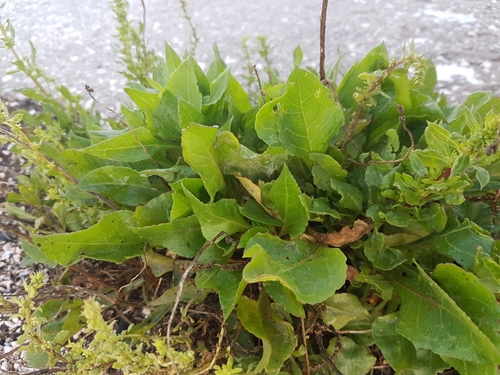
Verbatim
e1“P and K were lower in beet and spinach leaves that received N fertilizer”
Claim · model-written summary
Light intensity had no influence on P concentration.
- Taxon
- table beetsBeta vulgaris subsp. vulgarise0
- Treatment
- light intensitye1
- Outcome
- P concentratione1
- Direction
- no influencee1
Not reportedComparator
Organisms pictured · Representative pictures of the matched species, not figures from the paper.
Verbatim
e0“In greenhouse experiments, table beets ( Beta vulgaris L.) and spinach ( Spinacia oleracea L.) were grown in fine sandy loam soil at three levels of N, P, and K fertilizer in a 3 3 factorial design”
e1“Light intensity had no influence on P concentration”
Claim · model-written summary
Tissues grown at 1.08 ✕ 10 4 lux contained more K than tissues grown at 3.23 ✕ 10 4 lux.
- Taxon
- table beetsBeta vulgaris subsp. vulgarise0
- Treatment
- 1.08 ✕ 10 4 luxe1
- Outcome
- Ke1
- Direction
- moree1
- Comparator
- 3.23 ✕ 10 4 luxe1
Organisms pictured · Representative pictures of the matched species, not figures from the paper.
Verbatim
e0“In greenhouse experiments, table beets ( Beta vulgaris L.) and spinach ( Spinacia oleracea L.) were grown in fine sandy loam soil at three levels of N, P, and K fertilizer in a 3 3 factorial design”
e1“all tissues grown at 1.08 ✕ 10 4 lux contained more K than tissue grown at 3.23 ✕ 10 4 lux”
The same questions in other papers
light · nutrient: content · Beta vulgaris (beet)Positive and negative results
2 papers in the same direction as this paper · 3 in the opposite direction
- positive
- positive
- positive
2 papers more in this group
See all 6 papers →fertilization · molecular: metabolites · Beta vulgaris (beet)Positive and negative results
22 papers in the same direction as this paper · 45 in the opposite direction
- positive
- positive
- positive
64 papers more in this group
See all 68 papers →Claims are grouped by organism, treatment and what was measured or targeted. A paper counts as positive when any of its claims in the group is positive.