Abstract
Sesbania sesban L. (Merr) and Mimosa invisa L. (Fabaceae) were grown in rotation with lowland rice (var. KRC Baika). The experiments were conducted on three farmers’ fields at the Kpong Irrigation Project (KIP) sites at Akuse (lat 6° 06' N, long 0° 07' E) and Asutsuare (lat 6° 04' N, long 0° 12' E). In Farm 1, S. sesban and M. invisa were incorporated three times, in rotation with rice, over a period of 3 years, and in Farm 2, the green manures were incorporated once and rice planted within the year. The treatments also included a control (no fertilization), recommended inorganic nitrogen (N) that is, 90 kg N ha-1, S. sesban + 50% N and S. sesban + 75% N. Total dry matter and grain (paddy) yield of rice were higher in Farm 1 than Farm 2. Nitrogen contents of the S. sesban and M. invisa plants were 2.5 and 2.4% respectively. Total N of S. sesban ranged from 239 to 259 kg ha-1 and that of M. invisa ranged from 152 to 186 kg ha-1. The single incorporation of the green manures in Farm 2 did not have a significant impact on rice growth and grain yield, while in Farm 1, S.sesban and M. invisa gave comparable yields with those under the recommended inorganic N. Grain yields under S. sesban + 50% N (T2) and mimosa (T4) were comparable to that under the recommended inorganic fertilizer (T5) and both were significantly higher than the control (T6); grain yields were 5.8, 5.8, 6.5 and 3.9 t ha-1, in T2, T4, T5 and T6, respectively. In spite of the good performance of M. invisa it required upland conditions to grow and establish. The application of 50% N requirement, in addition to S. sesban incorporation, enhanced rice growth and yield, and resulted in 20.7% savings on nitrogen fertilizer use. Key words: Green manure, lowland rice, inorganic nitrogen, rotation, incorporation, total dry weight, grain yield.
Abstract from the paper’s OpenAlex record, shown for indexing and research. Copyright remains with the authors or the publisher. Read at the source ↗
The text the model read, with the source record’s inline markup (italics, sub- and superscripts) rendered and its character entities decoded; quote offsets refer to the raw text.
Claims 12
Claim · model-written summary
Rice dry matter and grain yield were higher on Farm 1 than Farm 2.
- Taxon
- rice
 Oryza sativae0
- Outcome
- Total dry matter and grain (paddy) yielde0
- Direction
- highere0
- Comparator
- Farm 2e0
- Setting
- Farm 1e0
Organisms pictured · Representative pictures of the matched species, not figures from the paper.

Verbatim
e0“Total dry matter and grain (paddy) yield of rice were higher in Farm 1 than Farm 2.”
Claim · model-written summary
Sesbania plants had 2.5% nitrogen content.
- Taxon
- S. sesban
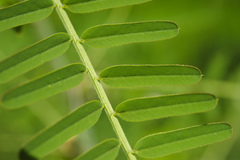 Sesbania sesbane0
- Outcome
- Nitrogen contentse0
- Value
- 2.5e0
Organisms pictured · Representative pictures of the matched species, not figures from the paper.

Verbatim
e0“Nitrogen contents of the S. sesban and M. invisa plants were 2.5 and 2.4% respectively.”
Claim · model-written summary
Mimosa plants had 2.4% nitrogen content.
- Taxon
- M. invisa
 Mimosa invisae0
- Outcome
- Nitrogen contentse0
- Value
- 2.4%e0
Organisms pictured · Representative pictures of the matched species, not figures from the paper.

Verbatim
e0“Nitrogen contents of the S. sesban and M. invisa plants were 2.5 and 2.4% respectively.”
Claim · model-written summary
Sesbania total nitrogen ranged from 239 to 259 kg ha-1.
- Taxon
- S. sesbanSesbania sesbane0
- Outcome
- Total Ne0
- Value
- 239 to 259 kg ha-1e0
Organisms pictured · Representative pictures of the matched species, not figures from the paper.
Verbatim
e0“Total N of S. sesban ranged from 239 to 259 kg ha-1 and that of M. invisa ranged from 152 to 186 kg ha-1.”
Claim · model-written summary
Mimosa total nitrogen ranged from 152 to 186 kg ha-1.
- Taxon
- M. invisaMimosa invisae0
- Outcome
- Total Ne0
- Value
- 152 to 186 kg ha-1e0
Organisms pictured · Representative pictures of the matched species, not figures from the paper.
Verbatim
e0“Total N of S. sesban ranged from 239 to 259 kg ha-1 and that of M. invisa ranged from 152 to 186 kg ha-1.”
Claim · model-written summary
Single green manure incorporation had no significant impact on rice growth and grain yield.
- Taxon
- riceOryza sativae0
- Treatment
- single incorporation of the green manurese0
- Outcome
- rice growth and grain yielde0
- Direction
- did not have a significant impacte0
- Setting
- Farm 2e0
Not reportedComparator
Organisms pictured · Representative pictures of the matched species, not figures from the paper.
Verbatim
e0“The single incorporation of the green manures in Farm 2 did not have a significant impact on rice growth and grain yield”
Claim · model-written summary
Repeated Sesbania incorporation gave rice yields comparable with recommended inorganic nitrogen.
- Taxon
- riceOryza sativae1
- Treatment
- S.sesbane0
- Outcome
- yieldse0
- Direction
- comparablee0
- Comparator
- recommended inorganic Ne0
- Setting
- Farm 1e0
Organisms pictured · Representative pictures of the matched species, not figures from the paper.
Verbatim
e0“while in Farm 1, S.sesban and M. invisa gave comparable yields with those under the recommended inorganic N.”
e1“Total dry matter and grain (paddy) yield of rice were higher in Farm 1 than Farm 2.”
Claim · model-written summary
Repeated Mimosa incorporation gave rice yields comparable with recommended inorganic nitrogen.
- Taxon
- riceOryza sativae1
- Treatment
- M. invisae0
- Outcome
- yieldse0
- Direction
- comparablee0
- Comparator
- recommended inorganic Ne0
- Setting
- Farm 1e0
Organisms pictured · Representative pictures of the matched species, not figures from the paper.
Verbatim
e0“while in Farm 1, S.sesban and M. invisa gave comparable yields with those under the recommended inorganic N.”
e1“Total dry matter and grain (paddy) yield of rice were higher in Farm 1 than Farm 2.”
Claim · model-written summary
Sesbania plus 50% nitrogen gave 5.8 t ha-1 grain yield, significantly above control.
- Taxon
- riceOryza sativae1
- Treatment
- S. sesban + 50% Ne0
- Outcome
- Grain yieldse0
- Direction
- highere0
- Value
- 5.8e0
- Qualifier
- 3.9 t ha-1e0
- Comparator
- control (T6)e0
Organisms pictured · Representative pictures of the matched species, not figures from the paper.
Verbatim
e0“Grain yields under S. sesban + 50% N (T2) and mimosa (T4) were comparable to that under the recommended inorganic fertilizer (T5) and both were significantly higher than the control (T6); grain yields were 5.8, 5.8, 6.5 and 3.9 t ha-1, in T2, T4, T5 and T6, respectively.”
e1“Total dry matter and grain (paddy) yield of rice were higher in Farm 1 than Farm 2.”
Claim · model-written summary
Mimosa gave 5.8 t ha-1 grain yield, significantly above control.
- Taxon
- riceOryza sativae1
- Treatment
- mimosa (T4)e0
- Outcome
- Grain yieldse0
- Direction
- highere0
- Value
- 5.8e0
- Comparator
- control (T6)e0
Organisms pictured · Representative pictures of the matched species, not figures from the paper.
Verbatim
e0“Grain yields under S. sesban + 50% N (T2) and mimosa (T4) were comparable to that under the recommended inorganic fertilizer (T5) and both were significantly higher than the control (T6); grain yields were 5.8, 5.8, 6.5 and 3.9 t ha-1, in T2, T4, T5 and T6, respectively.”
e1“Total dry matter and grain (paddy) yield of rice were higher in Farm 1 than Farm 2.”
Claim · model-written summary
Mimosa required upland conditions to establish.
- Taxon
- M. invisaMimosa invisae0
- Outcome
- required upland conditions to grow and establishe0
Organisms pictured · Representative pictures of the matched species, not figures from the paper.
Verbatim
e0“In spite of the good performance of M. invisa it required upland conditions to grow and establish.”
Claim · model-written summary
Sesbania incorporation with 50% nitrogen improved rice growth and yield and saved 20.7% nitrogen fertilizer.
- Taxon
- riceOryza sativae0
- Treatment
- 50% N requirement, in addition to S. sesban incorporatione0
- Outcome
- rice growth and yielde0
- Direction
- enhancede0
- Value
- 20.7%e0
Not reportedComparator
Organisms pictured · Representative pictures of the matched species, not figures from the paper.
Verbatim
e0“The application of 50% N requirement, in addition to S. sesban incorporation, enhanced rice growth and yield, and resulted in 20.7% savings on nitrogen fertilizer use.”
The same questions in other papers
Sesbania sesban · yield · Oryza sativa (rice)Results agree
1 paper in the same direction as this paper
- positive
fertilization · yield · Oryza sativa (rice)Positive and negative results
271 papers in the same direction as this paper · 3,183 in the opposite direction
- no effect
- positive
- positive
3,451 papers more in this group
See all 3,455 papers →Claims are grouped by organism, treatment and what was measured or targeted. A paper counts as positive when any of its claims in the group is positive.