Abstract
BACKGROUND: Ferns are a group of plants that have been little explored from a chemical and biological perspective but that have interesting potential, occurring in various parts of the world. OBJECTIVE: This work investigates the chemical profile and the biological effects of ferns from Brazil. MATERIALS AND METHODS: Analyses were performed using rapid performance liquid chromatography (RP-LC) with a diode array detector (DAD). Extracts were tested for their in vitro antioxidant activity, by the total reactive antioxidant potential method and for their antichemotactic potential, by the Boyden chamber method. Cytotoxic effects were assessed by lactate dehydrogenase levels, while the monoamine oxidase (MAO) assay was carried out using a fluorescence-based method. RESULTS: Different chemical compositions were found for the studied ferns, such as Asplenium gastonis, in which hesperidin was identified in its extract, while A. serra showed the presence of xanthone mangiferin. The most samples with highest antioxidant activity were the Asplenium serra, Lastreopsis amplissima and Cyathea dichromatolepis extracts, at 10 μg/mL. High antichemotactic activity was found for A. serra (94.06%) and Didymochlaena truncatula (93.41%), at 10 μg/mL. The extracts showed no cytotoxicity at the highest concentration. Against MAO-A, D. truncatula (82.61%), Alsophila setosa (82.21%), Cyathea phalerata (74.07%) and C. delgadii (70.32%) were the most active extracts (100 μg/mL). CONCLUSION: The hypothesis was considered that phenolics and triterpenes are responsible for these pronounced activities.
Abstract from the paper’s OpenAlex record, shown for indexing and research. Copyright remains with the authors or the publisher. Read at the source ↗
The text the model read, with the source record’s inline markup (italics, sub- and superscripts) rendered and its character entities decoded; quote offsets refer to the raw text.
Claims 12
Claim · model-written summary
Hesperidin was identified in Asplenium gastonis extract.
Not reportedDirection
Verbatim
e0“Asplenium gastonis, in which hesperidin was identified in its extract”
Claim · model-written summary
Xanthone mangiferin was present in A. serra.
- Taxon
- A. serra
 Asplenium serrae0
- Outcome
- xanthone mangiferine0
Not reportedDirection
Organisms pictured · Representative pictures of the matched species, not figures from the paper.

Verbatim
e0“A. serra showed the presence of xanthone mangiferin”
Claim · model-written summary
Asplenium serra extract was among those with highest antioxidant activity at 10 μg/mL.
- Taxon
- Asplenium serraAsplenium serrae0
- Treatment
- 10 μg/mLe0
- Outcome
- antioxidant activitye0
- Direction
- higheste0
Organisms pictured · Representative pictures of the matched species, not figures from the paper.
Verbatim
e0“highest antioxidant activity were the Asplenium serra, Lastreopsis amplissima and Cyathea dichromatolepis extracts, at 10 μg/mL”
Claim · model-written summary
Lastreopsis amplissima extract was among those with highest antioxidant activity at 10 μg/mL.
- Taxon
- Lastreopsis amplissimaLastreopsis amplissimae0
- Treatment
- 10 μg/mLe0
- Outcome
- antioxidant activitye0
- Direction
- higheste0
Verbatim
e0“highest antioxidant activity were the Asplenium serra, Lastreopsis amplissima and Cyathea dichromatolepis extracts, at 10 μg/mL”
Claim · model-written summary
Cyathea dichromatolepis extract was among those with highest antioxidant activity at 10 μg/mL.
- Taxon
- Cyathea dichromatolepisCyathea dichromatolepise0
- Treatment
- 10 μg/mLe0
- Outcome
- antioxidant activitye0
- Direction
- higheste0
Verbatim
e0“highest antioxidant activity were the Asplenium serra, Lastreopsis amplissima and Cyathea dichromatolepis extracts, at 10 μg/mL”
Claim · model-written summary
A. serra extract showed 94.06% antichemotactic activity at 10 μg/mL.
- Taxon
- A. serraAsplenium serrae0
- Treatment
- 10 μg/mLe0
- Outcome
- antichemotactic activitye0
- Direction
- Highe0
- Value
- 94.06%e0
Organisms pictured · Representative pictures of the matched species, not figures from the paper.
Verbatim
e0“High antichemotactic activity was found for A. serra (94.06%) and Didymochlaena truncatula (93.41%), at 10 μg/mL”
Claim · model-written summary
Didymochlaena truncatula extract showed 93.41% antichemotactic activity at 10 μg/mL.
- Taxon
- Didymochlaena truncatula
 Didymochlaena truncatulae0
- Treatment
- 10 μg/mLe0
- Outcome
- antichemotactic activitye0
- Direction
- Highe0
- Value
- 93.41%e0
Organisms pictured · Representative pictures of the matched species, not figures from the paper.

Verbatim
e0“High antichemotactic activity was found for A. serra (94.06%) and Didymochlaena truncatula (93.41%), at 10 μg/mL”
Claim · model-written summary
The fern extracts showed no cytotoxicity at the highest concentration.
Not reportedTaxon
Verbatim
e0“The extracts showed no cytotoxicity at the highest concentration”
Claim · model-written summary
D. truncatula extract had 82.61% activity against MAO-A at 100 μg/mL.
- Taxon
- D. truncatulaDidymochlaena truncatulae0
- Treatment
- 100 μg/mLe0
- Outcome
- MAO-Ae0
- Direction
- most activee0
- Value
- 82.61%e0
Organisms pictured · Representative pictures of the matched species, not figures from the paper.
Verbatim
e0“Against MAO-A, D. truncatula (82.61%), Alsophila setosa (82.21%), Cyathea phalerata (74.07%) and C. delgadii (70.32%) were the most active extracts (100 μg/mL)”
Claim · model-written summary
Alsophila setosa extract had 82.21% activity against MAO-A at 100 μg/mL.
- Taxon
- Alsophila setosa
 Alsophila setosae0
- Treatment
- 100 μg/mLe0
- Outcome
- MAO-Ae0
- Direction
- most activee0
- Value
- 82.21%e0
Organisms pictured · Representative pictures of the matched species, not figures from the paper.
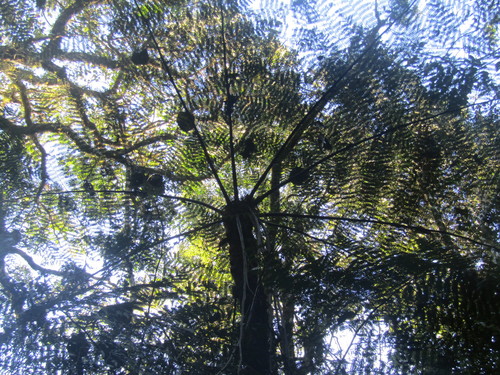
Verbatim
e0“Against MAO-A, D. truncatula (82.61%), Alsophila setosa (82.21%), Cyathea phalerata (74.07%) and C. delgadii (70.32%) were the most active extracts (100 μg/mL)”
Claim · model-written summary
Cyathea phalerata extract had 74.07% activity against MAO-A at 100 μg/mL.
- Taxon
- Cyathea phalerata
 Cyathea phaleratae0
- Treatment
- 100 μg/mLe0
- Outcome
- MAO-Ae0
- Direction
- most activee0
- Value
- 74.07%e0
Organisms pictured · Representative pictures of the matched species, not figures from the paper.
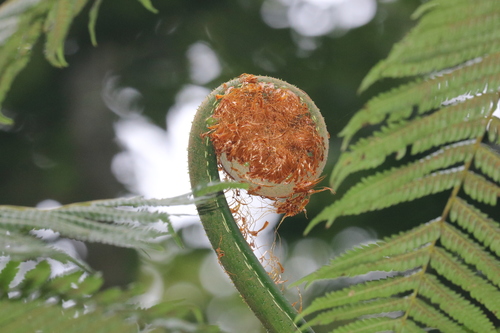
Verbatim
e0“Against MAO-A, D. truncatula (82.61%), Alsophila setosa (82.21%), Cyathea phalerata (74.07%) and C. delgadii (70.32%) were the most active extracts (100 μg/mL)”
Claim · model-written summary
C. delgadii extract had 70.32% activity against MAO-A at 100 μg/mL.
- Taxon
- C. delgadii
 Cyathea delgadiie0
- Treatment
- 100 μg/mLe0
- Outcome
- MAO-Ae0
- Direction
- most activee0
- Value
- 70.32%e0
Organisms pictured · Representative pictures of the matched species, not figures from the paper.

Verbatim
e0“Against MAO-A, D. truncatula (82.61%), Alsophila setosa (82.21%), Cyathea phalerata (74.07%) and C. delgadii (70.32%) were the most active extracts (100 μg/mL)”