Abstract
Co-aggregation was attempted in Azorhizobium caulinodans ORS-571 with other agriculturally important microorganisms such as Azospirillum brasilense MTCC-125, Azotobacter chroococcum MTCC-446, Bacillus megatherium MTCC-3353, and Pseudomonas fl uorescens MTCC-4828 to develop coaggregates with multiple benefi ts using seed powders of diff erent plants viz., Moringa oleifera, Strychnos potatorum and Sappindus emaignatus.Among the diff erent treatments evaluated, the combination of Azorhizobium caulinodans ORS-571 and Azospirillum brasilense MTCC-125 with the plant seed powder of Moringa oleifera recorded the maximum co-aggregation of cells to the tune of 96.8%.Th e co-aggregates were also studied for their phyto-stimulatory eff ect such as seed vigour, plant height, plant dry weight, plant N content and endophytic colonization of A. caulinodans ORS-571 in rice var.ADT 43 grown under in vitro conditions.Th e co-aggregates of A. caulinodans and A. brasilense were found to be superior in positively augmenting the characters studied above.
Abstract from the paper’s OpenAlex record; open copy licensed other-oa. Read at the source ↗
The text the model read, with the source record’s inline markup (italics, sub- and superscripts) rendered and its character entities decoded; quote offsets refer to the raw text.
Claims 1
Claim · model-written summary
The A. caulinodans and A. brasilense coaggregates augmented the studied rice seed vigour, height, dry weight, nitrogen content and endophytic colonization traits.
- Taxon
- rice
 Oryza sativae1
- Material
- ADT 43e1
- Treatment
- co-aggregates of A. caulinodans and A. brasilensee0
- Interactor
- A. caulinodans
 Azorhizobium caulinodanse0symbiont
- Second interactor
- A. brasilense
 Azospirillum brasilensee0symbiont
- Outcome
- seed vigour, plant height, plant dry weighte1
- Direction
- positively augmentinge0
- Setting
- in vitro conditionse1
Not reportedComparator
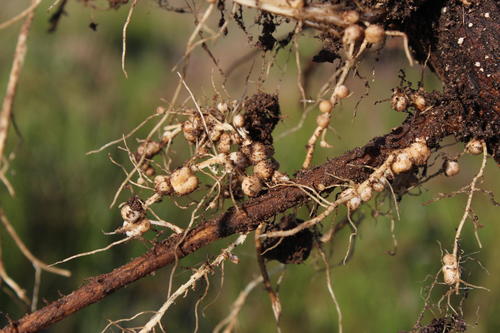
Organisms pictured · Representative pictures of the matched species, not figures from the paper.


Verbatim
e0“Th e co-aggregates of A. caulinodans and A. brasilense were found to be superior in positively augmenting the characters studied above.”
e1“seed vigour, plant height, plant dry weight, plant N content and endophytic colonization of A. caulinodans ORS-571 in rice var.ADT 43 grown under in vitro conditions”
The same questions in other papers
Azospirillum brasilense · growth · Oryza sativa (rice)Positive and negative results
9 papers in the same direction as this paper · 1 in the opposite direction
- no effect
- positive
- positive
7 papers more in this group
See all 11 papers →Azorhizobium caulinodans · growth · Oryza sativa (rice)Results agree
1 paper in the same direction as this paper
- positive
Claims are grouped by organism, treatment and what was measured or targeted. A paper counts as positive when any of its claims in the group is positive.