Abstract
The barley resistance gene mlo5 determines race non-specific resistance to the biotrophic powdery mildew pathogen Blumeria graminis f.sp. hordei. On the other hand, we have shown that barley lines that contain the mlo5 gene display enhanced susceptibility to the necrotrophic fungus Bipolaris sorokiniana (teleomorph: Cochliobolus sativus) and its toxic culture filtrate (Kumar et al. 2001). Enhanced susceptibility to necrotic disease symptoms was linked to increased accumulation of hydrogen peroxide (H2O2), a reactive oxygen intermediate. In addition, increased accumulation of transcripts of a barley pathogenesis-related gene (PR1- b) and slight increases in expression of two antioxidant genes, a glutathione S transferase and an ascorbate peroxidase occurred in association with enhanced cell/tissue death and H2O2 accumulation. These results might reflect an unsuccessful attempt by infected mlo5-barley to suppress necrotic disease symptoms and support the hypothesis that the barley Mlo gene product functions as a negative regulator of cell death. Therefore, a compromised Mlo pathway confers effective control of the biotrophic powdery mildew pathogen but not of the necrotroph B. sorokiniana, demonstrating the necessity of different host defense strategies in response to pathogens with different lifestyles (biotroph vs. necrotroph).
Abstract from the paper’s OpenAlex record, shown for indexing and research. Copyright remains with the authors or the publisher. Read at the source ↗
The text the model read, with the source record’s inline markup (italics, sub- and superscripts) rendered and its character entities decoded; quote offsets refer to the raw text.
Claims 10
Claim · model-written summary
Barley mlo5 confers race non-specific resistance to Blumeria graminis f.sp. hordei.
- Taxon
- barley
 Hordeum vulgaree0
- Interactor
- Blumeria graminis f.sp. hordeiBlumeria hordeie0pathogen
- Gene
- mlo5e0
- Outcome
- race non-specific resistancee0
Organisms pictured · Representative pictures of the matched species, not figures from the paper.

Verbatim
e0“The barley resistance gene mlo5 determines race non-specific resistance to the biotrophic powdery mildew pathogen Blumeria graminis f.sp. hordei.”
Claim · model-written summary
Barley lines containing mlo5 show enhanced susceptibility to Bipolaris sorokiniana.
- Taxon
- barleyHordeum vulgaree0
- Interactor
- Bipolaris sorokiniana
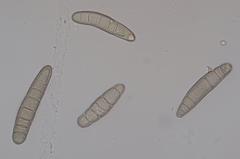 Bipolaris sorokinianae0pathogen
- Gene
- mlo5e0
- Outcome
- enhanced susceptibilitye0
- Direction
- enhancede0
Organisms pictured · Representative pictures of the matched species, not figures from the paper.
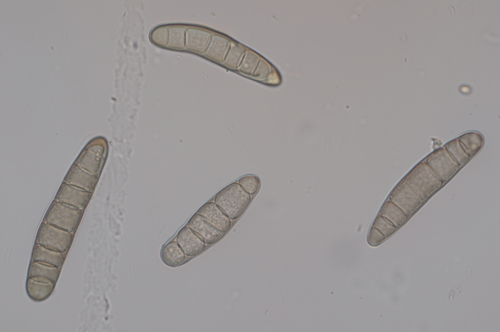
Verbatim
e0“barley lines that contain the mlo5 gene display enhanced susceptibility to the necrotrophic fungus Bipolaris sorokiniana (teleomorph: Cochliobolus sativus)”
Claim · model-written summary
Barley lines containing mlo5 show enhanced susceptibility to the fungal toxic culture filtrate.
- Taxon
- barleyHordeum vulgaree0
- Treatment
- toxic culture filtratee0
- Interactor
- Bipolaris sorokinianaBipolaris sorokinianae0pathogen
- Gene
- mlo5e0
- Outcome
- enhanced susceptibilitye0
- Direction
- enhancede0
Organisms pictured · Representative pictures of the matched species, not figures from the paper.
Verbatim
e0“barley lines that contain the mlo5 gene display enhanced susceptibility to the necrotrophic fungus Bipolaris sorokiniana (teleomorph: Cochliobolus sativus) and its toxic culture filtrate”
Claim · model-written summary
Enhanced necrotic symptoms were linked to greater hydrogen peroxide accumulation.
- Taxon
- barleyHordeum vulgaret0
- Interactor
- Bipolaris sorokinianaBipolaris sorokinianat0pathogen
- Compound
- hydrogen peroxide (H2O2)e0
- Outcome
- necrotic disease symptomse0
Not reportedDirection
Organisms pictured · Representative pictures of the matched species, not figures from the paper.
Verbatim
e0“Enhanced susceptibility to necrotic disease symptoms was linked to increased accumulation of hydrogen peroxide (H2O2), a reactive oxygen intermediate.”
t0“mlo5, a resistance gene effective against a biotrophic pathogen (Blumeria graminis fsp. hordei) confers enhanced susceptibility of barley to the necrotrophic fungus Bipolaris sorokiniana (teleomorph: Cochliobolus sativus)”
Claim · model-written summary
PR1- b transcript accumulation increased alongside cell death and hydrogen peroxide accumulation.
- Taxon
- barleyHordeum vulgaree0
- Gene
- PR1- be0
- Outcome
- increased accumulation of transcriptse0
- Direction
- increasede0
- Qualifier
- in association with enhanced cell/tissue death and H2O2 accumulatione0
Organisms pictured · Representative pictures of the matched species, not figures from the paper.
Verbatim
e0“increased accumulation of transcripts of a barley pathogenesis-related gene (PR1- b) and slight increases in expression of two antioxidant genes, a glutathione S transferase and an ascorbate peroxidase occurred in association with enhanced cell/tissue death and H2O2 accumulation.”
Claim · model-written summary
Expression of glutathione S transferase increased slightly in association with cell death and hydrogen peroxide accumulation.
- Taxon
- barleyHordeum vulgaret0
- Gene
- a glutathione S transferasee0
- Outcome
- expressione0
- Direction
- increasese0
- Qualifier
- in association with enhanced cell/tissue death and H2O2 accumulatione0
Organisms pictured · Representative pictures of the matched species, not figures from the paper.
Verbatim
e0“slight increases in expression of two antioxidant genes, a glutathione S transferase and an ascorbate peroxidase occurred in association with enhanced cell/tissue death and H2O2 accumulation.”
t0“mlo5, a resistance gene effective against a biotrophic pathogen (Blumeria graminis fsp. hordei) confers enhanced susceptibility of barley to the necrotrophic fungus Bipolaris sorokiniana (teleomorph: Cochliobolus sativus)”
Claim · model-written summary
Expression of ascorbate peroxidase increased slightly in association with cell death and hydrogen peroxide accumulation.
- Taxon
- barleyHordeum vulgaret0
- Gene
- an ascorbate peroxidasee0
- Outcome
- expressione0
- Direction
- increasese0
- Qualifier
- in association with enhanced cell/tissue death and H2O2 accumulatione0
Organisms pictured · Representative pictures of the matched species, not figures from the paper.
Verbatim
e0“slight increases in expression of two antioxidant genes, a glutathione S transferase and an ascorbate peroxidase occurred in association with enhanced cell/tissue death and H2O2 accumulation.”
t0“mlo5, a resistance gene effective against a biotrophic pathogen (Blumeria graminis fsp. hordei) confers enhanced susceptibility of barley to the necrotrophic fungus Bipolaris sorokiniana (teleomorph: Cochliobolus sativus)”
Claim · model-written summary
The authors hypothesize that the barley Mlo product negatively regulates cell death.
- Taxon
- barleyHordeum vulgaree0
- Gene
- Mloe0
- Outcome
- cell deathe0
- Qualifier
- negative regulatore0
Organisms pictured · Representative pictures of the matched species, not figures from the paper.
Verbatim
e0“support the hypothesis that the barley Mlo gene product functions as a negative regulator of cell death.”
Claim · model-written summary
The authors conclude that compromised Mlo control is effective against the biotrophic powdery mildew pathogen.
- Taxon
- barleyHordeum vulgaret0
- Interactor
- Blumeria graminis fsp. hordei
 Blumeria graminist0pathogen
- Gene
- Mloe0
- Outcome
- effective control of the biotrophic powdery mildew pathogene0
Organisms pictured · Representative pictures of the matched species, not figures from the paper.

Verbatim
e0“a compromised Mlo pathway confers effective control of the biotrophic powdery mildew pathogen”
t0“mlo5, a resistance gene effective against a biotrophic pathogen (Blumeria graminis fsp. hordei) confers enhanced susceptibility of barley to the necrotrophic fungus Bipolaris sorokiniana (teleomorph: Cochliobolus sativus)”
Claim · model-written summary
The authors conclude that compromised Mlo does not control B. sorokiniana.
- Taxon
- barleyHordeum vulgaret0
- Interactor
- B. sorokinianaBipolaris sorokinianae0pathogen
- Gene
- Mloe0
- Outcome
- not of the necrotroph B. sorokinianae0
Organisms pictured · Representative pictures of the matched species, not figures from the paper.
Verbatim
e0“a compromised Mlo pathway confers effective control of the biotrophic powdery mildew pathogen but not of the necrotroph B. sorokiniana”
t0“mlo5, a resistance gene effective against a biotrophic pathogen (Blumeria graminis fsp. hordei) confers enhanced susceptibility of barley to the necrotrophic fungus Bipolaris sorokiniana (teleomorph: Cochliobolus sativus)”