Abstract
The aim of the present work is to obtain effective rhizosphere fungal bio-control agents (bio-fungicides) that can antagonize Rhizoctonia solani; the fungal causal agent of stem canker disease of potato (Solanum tuberosum L.) and to improve the growth of the potato plant. A total of eleven different isolates of mold fungi were isolated from the rhizosphere soil of potato plants collected from three different potato cultivation areas in El-Monofia governorate-Egypt. Three isolates belong to the genus of Fusarium and three to Aspergillus, whereas the other five isolates belong to the genera of Penicillium, Absidia, Mucor, Gliocladium and Alternaria. In dual culture technique on Sabouraud dextrose agar media, three species (Gliocladium virens; Penicillium oxalicum and Trichoderma viride), completely surrounded the pathogen colonies and prevented their radial spread. In vivo results of antagonism in greenhouse were very promising as growth of potato plant was highly promoted by the three bio-agents compared with positive and non-infested control plants. Studies on soil population dynamics of selected Gliocladium virens showed a gradual decrease in CFU with increasing periods of incubation. Maize kernels and wheat bran were the best solid substrates for the mass production of Gliocladium virens conidia especially at 30% initial moisture level. The highest percentage of viable conidia of formulated Gliocladium virens was obtained on storage at 4˚C. Gliocladium virens showed promising results of antagonizing R. solani in vitro and improving potato growth under greenhouse conditions, subsequently, could be mass produced and formulated to be used as an effective biofungicide.
Abstract from the paper’s OpenAlex record, shown for indexing and research. Copyright remains with the authors or the publisher. Read at the source ↗
The text the model read, with the source record’s inline markup (italics, sub- and superscripts) rendered and its character entities decoded; quote offsets refer to the raw text.
Claims 11
Claim · model-written summary
Gliocladium virens surrounded pathogen colonies and prevented radial spread in dual culture.
- Taxon
- potato
 Solanum tuberosume1
- Treatment
- Gliocladium virense0
- Interactor
- Rhizoctonia solani
 Rhizoctonia solanie1pathogen
- Second interactor
- Gliocladium virensTrichoderma virense0biocontrol_agent
- Outcome
- prevented their radial spreade0
Organisms pictured · Representative pictures of the matched species, not figures from the paper.


Verbatim
e0“In dual culture technique on Sabouraud dextrose agar media, three species (Gliocladium virens; Penicillium oxalicum and Trichoderma viride), completely surrounded the pathogen colonies and prevented their radial spread.”
e1“Rhizoctonia solani; the fungal causal agent of stem canker disease of potato (Solanum tuberosum L.)”
Claim · model-written summary
Penicillium oxalicum surrounded pathogen colonies and prevented radial spread in dual culture.
- Taxon
- potatoSolanum tuberosume1
- Treatment
- Penicillium oxalicume0
- Interactor
- Rhizoctonia solaniRhizoctonia solanie1pathogen
- Second interactor
- Penicillium oxalicum
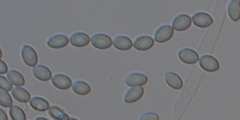 Penicillium oxalicume0biocontrol_agent
- Outcome
- prevented their radial spreade0
Organisms pictured · Representative pictures of the matched species, not figures from the paper.

Verbatim
e0“In dual culture technique on Sabouraud dextrose agar media, three species (Gliocladium virens; Penicillium oxalicum and Trichoderma viride), completely surrounded the pathogen colonies and prevented their radial spread.”
e1“Rhizoctonia solani; the fungal causal agent of stem canker disease of potato (Solanum tuberosum L.)”
Claim · model-written summary
Trichoderma viride surrounded pathogen colonies and prevented radial spread in dual culture.
- Taxon
- potatoSolanum tuberosume1
- Treatment
- Trichoderma viridee0
- Interactor
- Rhizoctonia solaniRhizoctonia solanie1pathogen
- Second interactor
- Trichoderma viride
 Trichoderma viridee0biocontrol_agent
- Outcome
- prevented their radial spreade0
Organisms pictured · Representative pictures of the matched species, not figures from the paper.

Verbatim
e0“In dual culture technique on Sabouraud dextrose agar media, three species (Gliocladium virens; Penicillium oxalicum and Trichoderma viride), completely surrounded the pathogen colonies and prevented their radial spread.”
e1“Rhizoctonia solani; the fungal causal agent of stem canker disease of potato (Solanum tuberosum L.)”
Claim · model-written summary
Gliocladium virens strongly promoted potato growth relative to controls in the greenhouse.
- Taxon
- potatoSolanum tuberosume0
- Treatment
- Gliocladium virense1
- Interactor
- Gliocladium virensTrichoderma virense1biocontrol_agent
- Outcome
- growth of potato plante0
- Direction
- highly promotede0
- Comparator
- positive and non-infested control plantse0
- Setting
- greenhousee2
Organisms pictured · Representative pictures of the matched species, not figures from the paper.
Verbatim
e0“growth of potato plant was highly promoted by the three bio-agents compared with positive and non-infested control plants.”
e1“Gliocladium virens; Penicillium oxalicum and Trichoderma viride”
e2“under greenhouse conditions”
Claim · model-written summary
Penicillium oxalicum strongly promoted potato growth relative to controls in the greenhouse.
- Taxon
- potatoSolanum tuberosume0
- Treatment
- Penicillium oxalicume1
- Interactor
- Penicillium oxalicumPenicillium oxalicume1biocontrol_agent
- Outcome
- growth of potato plante0
- Direction
- highly promotede0
- Comparator
- positive and non-infested control plantse0
Organisms pictured · Representative pictures of the matched species, not figures from the paper.
Verbatim
e0“growth of potato plant was highly promoted by the three bio-agents compared with positive and non-infested control plants.”
e1“Gliocladium virens; Penicillium oxalicum and Trichoderma viride”
Claim · model-written summary
Trichoderma viride strongly promoted potato growth relative to controls in the greenhouse.
- Taxon
- potatoSolanum tuberosume0
- Treatment
- Trichoderma viridee1
- Interactor
- Trichoderma virideTrichoderma viridee1biocontrol_agent
- Outcome
- growth of potato plante0
- Direction
- highly promotede0
- Comparator
- positive and non-infested control plantse0
Organisms pictured · Representative pictures of the matched species, not figures from the paper.
Verbatim
e0“growth of potato plant was highly promoted by the three bio-agents compared with positive and non-infested control plants.”
e1“Gliocladium virens; Penicillium oxalicum and Trichoderma viride”
Claim · model-written summary
Gliocladium virens CFU declined gradually as incubation time increased.
- Taxon
- potatoSolanum tuberosume1
- Treatment
- increasing periods of incubatione0
- Interactor
- Gliocladium virensTrichoderma virense0biocontrol_agent
- Outcome
- Gliocladium virens showed a gradual decrease in CFUe0
- Direction
- gradual decreasee0
Organisms pictured · Representative pictures of the matched species, not figures from the paper.
Verbatim
e0“soil population dynamics of selected Gliocladium virens showed a gradual decrease in CFU with increasing periods of incubation”
e1“potato plants”
Claim · model-written summary
Maize kernels were a best solid substrate for producing Gliocladium virens conidia, especially at 30% initial moisture.
- Taxon
- potatoSolanum tuberosume1
- Material
- Maize kernelse0
- Interactor
- Gliocladium virensTrichoderma virense0biocontrol_agent
- Outcome
- mass production of Gliocladium virens conidiae0
- Direction
- beste0
- Qualifier
- 30% initial moisture levele0
Organisms pictured · Representative pictures of the matched species, not figures from the paper.
Verbatim
e0“Maize kernels and wheat bran were the best solid substrates for the mass production of Gliocladium virens conidia especially at 30% initial moisture level.”
e1“potato plants”
Claim · model-written summary
Wheat bran was a best solid substrate for producing Gliocladium virens conidia, especially at 30% initial moisture.
- Taxon
- potatoSolanum tuberosume1
- Material
- wheat brane0
- Interactor
- Gliocladium virensTrichoderma virense0biocontrol_agent
- Outcome
- mass production of Gliocladium virens conidiae0
- Direction
- beste0
- Qualifier
- 30% initial moisture levele0
Organisms pictured · Representative pictures of the matched species, not figures from the paper.
Verbatim
e0“Maize kernels and wheat bran were the best solid substrates for the mass production of Gliocladium virens conidia especially at 30% initial moisture level.”
e1“potato plants”
Claim · model-written summary
Storage at 4˚C yielded the highest viable conidia percentage for formulated Gliocladium virens.
- Taxon
- potatoSolanum tuberosume1
- Treatment
- storage at 4˚Ce0
- Interactor
- Gliocladium virensTrichoderma virense0biocontrol_agent
- Outcome
- percentage of viable conidia of formulated Gliocladium virense0
- Direction
- higheste0
Organisms pictured · Representative pictures of the matched species, not figures from the paper.
Verbatim
e0“The highest percentage of viable conidia of formulated Gliocladium virens was obtained on storage at 4˚C.”
e1“potato plants”
Claim · model-written summary
The authors suggest mass producing and formulating Gliocladium virens as a biofungicide.
- Taxon
- potatoSolanum tuberosume0
- Interactor
- R. solaniRhizoctonia solanie0pathogen
- Second interactor
- Gliocladium virensTrichoderma virense0biocontrol_agent
- Outcome
- mass produced and formulated to be used as an effective biofungicidee0
Organisms pictured · Representative pictures of the matched species, not figures from the paper.
Verbatim
e0“Gliocladium virens showed promising results of antagonizing R. solani in vitro and improving potato growth under greenhouse conditions, subsequently, could be mass produced and formulated to be used as an effective biofungicide.”
The same questions in other papers
Trichoderma viride · growth · Solanum tuberosum (potato)Results differ
5 papers in the same direction as this paper · 2 in the opposite direction
- negative
- negative
- positive
4 papers more in this group
See all 8 papers →Claims are grouped by organism, treatment and what was measured or targeted. A paper counts as positive when any of its claims in the group is positive.