Abstract
Three weed species viz., Asphodelus tenuifolius Cav., Euphorbia hirta L., and Fumaria indica (Haussk.) Pugsley were used in the form of powder with different ratios/quantity as treatments of 10, 25, 50 and 100g and mixed with uniform amount of soil (500g). Wheat seeds were grown and it was observed that 10 and 25g powder/500g soil of Asphodelus tenuifolius considerably increased the germination and rate of germination of wheat, while the powder of other two species reduced this phenomenon in the test species at the concentration of 25, 50 and 100g/500g soil. All the weeds powder treatments showed remarkable varied effects on the plant height and their weights (fresh, dry shoot and root weight) of the test plant. The powder of Fumaria indica and Asphodelus tenuifolius significantly reduced, while the Euphorbia hirta showed non-significant effects on the wheat plant height. Soil containing Euphorbia hirta powder showed the significant reduction in the fresh and dry shoot weight of wheat plant.
Abstract from the paper’s OpenAlex record, shown for indexing and research. Copyright remains with the authors or the publisher. Read at the source ↗
The text the model read, with the source record’s inline markup (italics, sub- and superscripts) rendered and its character entities decoded; quote offsets refer to the raw text.
Claims 7
Claim · model-written summary
Asphodelus tenuifolius powder at 10 and 25 g per 500 g soil considerably increased wheat germination and germination rate.
- Taxon
- wheat
 Triticum aestivume0
- Treatment
- 10 and 25g powder/500g soil of Asphodelus tenuifoliuse0
- Interactor
- Asphodelus tenuifolius
 Asphodelus tenuifoliuse0weed
- Outcome
- germination and rate of germinatione0
- Direction
- increasede0
Not reportedComparator
Organisms pictured · Representative pictures of the matched species, not figures from the paper.


Verbatim
e0“10 and 25g powder/500g soil of Asphodelus tenuifolius considerably increased the germination and rate of germination of wheat”
Claim · model-written summary
Powders of the other two weed species (Euphorbia hirta and Fumaria indica) at 25, 50 and 100 g per 500 g soil reduced wheat germination and germination rate.
- Taxon
- wheatTriticum aestivume0
- Treatment
- powder of other two speciese0
- Outcome
- germination and rate of germinatione0
- Direction
- reducede0
- Qualifier
- at the concentration of 25, 50 and 100g/500g soile0
Not reportedComparator
Organisms pictured · Representative pictures of the matched species, not figures from the paper.
Verbatim
e0“10 and 25g powder/500g soil of Asphodelus tenuifolius considerably increased the germination and rate of germination of wheat, while the powder of other two species reduced this phenomenon in the test species at the concentration of 25, 50 and 100g/500g soil”
Claim · model-written summary
All weed powder treatments had varied effects on wheat plant height and fresh and dry shoot and root weights.
- Taxon
- WheatTriticum aestivume1
- Treatment
- All the weeds powder treatmentse0
- Outcome
- plant height and their weights (fresh, dry shoot and root weight)e0
Not reportedComparatorDirection
Organisms pictured · Representative pictures of the matched species, not figures from the paper.
Verbatim
e0“All the weeds powder treatments showed remarkable varied effects on the plant height and their weights (fresh, dry shoot and root weight) of the test plant”
e1“Wheat seeds were grown”
Claim · model-written summary
Fumaria indica powder significantly reduced wheat plant height.
- Taxon
- wheatTriticum aestivume0
- Treatment
- powder of Fumaria indicae0
- Interactor
- Fumaria indica
 Fumaria indicae0weed
- Outcome
- plant heighte0
- Direction
- reducede0
Not reportedComparator
Organisms pictured · Representative pictures of the matched species, not figures from the paper.
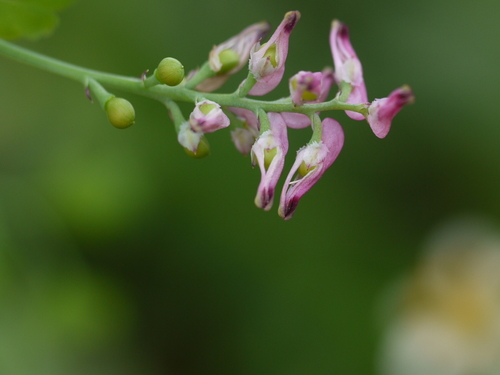
Verbatim
e0“The powder of Fumaria indica and Asphodelus tenuifolius significantly reduced, while the Euphorbia hirta showed non-significant effects on the wheat plant height”
Claim · model-written summary
Asphodelus tenuifolius powder significantly reduced wheat plant height.
- Taxon
- wheatTriticum aestivume0
- Treatment
- Asphodelus tenuifoliuse0
- Interactor
- Asphodelus tenuifoliusAsphodelus tenuifoliuse0weed
- Outcome
- plant heighte0
- Direction
- reducede0
Not reportedComparator
Organisms pictured · Representative pictures of the matched species, not figures from the paper.
Verbatim
e0“The powder of Fumaria indica and Asphodelus tenuifolius significantly reduced, while the Euphorbia hirta showed non-significant effects on the wheat plant height”
Claim · model-written summary
Euphorbia hirta powder had non-significant effects on wheat plant height.
- Taxon
- wheatTriticum aestivume0
- Treatment
- Euphorbia hirtae0
- Interactor
- Euphorbia hirta
 Euphorbia hirtae0weed
- Outcome
- plant heighte0
- Direction
- non-significant effectse0
Not reportedComparator
Organisms pictured · Representative pictures of the matched species, not figures from the paper.

Verbatim
e0“The powder of Fumaria indica and Asphodelus tenuifolius significantly reduced, while the Euphorbia hirta showed non-significant effects on the wheat plant height”
Claim · model-written summary
Soil containing Euphorbia hirta powder significantly reduced fresh and dry shoot weight of wheat.
- Taxon
- wheatTriticum aestivume0
- Treatment
- Soil containing Euphorbia hirta powdere0
- Interactor
- Euphorbia hirtaEuphorbia hirtae0weed
- Outcome
- fresh and dry shoot weighte0
- Direction
- reductione0
Not reportedComparator
Organisms pictured · Representative pictures of the matched species, not figures from the paper.
Verbatim
e0“Soil containing Euphorbia hirta powder showed the significant reduction in the fresh and dry shoot weight of wheat plant”
The same questions in other papers
Euphorbia hirta · growth · Triticum aestivum (wheat)Positive and negative results
1 in the opposite direction
- positive
Fumaria indica · growth · Triticum aestivum (wheat)Results agree
1 paper in the same direction as this paper
- negative
botanical · growth · Triticum aestivum (wheat)Positive and negative results
205 papers in the same direction as this paper · 228 in the opposite direction · 1 reporting no difference from an alternative
- negative
- positive
- positive
431 papers more in this group
See all 435 papers →Claims are grouped by organism, treatment and what was measured or targeted. A paper counts as positive when any of its claims in the group is positive.