Abstract
The comparative allelopathic potential of Fumaria indica L. and Polygonum plebejum L. leaf, stem, root, fruit and whole plant aqueous extracts was evaluated on germination and seedling growth of Triticum aestivum L., Cicer arietinum L., Lens culinaris Medic. and Brasica napus L. in laboratory condition. Germination and seedling growth of T. aestivum, C. arietinum, L. culinaris was significantly reduced by the leaf extract of F. indica and P. plebejum. But germination and seedling growth of Brasica napus was completely inhibited by the leaf extract of F. indica. The degree of sensitvity of different crops in respect of germination was canola > chickpea > lentil > wheat. The degree of germination inhibition of different F. indica and P. plebejum plant parts can be classified in order of leaf extract > root extract > fruit extract > stem and whole plant extract in wheat; leaf extract > root extract and stem extract > fruit extract and whole plant extract in chickpea; leaf extract > root extract > stem extract > fruit and whole plant extract in lentil and leaf extract > root extract and stem extract > fruit extract and whole plant extract in canola. Inhibitorier effect was observed with F. indica than P. plebejum. It was due to more phenolics in F. indica leaves (13091.12 mg kg -1 ) as compared to those of P. plebejum (8131.49 mg kg -1 ). Chromatographic analysis reveled presence of six phytotoxins, viz., ferulic acid, m-coumaric, syringic acid, caffeic acid, gallic acid and 4Hydroxy-3-Methoxybenzoic acid in aqueous leaf (1:10) fraction of F. indica. Ferulic acid, syringic acid, caffeic acid and vanillic acid were recorded in aqueous leaf extract of P. plebejum.
Abstract from the paper’s OpenAlex record, shown for indexing and research. Copyright remains with the authors or the publisher. Read at the source ↗
The text the model read, with the source record’s inline markup (italics, sub- and superscripts) rendered and its character entities decoded; quote offsets refer to the raw text.
Claims 16
Claim · model-written summary
Fumaria leaf extract significantly reduced wheat germination and seedling growth.
- Taxon
- Triticum aestivum L.
 Triticum aestivume1
- Treatment
- leaf extract of F. indicae0
- Interactor
- F. indica
 Fumaria indicae0weed
- Outcome
- Germination and seedling growthe0
- Direction
- reducede0
Not reportedComparator
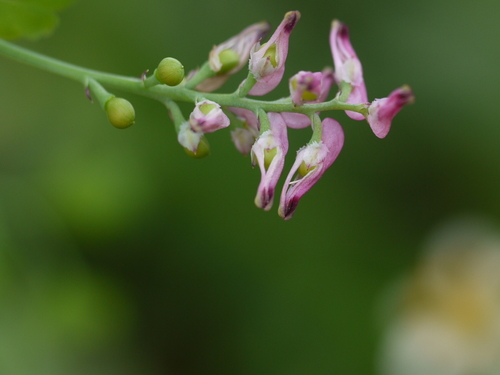
Organisms pictured · Representative pictures of the matched species, not figures from the paper.

Verbatim
e0“Germination and seedling growth of T. aestivum, C. arietinum, L. culinaris was significantly reduced by the leaf extract of F. indica and P. plebejum”
e1“Triticum aestivum L.”
Claim · model-written summary
Polygonum leaf extract significantly reduced wheat germination and seedling growth.
- Taxon
- Triticum aestivum L.Triticum aestivume1
- Treatment
- leaf extract of F. indica and P. plebejume0
- Interactor
- P. plebejume0weed
- Outcome
- Germination and seedling growthe0
- Direction
- reducede0
Not reportedComparator
Organisms pictured · Representative pictures of the matched species, not figures from the paper.
Verbatim
e0“Germination and seedling growth of T. aestivum, C. arietinum, L. culinaris was significantly reduced by the leaf extract of F. indica and P. plebejum”
e1“Triticum aestivum L.”
Claim · model-written summary
Fumaria leaf extract significantly reduced chickpea germination and seedling growth.
- Taxon
- Cicer arietinum L.
 Cicer arietinume1
- Treatment
- leaf extract of F. indicae0
- Interactor
- F. indicaFumaria indicae0weed
- Outcome
- Germination and seedling growthe0
- Direction
- reducede0
Not reportedComparator
Organisms pictured · Representative pictures of the matched species, not figures from the paper.

Verbatim
e0“Germination and seedling growth of T. aestivum, C. arietinum, L. culinaris was significantly reduced by the leaf extract of F. indica and P. plebejum”
e1“Cicer arietinum L.”
Claim · model-written summary
Polygonum leaf extract significantly reduced chickpea germination and seedling growth.
- Taxon
- Cicer arietinum L.Cicer arietinume1
- Treatment
- leaf extract of F. indica and P. plebejume0
- Interactor
- P. plebejume0weed
- Outcome
- Germination and seedling growthe0
- Direction
- reducede0
Not reportedComparator
Organisms pictured · Representative pictures of the matched species, not figures from the paper.
Verbatim
e0“Germination and seedling growth of T. aestivum, C. arietinum, L. culinaris was significantly reduced by the leaf extract of F. indica and P. plebejum”
e1“Cicer arietinum L.”
Claim · model-written summary
Fumaria leaf extract significantly reduced lentil germination and seedling growth.
- Taxon
- Lens culinaris Medic.
 Lens culinarise1
- Treatment
- leaf extract of F. indicae0
- Interactor
- F. indicaFumaria indicae0weed
- Outcome
- Germination and seedling growthe0
- Direction
- reducede0
Not reportedComparator
Organisms pictured · Representative pictures of the matched species, not figures from the paper.

Verbatim
e0“Germination and seedling growth of T. aestivum, C. arietinum, L. culinaris was significantly reduced by the leaf extract of F. indica and P. plebejum”
e1“Lens culinaris Medic.”
Claim · model-written summary
Polygonum leaf extract significantly reduced lentil germination and seedling growth.
- Taxon
- Lens culinaris Medic.Lens culinarise1
- Treatment
- leaf extract of F. indica and P. plebejume0
- Interactor
- P. plebejume0weed
- Outcome
- Germination and seedling growthe0
- Direction
- reducede0
Not reportedComparator
Organisms pictured · Representative pictures of the matched species, not figures from the paper.
Verbatim
e0“Germination and seedling growth of T. aestivum, C. arietinum, L. culinaris was significantly reduced by the leaf extract of F. indica and P. plebejum”
e1“Lens culinaris Medic.”
Claim · model-written summary
Fumaria leaf extract completely inhibited canola germination and seedling growth.
- Taxon
- Brasica napuse0
- Treatment
- leaf extract of F. indicae0
- Interactor
- F. indicaFumaria indicae0weed
- Outcome
- germination and seedling growthe0
- Direction
- completely inhibitede0
Not reportedComparator
Organisms pictured · Representative pictures of the matched species, not figures from the paper.
Verbatim
e0“germination and seedling growth of Brasica napus was completely inhibited by the leaf extract of F. indica”
Claim · model-written summary
Crop germination sensitivity ranked canola above chickpea, lentil and wheat.
Verbatim
e0“The degree of sensitvity of different crops in respect of germination was canola > chickpea > lentil > wheat”
e1“Triticum aestivum L., Cicer arietinum L., Lens culinaris Medic. and Brasica napus L.”
Claim · model-written summary
Wheat germination inhibition ranked leaf, root, fruit, then stem and whole plant extracts.
- Taxon
- Triticum aestivum L.Triticum aestivume1
- Outcome
- leaf extract > root extract > fruit extract > stem and whole plant extract in wheate0
Organisms pictured · Representative pictures of the matched species, not figures from the paper.
Verbatim
e0“leaf extract > root extract > fruit extract > stem and whole plant extract in wheat”
e1“Triticum aestivum L.”
Claim · model-written summary
Chickpea germination inhibition ranked leaf, root and stem, then fruit and whole plant extracts.
- Taxon
- Cicer arietinum L.Cicer arietinume1
- Outcome
- leaf extract > root extract and stem extract > fruit extract and whole plant extract in chickpeae0
Organisms pictured · Representative pictures of the matched species, not figures from the paper.
Verbatim
e0“leaf extract > root extract and stem extract > fruit extract and whole plant extract in chickpea”
e1“Cicer arietinum L.”
Claim · model-written summary
Lentil germination inhibition ranked leaf, root, stem, then fruit and whole plant extracts.
- Taxon
- Lens culinaris Medic.Lens culinarise1
- Outcome
- leaf extract > root extract > stem extract > fruit and whole plant extract in lentile0
Organisms pictured · Representative pictures of the matched species, not figures from the paper.
Verbatim
e0“leaf extract > root extract > stem extract > fruit and whole plant extract in lentil”
e1“Lens culinaris Medic.”
Claim · model-written summary
Canola germination inhibition ranked leaf, root and stem, then fruit and whole plant extracts.
Verbatim
e0“leaf extract > root extract and stem extract > fruit extract and whole plant extract in canola”
e1“Brasica napus L.”
Claim · model-written summary
Fumaria had stronger inhibitory effects than Polygonum.
- Taxon
- F. indicaFumaria indicae0
- Outcome
- Inhibitorier effecte0
- Comparator
- P. plebejume0
Organisms pictured · Representative pictures of the matched species, not figures from the paper.
Verbatim
e0“Inhibitorier effect was observed with F. indica than P. plebejum”
Claim · model-written summary
Fumaria leaves contained more phenolics than Polygonum leaves.
- Taxon
- F. indicaFumaria indicae0
- Outcome
- phenolicse0
- Direction
- moree0
- Value
- 13091.12 mg kg -1e0
- Qualifier
- 8131.49 mg kg -1e0
- Comparator
- P. plebejume0
Organisms pictured · Representative pictures of the matched species, not figures from the paper.
Verbatim
e0“more phenolics in F. indica leaves (13091.12 mg kg -1 ) as compared to those of P. plebejum (8131.49 mg kg -1 )”
Claim · model-written summary
Fumaria leaf fraction contained six listed phytotoxins.
- Taxon
- F. indicaFumaria indicae0
- Organ / stage
- leafe0
- Outcome
- presence of six phytotoxinse0
- Value
- six phytotoxinse0
- Qualifier
- ferulic acid, m-coumaric, syringic acid, caffeic acid, gallic acid and 4Hydroxy-3-Methoxybenzoic acide0
Organisms pictured · Representative pictures of the matched species, not figures from the paper.
Verbatim
e0“presence of six phytotoxins, viz., ferulic acid, m-coumaric, syringic acid, caffeic acid, gallic acid and 4Hydroxy-3-Methoxybenzoic acid in aqueous leaf (1:10) fraction of F. indica”
Claim · model-written summary
Polygonum leaf extract contained ferulic, syringic, caffeic and vanillic acids.
Verbatim
e0“Ferulic acid, syringic acid, caffeic acid and vanillic acid were recorded in aqueous leaf extract of P. plebejum”
The same questions in other papers
Fumaria indica · growth · Triticum aestivum (wheat)Results agree
1 paper in the same direction as this paper
- negative
botanical · growth · Lens culinaris (lentil)Positive and negative results
13 papers in the same direction as this paper · 7 in the opposite direction
- negative
- positive
- positive
17 papers more in this group
See all 21 papers →botanical · growth · Cicer arietinum (chickpea)Positive and negative results
27 papers in the same direction as this paper · 44 in the opposite direction
- positive
- negative
- negative
68 papers more in this group
See all 72 papers →botanical · growth · Triticum aestivum (wheat)Positive and negative results
228 papers in the same direction as this paper · 206 in the opposite direction
- positive
- negative
- positive
431 papers more in this group
See all 435 papers →Claims are grouped by organism, treatment and what was measured or targeted. A paper counts as positive when any of its claims in the group is positive.