Abstract
Chrysanthemoides monilifera subsp. monilifera (boneseed), a weed of national significance in Australia, threatens indigenous species and crop production through allelopathy. We aimed to identify phenolic compounds produced by boneseed and to assess their phytotoxicity on native species. Phenolic compounds in water and methanol extracts, and in decomposed litter-mediated soil leachate were identified using HPLC, and phytotoxicity of identified phenolics was assessed (repeatedly) through a standard germination bioassay on native Isotoma axillaris. The impact of boneseed litter on native Xerochrysum bracteatum was evaluated using field soil in a greenhouse. Collectively, we found the highest quantity of phenolic compounds in boneseed litter followed by leaf, root and stem. Quantity varied with extraction media. The rank of phenolics concentration in boneseed was in the order of ferulic acid > phloridzin > catechin > p-coumaric acid and they inhibited germination of I. axillaris with the rank of ferulic acid > catechin > phloridzin > p-coumaric acid. Synergistic effects were more severe compared to individual phenolics. The litter-mediated soil leachate (collected after15 days) exhibited strong phytotoxicity to I. axillaris despite the level of phenolic compounds in the decomposed leachate being decreased significantly compared with their initial level. This suggests the presence of other unidentified allelochemicals that individually or synergistically contributed to the phytotoxicity. Further, the dose response phytotoxic impacts exhibited by the boneseed litter-mediated soil to native X. bracteatum in a more naturalistic greenhouse experiment might ensure the potential allelopathy of other chemical compounds in the boneseed invasion. The reduction of leaf relative water content and chlorophyll level in X. bracteatum suggest possible mechanisms underpinning plant growth inhibition caused by boneseed litter allelopathy. The presence of a substantial quantity of free proline in the target species also suggests that the plant was in a stressed condition due to litter allelopathy. These findings are important for better understanding the invasive potential of boneseed and in devising control strategies.
Abstract from the paper’s OpenAlex record; open copy licensed cc-by. Read at the source ↗
The text the model read, with the source record’s inline markup (italics, sub- and superscripts) rendered and its character entities decoded; quote offsets refer to the raw text.
Claims 10
Claim · model-written summary
Boneseed litter had the highest phenolic quantity, followed by leaf, root and stem.
Verbatim
e0“Collectively, we found the highest quantity of phenolic compounds in boneseed litter followed by leaf, root and stem. Quantity varied with extraction media.”
Claim · model-written summary
The quantity of boneseed phenolics varied with extraction medium.
Not reportedDirection
Verbatim
e0“Collectively, we found the highest quantity of phenolic compounds in boneseed litter followed by leaf, root and stem. Quantity varied with extraction media.”
Claim · model-written summary
Boneseed phenolic concentration ranked ferulic acid above phloridzin, catechin and p-coumaric acid.
Verbatim
e0“The rank of phenolics concentration in boneseed was in the order of ferulic acid > phloridzin > catechin > p-coumaric acid and they inhibited germination of I. axillaris with the rank of ferulic acid > catechin > phloridzin > p-coumaric acid.”
Claim · model-written summary
Boneseed phenolics inhibited Isotoma germination, ranked ferulic acid, catechin, phloridzin and p-coumaric acid.
- Taxon
- I. axillaris
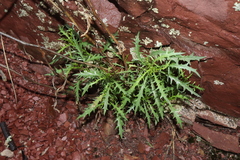 Lithotoma axillarise0
- Treatment
- phenolicse0
- Interactor
- boneseede0weed
- Outcome
- germination of I. axillarise0
- Direction
- inhibitede0
- Qualifier
- ferulic acid > catechin > phloridzin > p-coumaric acide0
Not reportedComparator
Organisms pictured · Representative pictures of the matched species, not figures from the paper.
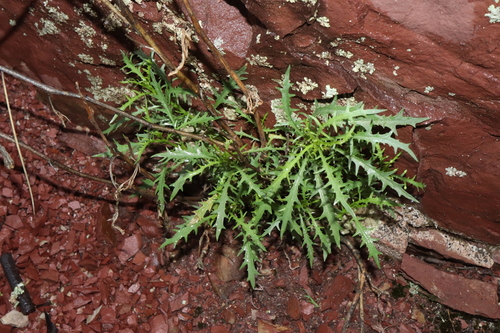
Verbatim
e0“The rank of phenolics concentration in boneseed was in the order of ferulic acid > phloridzin > catechin > p-coumaric acid and they inhibited germination of I. axillaris with the rank of ferulic acid > catechin > phloridzin > p-coumaric acid.”
Claim · model-written summary
Combined phenolics had more severe phytotoxic effects than individual phenolics.
- Taxon
- Isotoma axillarisLithotoma axillarist0
- Treatment
- Synergistic effectse0
- Outcome
- effectse0
- Direction
- more severee0
- Comparator
- individual phenolicse0
Organisms pictured · Representative pictures of the matched species, not figures from the paper.
Verbatim
e0“Synergistic effects were more severe compared to individual phenolics.”
t0“native Isotoma axillaris”
Claim · model-written summary
Boneseed litter-mediated leachate showed strong phytotoxicity to Isotoma after 15 days.
- Taxon
- I. axillarisLithotoma axillarise0
- Treatment
- litter-mediated soil leachatee0
- Interactor
- littere0weed
- Outcome
- phytotoxicity to I. axillarise0
- Qualifier
- collected after15 dayse0
Not reportedComparatorDirection
Organisms pictured · Representative pictures of the matched species, not figures from the paper.
Verbatim
e0“The litter-mediated soil leachate (collected after15 days) exhibited strong phytotoxicity to I. axillaris despite the level of phenolic compounds in the decomposed leachate being decreased significantly compared with their initial level.”
Claim · model-written summary
Phenolic levels in decomposed leachate decreased significantly from initial levels.
- Taxon
- Chrysanthemoides monilifera subsp. moniliferaChrysanthemoides monilifera subsp. moniliferat0
- Outcome
- level of phenolic compounds in the decomposed leachatee0
- Direction
- decreasede0
- Comparator
- their initial levele0
Verbatim
e0“The litter-mediated soil leachate (collected after15 days) exhibited strong phytotoxicity to I. axillaris despite the level of phenolic compounds in the decomposed leachate being decreased significantly compared with their initial level.”
t0“Chrysanthemoides monilifera subsp. monilifera”
Claim · model-written summary
Boneseed litter-mediated soil had dose-responsive phytotoxic effects on Xerochrysum in a greenhouse.
- Taxon
- X. bracteatum
 Xerochrysum bracteatume0
- Treatment
- boneseed litter-mediated soile0
- Interactor
- boneseede0weed
- Outcome
- phytotoxic impactse0
- Setting
- greenhousee0
Not reportedComparatorDirection
Organisms pictured · Representative pictures of the matched species, not figures from the paper.

Verbatim
e0“Further, the dose response phytotoxic impacts exhibited by the boneseed litter-mediated soil to native X. bracteatum in a more naturalistic greenhouse experiment might ensure the potential allelopathy of other chemical compounds in the boneseed invasion.”
Claim · model-written summary
Boneseed litter reduced leaf relative water content and chlorophyll in Xerochrysum.
- Taxon
- X. bracteatumXerochrysum bracteatume0
- Treatment
- boneseed litter allelopathye0
- Interactor
- boneseede0weed
- Outcome
- leaf relative water content and chlorophyll levele0
- Direction
- reductione0
Not reportedComparator
Organisms pictured · Representative pictures of the matched species, not figures from the paper.
Verbatim
e0“The reduction of leaf relative water content and chlorophyll level in X. bracteatum suggest possible mechanisms underpinning plant growth inhibition caused by boneseed litter allelopathy.”
Claim · model-written summary
Substantial free proline in the target plant suggested stress from litter allelopathy.
- Taxon
- Xerochrysum bracteatumXerochrysum bracteatume1
- Interactor
- Chrysanthemoides monilifera subsp. moniliferaChrysanthemoides monilifera subsp. moniliferat0weed
- Outcome
- substantial quantity of free prolinee0
Organisms pictured · Representative pictures of the matched species, not figures from the paper.
Verbatim
e0“The presence of a substantial quantity of free proline in the target species also suggests that the plant was in a stressed condition due to litter allelopathy.”
e1“native Xerochrysum bracteatum”
t0“Chrysanthemoides monilifera subsp. monilifera (Boneseed)”