Abstract
Efficacy of some new fungicides namely trifloxystrobin + tebuconazole (Nativo 75 WG), tebuconazole (Folicur 25 EC), propiconazole (Tilt 25 EC), pencycuron (Monceren 250SC) and thifluzamide (Spencer 24SC) was evaluated against economically important rice diseases namely sheath blight (Rhizoctonia solani) and brown spot (Drechslera oryzae) under laboratory and field conditions under artificial inoculation conditions during kharif seasons 2008, 2009 and 2010. In addition, their efficacy was also tested against glume discoloration. Trifloxystrobin + tebuconazole @ 0.04% was found to be the most effective fungicide against these diseases, where the lowest mean disease severity was 5.2% for sheath blight, 5.1% for brown spot and 4.4% for glume discoloration as compared to 45.5%, 46.5% and 13.6% in untreated inoculated check plots of respective diseases. Next best fungicide observed was tebuconazole (Folicur 25 EC) @ 0.1%, effective against sheath blight (7.5%), brown spot (7.3%) and glume discoloration (4.2%). It was followed by propiconazole (Tilt 25 EC) @ 0.1%. Fungicide pencycuron (Monceren 250SC) was equally effective against sheath blight, but least effective against brown spot under laboratory as well as field conditions. Fungicides viz. trifloxystrobin + tebuconazole, tebuconazole, and propiconazole showed higher level of efficacy against R. solani and D. oryzae pathogens of above mentioned diseases under laboratory conditions also, however, thifluzamide (Spencer 24SC) was least effective against all the diseases under the both conditions.
Abstract from the paper’s OpenAlex record, shown for indexing and research. Copyright remains with the authors or the publisher. Read at the source ↗
The text the model read, with the source record’s inline markup (italics, sub- and superscripts) rendered and its character entities decoded; quote offsets refer to the raw text.
Claims 12
Claim · model-written summary
Trifloxystrobin + tebuconazole gave the lowest sheath blight severity (5.2%) against 45.5% in untreated inoculated checks.
- Taxon
- rice
 Oryza sativae2
- Treatment
- Trifloxystrobin + tebuconazole @ 0.04%e1
- Interactor
- Rhizoctonia solani
 Rhizoctonia solanie2pathogen
- Outcome
- mean disease severitye1
- Direction
- loweste1
- Value
- 5.2%e1
- Qualifier
- 45.5%e1
- Comparator
- untreated inoculated check plotse1
Organisms pictured · Representative pictures of the matched species, not figures from the paper.


Verbatim
e1“Trifloxystrobin + tebuconazole @ 0.04% was found to be the most effective fungicide against these diseases, where the lowest mean disease severity was 5.2% for sheath blight, 5.1% for brown spot and 4.4% for glume discoloration as compared to 45.5%, 46.5% and 13.6% in untreated inoculated check plots of respective diseases”
e2“economically important rice diseases namely sheath blight (Rhizoctonia solani) and brown spot (Drechslera oryzae)”
Claim · model-written summary
Trifloxystrobin + tebuconazole gave the lowest brown spot severity (5.1%) against 46.5% in untreated inoculated checks.
- Taxon
- riceOryza sativae2
- Treatment
- Trifloxystrobin + tebuconazole @ 0.04%e1
- Interactor
- Drechslera oryzae
 Bipolaris oryzaee2pathogen
- Outcome
- mean disease severitye1
- Direction
- loweste1
- Value
- 5.1%e1
- Qualifier
- 46.5%e1
- Comparator
- untreated inoculated check plotse1
Organisms pictured · Representative pictures of the matched species, not figures from the paper.
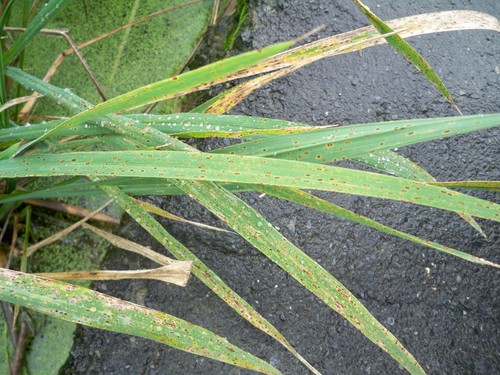
Verbatim
e1“Trifloxystrobin + tebuconazole @ 0.04% was found to be the most effective fungicide against these diseases, where the lowest mean disease severity was 5.2% for sheath blight, 5.1% for brown spot and 4.4% for glume discoloration as compared to 45.5%, 46.5% and 13.6% in untreated inoculated check plots of respective diseases”
e2“economically important rice diseases namely sheath blight (Rhizoctonia solani) and brown spot (Drechslera oryzae)”
Claim · model-written summary
Trifloxystrobin + tebuconazole gave the lowest glume discoloration severity (4.4%) against 13.6% in untreated inoculated checks.
- Taxon
- riceOryza sativae2
- Treatment
- Trifloxystrobin + tebuconazole @ 0.04%e1
- Outcome
- mean disease severitye1
- Direction
- loweste1
- Value
- 4.4%e1
- Qualifier
- 13.6%e1
- Comparator
- untreated inoculated check plotse1
Organisms pictured · Representative pictures of the matched species, not figures from the paper.
Verbatim
e1“Trifloxystrobin + tebuconazole @ 0.04% was found to be the most effective fungicide against these diseases, where the lowest mean disease severity was 5.2% for sheath blight, 5.1% for brown spot and 4.4% for glume discoloration as compared to 45.5%, 46.5% and 13.6% in untreated inoculated check plots of respective diseases”
e2“economically important rice diseases namely sheath blight (Rhizoctonia solani) and brown spot (Drechslera oryzae)”
Claim · model-written summary
Tebuconazole at 0.1% reduced sheath blight, with 7.5% severity reported.
- Taxon
- riceOryza sativae2
- Treatment
- tebuconazole (Folicur 25 EC) @ 0.1%e3
- Interactor
- Rhizoctonia solaniRhizoctonia solanie2pathogen
- Outcome
- sheath blighte3
- Direction
- lowerinferrede3
- Value
- 7.5%e3
Not reportedComparator
Organisms pictured · Representative pictures of the matched species, not figures from the paper.
Verbatim
e3“Next best fungicide observed was tebuconazole (Folicur 25 EC) @ 0.1%, effective against sheath blight (7.5%), brown spot (7.3%) and glume discoloration (4.2%)”
e2“economically important rice diseases namely sheath blight (Rhizoctonia solani) and brown spot (Drechslera oryzae)”
Claim · model-written summary
Tebuconazole at 0.1% reduced brown spot, with 7.3% severity reported.
- Taxon
- riceOryza sativae2
- Treatment
- tebuconazole (Folicur 25 EC) @ 0.1%e3
- Interactor
- Drechslera oryzaeBipolaris oryzaee2pathogen
- Outcome
- brown spote3
- Direction
- lowerinferrede3
- Value
- 7.3%e3
Not reportedComparator
Organisms pictured · Representative pictures of the matched species, not figures from the paper.
Verbatim
e3“Next best fungicide observed was tebuconazole (Folicur 25 EC) @ 0.1%, effective against sheath blight (7.5%), brown spot (7.3%) and glume discoloration (4.2%)”
e2“economically important rice diseases namely sheath blight (Rhizoctonia solani) and brown spot (Drechslera oryzae)”
Claim · model-written summary
Tebuconazole at 0.1% reduced glume discoloration, with 4.2% severity reported.
- Taxon
- riceOryza sativae2
- Treatment
- tebuconazole (Folicur 25 EC) @ 0.1%e3
- Outcome
- glume discoloratione3
- Direction
- lowerinferrede3
- Value
- 4.2%e3
Not reportedComparator
Organisms pictured · Representative pictures of the matched species, not figures from the paper.
Verbatim
e3“Next best fungicide observed was tebuconazole (Folicur 25 EC) @ 0.1%, effective against sheath blight (7.5%), brown spot (7.3%) and glume discoloration (4.2%)”
e2“economically important rice diseases namely sheath blight (Rhizoctonia solani) and brown spot (Drechslera oryzae)”
Claim · model-written summary
Pencycuron was equally effective against sheath blight under laboratory and field conditions.
- Taxon
- riceOryza sativae2
- Treatment
- pencycuron (Monceren 250SC)e4
- Interactor
- Rhizoctonia solaniRhizoctonia solanie2pathogen
- Outcome
- equally effective against sheath blighte4
- Direction
- no_changeinferrede4
- Setting
- laboratory as well as field conditionse4
Not reportedComparator
Organisms pictured · Representative pictures of the matched species, not figures from the paper.
Verbatim
e4“Fungicide pencycuron (Monceren 250SC) was equally effective against sheath blight, but least effective against brown spot under laboratory as well as field conditions”
e2“economically important rice diseases namely sheath blight (Rhizoctonia solani) and brown spot (Drechslera oryzae)”
Claim · model-written summary
Pencycuron was least effective against brown spot under laboratory and field conditions.
- Taxon
- riceOryza sativae2
- Treatment
- pencycuron (Monceren 250SC)e4
- Interactor
- Drechslera oryzaeBipolaris oryzaee2pathogen
- Outcome
- least effective against brown spote4
- Direction
- higherinferrede4
- Setting
- laboratory as well as field conditionse4
Not reportedComparator
Organisms pictured · Representative pictures of the matched species, not figures from the paper.
Verbatim
e4“Fungicide pencycuron (Monceren 250SC) was equally effective against sheath blight, but least effective against brown spot under laboratory as well as field conditions”
e2“economically important rice diseases namely sheath blight (Rhizoctonia solani) and brown spot (Drechslera oryzae)”
Claim · model-written summary
Trifloxystrobin + tebuconazole showed higher efficacy against R. solani under laboratory conditions.
- Taxon
- riceOryza sativae2
- Treatment
- trifloxystrobin + tebuconazolee5
- Interactor
- R. solaniRhizoctonia solanie5pathogen
- Second interactor
- D. oryzaeBipolaris oryzaee5pathogen
- Outcome
- level of efficacye5
- Direction
- highere5
- Setting
- laboratory conditionse5
Not reportedComparator
Organisms pictured · Representative pictures of the matched species, not figures from the paper.
Verbatim
e5“Fungicides viz. trifloxystrobin + tebuconazole, tebuconazole, and propiconazole showed higher level of efficacy against R. solani and D. oryzae pathogens of above mentioned diseases under laboratory conditions also, however, thifluzamide (Spencer 24SC) was least effective against all the diseases under the both conditions”
e2“economically important rice diseases namely sheath blight (Rhizoctonia solani) and brown spot (Drechslera oryzae)”
Claim · model-written summary
Tebuconazole showed higher efficacy against R. solani and D. oryzae under laboratory conditions.
- Taxon
- riceOryza sativae2
- Treatment
- tebuconazolee5
- Interactor
- R. solaniRhizoctonia solanie5pathogen
- Second interactor
- D. oryzaeBipolaris oryzaee5pathogen
- Outcome
- level of efficacye5
- Direction
- highere5
- Setting
- laboratory conditionse5
Not reportedComparator
Organisms pictured · Representative pictures of the matched species, not figures from the paper.
Verbatim
e5“Fungicides viz. trifloxystrobin + tebuconazole, tebuconazole, and propiconazole showed higher level of efficacy against R. solani and D. oryzae pathogens of above mentioned diseases under laboratory conditions also, however, thifluzamide (Spencer 24SC) was least effective against all the diseases under the both conditions”
e2“economically important rice diseases namely sheath blight (Rhizoctonia solani) and brown spot (Drechslera oryzae)”
Claim · model-written summary
Propiconazole showed higher efficacy against R. solani and D. oryzae under laboratory conditions.
- Taxon
- riceOryza sativae2
- Treatment
- propiconazolee5
- Interactor
- R. solaniRhizoctonia solanie5pathogen
- Second interactor
- D. oryzaeBipolaris oryzaee5pathogen
- Outcome
- level of efficacye5
- Direction
- highere5
- Setting
- laboratory conditionse5
Not reportedComparator
Organisms pictured · Representative pictures of the matched species, not figures from the paper.
Verbatim
e5“Fungicides viz. trifloxystrobin + tebuconazole, tebuconazole, and propiconazole showed higher level of efficacy against R. solani and D. oryzae pathogens of above mentioned diseases under laboratory conditions also, however, thifluzamide (Spencer 24SC) was least effective against all the diseases under the both conditions”
e2“economically important rice diseases namely sheath blight (Rhizoctonia solani) and brown spot (Drechslera oryzae)”
Claim · model-written summary
Thifluzamide was least effective against all the diseases under both laboratory and field conditions.
- Taxon
- riceOryza sativae2
- Treatment
- thifluzamide (Spencer 24SC)e5
- Outcome
- least effective against all the diseasese5
- Direction
- higherinferrede5
- Setting
- both conditionse5
Not reportedComparator
Organisms pictured · Representative pictures of the matched species, not figures from the paper.
Verbatim
e5“Fungicides viz. trifloxystrobin + tebuconazole, tebuconazole, and propiconazole showed higher level of efficacy against R. solani and D. oryzae pathogens of above mentioned diseases under laboratory conditions also, however, thifluzamide (Spencer 24SC) was least effective against all the diseases under the both conditions”
e2“economically important rice diseases namely sheath blight (Rhizoctonia solani) and brown spot (Drechslera oryzae)”
The same questions in other papers
tebuconazole · disease · Oryza sativa (rice)Positive and negative results
24 papers in the same direction as this paper · 1 reporting no difference from an alternative
- positive
- no effect
- positive
22 papers more in this group
See all 26 papers →trifloxystrobin · Rhizoctonia solani · Oryza sativa (rice)Results agree
2 papers in the same direction as this paper
- positive
- positive
pencycuron · Rhizoctonia solani · Oryza sativa (rice)Results agree
2 papers in the same direction as this paper
- positive
- positive
tebuconazole · Bipolaris oryzae · Oryza sativa (rice)Results agree
4 papers in the same direction as this paper
- positive
- positive
- positive
1 paper more in this group
See all 5 papers →tebuconazole · Rhizoctonia solani · Oryza sativa (rice)Results agree
10 papers in the same direction as this paper
- positive
- positive
- positive
7 papers more in this group
See all 11 papers →propiconazole · Rhizoctonia solani · Oryza sativa (rice)Results agree
10 papers in the same direction as this paper
- positive
- positive
- positive
7 papers more in this group
See all 11 papers →trifloxystrobin · disease · Oryza sativa (rice)Results agree
18 papers in the same direction as this paper
- positive
- positive
- positive
15 papers more in this group
See all 19 papers →Claims are grouped by organism, treatment and what was measured or targeted. A paper counts as positive when any of its claims in the group is positive.