Abstract
Ground-vegetation succession was analysed at four Swedish coniferous sites 8-16 years after clear-felling. At each site, three levels of logging-residue harvesting were applied in a randomized block design: above-stump whole-tree harvesting (no residues remaining); harvesting all tree parts except needles; and conventional harvest (residues left on site). Vegetational changes at each site were analysed by principal component analyses. Successional changes were related to the first principal components, whereas residue treatments were related to components of the second or lower order. Treatment-related differences in species cover, as analysed by a two-way ANOVA, were noted at all sites, 8 as well as 16 years after harvest. The covers of most vascular plant species, notably herbs and graminoids, were generally lower after whole-tree harvesting, while the covers of epigeic lichens and Vaccinium myrtillus were higher. Bryophytes were mostly indifferent to logging residue treatment, except for Pleurozium schreberi which had a lower cover in plots without logging residues. The overall differences were small and resembled those found along natural soil fertility gradients. The presence of woody debris appeared to have a weak, suppressive effect on the cover of the graminoids Deschampsia flexuosa and Luzula pilosa. This effect was only evident on the first study occasion, about 8 years after felling. Our results suggest that the major influence of logging residues left on site was related to their nutrient contribution. The impact tended to decrease over time and, in a long-term perspective it is suggested that treatment differences in species cover will be small, especially in forests developing dense canopies. However, one cannot exclude the possibility that repeated whole-tree harvesting will produce more drastic effects by reducing soil nutrient availability.
Abstract from the paper’s OpenAlex record, shown for indexing and research. Copyright remains with the authors or the publisher. Read at the source ↗
The text the model read, with the source record’s inline markup (italics, sub- and superscripts) rendered and its character entities decoded; quote offsets refer to the raw text.
Claims 15
Claim · model-written summary
Successional changes in ground vegetation were related to the first principal components.
Verbatim
t0“Ground Vegetation in Coniferous Forests”
e1“Successional changes were related to the first principal components”
Claim · model-written summary
Residue treatments were related to principal components of the second or lower order.
Verbatim
t0“Ground Vegetation in Coniferous Forests”
e2“whereas residue treatments were related to components of the second or lower order”
Claim · model-written summary
Whole-tree harvesting generally lowered the cover of most vascular plant species, notably herbs and graminoids.
Not reportedComparator
Verbatim
t0“Ground Vegetation in Coniferous Forests”
e3“The covers of most vascular plant species, notably herbs and graminoids, were generally lower after whole-tree harvesting”
Claim · model-written summary
Whole-tree harvesting raised the cover of epigeic lichens.
Not reportedComparator
Verbatim
t0“Ground Vegetation in Coniferous Forests”
e4“generally lower after whole-tree harvesting, while the covers of epigeic lichens and Vaccinium myrtillus were higher”
Claim · model-written summary
Whole-tree harvesting raised the cover of Vaccinium myrtillus.
- Taxon
- Vaccinium myrtillus
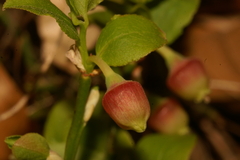 Vaccinium myrtilluse4
- Treatment
- whole-tree harvestinge4
- Outcome
- coverse4
- Direction
- highere4
Not reportedComparator
Organisms pictured · Representative pictures of the matched species, not figures from the paper.

Verbatim
t0“Ground Vegetation in Coniferous Forests”
e4“generally lower after whole-tree harvesting, while the covers of epigeic lichens and Vaccinium myrtillus were higher”
Claim · model-written summary
Bryophytes were mostly indifferent to logging residue treatment in cover.
Not reportedComparator
Verbatim
t0“Ground Vegetation in Coniferous Forests”
e5“Bryophytes were mostly indifferent to logging residue treatment, except for Pleurozium schreberi which had a lower cover in plots without logging residues”
Claim · model-written summary
Pleurozium schreberi had a lower cover in plots without logging residues.
- Taxon
- Pleurozium schreberi
 Pleurozium schreberie5
- Treatment
- plots without logging residuese5
- Outcome
- covere5
- Direction
- lowere5
Not reportedComparator
Organisms pictured · Representative pictures of the matched species, not figures from the paper.

Verbatim
t0“Ground Vegetation in Coniferous Forests”
e5“Bryophytes were mostly indifferent to logging residue treatment, except for Pleurozium schreberi which had a lower cover in plots without logging residues”
Claim · model-written summary
Overall differences in ground vegetation between treatments were small, resembling natural soil fertility gradients.
Verbatim
t0“Ground Vegetation in Coniferous Forests”
e6“The overall differences were small and resembled those found along natural soil fertility gradients”
Claim · model-written summary
Woody debris weakly suppressed the cover of Deschampsia flexuosa, only on the first study occasion.
- Taxon
- Deschampsia flexuosa
 Avenella flexuosae7
- Treatment
- presence of woody debrise7
- Outcome
- covere7
- Direction
- suppressivee7
- Qualifier
- only evident on the first study occasione2
Not reportedComparator
Organisms pictured · Representative pictures of the matched species, not figures from the paper.

Verbatim
t0“Ground Vegetation in Coniferous Forests”
e7“The presence of woody debris appeared to have a weak, suppressive effect on the cover of the graminoids Deschampsia flexuosa and Luzula pilosa”
e2“This effect was only evident on the first study occasion, about 8 years after felling”
Claim · model-written summary
Woody debris weakly suppressed the cover of Luzula pilosa, only on the first study occasion.
- Taxon
- Luzula pilosa
 Luzula pilosae7
- Treatment
- presence of woody debrise7
- Outcome
- covere7
- Direction
- suppressivee7
- Qualifier
- only evident on the first study occasione2
Not reportedComparator
Organisms pictured · Representative pictures of the matched species, not figures from the paper.

Verbatim
t0“Ground Vegetation in Coniferous Forests”
e7“The presence of woody debris appeared to have a weak, suppressive effect on the cover of the graminoids Deschampsia flexuosa and Luzula pilosa”
e2“This effect was only evident on the first study occasion, about 8 years after felling”
Claim · model-written summary
The major influence of logging residues left on site on ground vegetation is suggested to relate to their nutrient contribution.
Verbatim
t0“Ground Vegetation in Coniferous Forests”
e1“Our results suggest that the major influence of logging residues left on site was related to their nutrient contribution”
Claim · model-written summary
The impact of residue treatment tended to decrease over time.
Verbatim
t0“Ground Vegetation in Coniferous Forests”
e1“The impact tended to decrease over time”
Claim · model-written summary
Long-term treatment differences in species cover are suggested to be small, especially in forests developing dense canopies.
Verbatim
t0“Ground Vegetation in Coniferous Forests”
e1“in a long-term perspective it is suggested that treatment differences in species cover will be small, especially in forests developing dense canopies”
Claim · model-written summary
Repeated whole-tree harvesting may produce more drastic vegetation effects by reducing soil nutrient availability, which cannot be excluded.
Verbatim
t0“Ground Vegetation in Coniferous Forests”
e1“one cannot exclude the possibility that repeated whole-tree harvesting will produce more drastic effects by reducing soil nutrient availability”
Claim · model-written summary
Treatment-related differences in species cover were noted at all sites, 8 and 16 years after harvest.
Verbatim
t0“Ground Vegetation in Coniferous Forests”
e1“Treatment-related differences in species cover, as analysed by a two-way ANOVA, were noted at all sites, 8 as well as 16 years after harvest”