Abstract
Vineyards worldwide occupy over 7 million hectares and are typically virtual monocultures, with high and costly inputs of water and agro-chemicals. Understanding and enhancing ecosystem services can reduce inputs and their costs and help satisfy market demands for evidence of more sustainable practices. In this New Zealand work, low-growing, endemic plant species were evaluated for their potential benefits as Service Providing Units (SPUs) or Ecosystem Service Providers (ESPs). The services provided were weed suppression, conservation of beneficial invertebrates, soil moisture retention and microbial activity. The potential Ecosystem Dis-services (EDS) from the selected plant species by hosting the larvae of a key vine moth pest, the light-brown apple moth (Epiphyas postvittana), was also quantified. Questionnaires were used to evaluate winegrowers' perceptions of the value of and problems associated with such endemic plant species in their vineyards. Growth and survival rates of the 14 plant species, in eight families, were evaluated, with Leptinella dioica (Asteraceae) and Acaena inermis 'purpurea' (Rosaceae) having the highest growth rates in terms of area covered and the highest survival rate after 12 months. All 14 plant species suppressed weeds, with Leptinella squalida, Geranium sessiliforum (Geraniaceae), Hebe chathamica (Plantaginaceae), Scleranthus uniflorus (Caryophyllaceae) and L. dioica, each reducing weed cover by >95%. Plant species also differed in the diversity of arthropods that they supported, with the Shannon Wiener diversity index (H') for these taxa ranging from 0 to 1.3. G. sessiliforum and Muehlenbeckia axillaris (Polygonaceae) had the highest invertebrate diversity. Density of spiders was correlated with arthropod diversity and G. sessiliflorum and H. chathamica had the highest densities of these arthropods. Several plant species associated with higher soil moisture content than in control plots. The best performing species in this context were A. inermis 'purpurea' and Lobelia angulata (Lobeliaceae). Soil beneath all plant species had a higher microbial activity than in control plots, with L. dioica being highest in this respect. Survival proportion to the adult stage of the moth pest, E. postvittana, on all plant species was poor (<0.3). When judged by a ranking combining multiple criteria, the most promising plant species were (in decreasing order) G. sessiliflorum, A. inermis 'purpurea', H. chathamica, M. axillaris, L. dioica, L. angulata, L. squalida and S. uniflorus. Winegrowers surveyed said that they probably would deploy endemic plants around their vines. This research demonstrates that enhancing plant diversity in vineyards can deliver SPUs, harbour ESPs and therefore deliver ES. The data also shows that growers are willing to follow these protocols, with appropriate advice founded on sound research.
Abstract from the paper’s OpenAlex record; open copy licensed cc-by. Read at the source ↗
The text the model read, with the source record’s inline markup (italics, sub- and superscripts) rendered and its character entities decoded; quote offsets refer to the raw text.
Claims 15
Claim · model-written summary
Leptinella dioica had among the highest area growth and survival after 12 months.
- Taxon
- Leptinella dioica
 Leptinella dioicae0
- Outcome
- highest growth rates in terms of area covered and the highest survival ratee0
- Value
- 12 monthse0
Organisms pictured · Representative pictures of the matched species, not figures from the paper.

Verbatim
e0“Leptinella dioica (Asteraceae) and Acaena inermis 'purpurea' (Rosaceae) having the highest growth rates in terms of area covered and the highest survival rate after 12 months”
Claim · model-written summary
Acaena inermis purpurea had among the highest area growth and survival after 12 months.
- Taxon
- Acaena inermis 'purpurea'
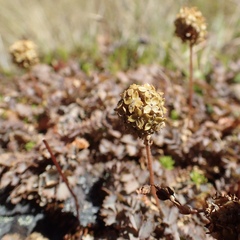 Acaena inermise0
- Outcome
- highest growth rates in terms of area covered and the highest survival ratee0
Organisms pictured · Representative pictures of the matched species, not figures from the paper.
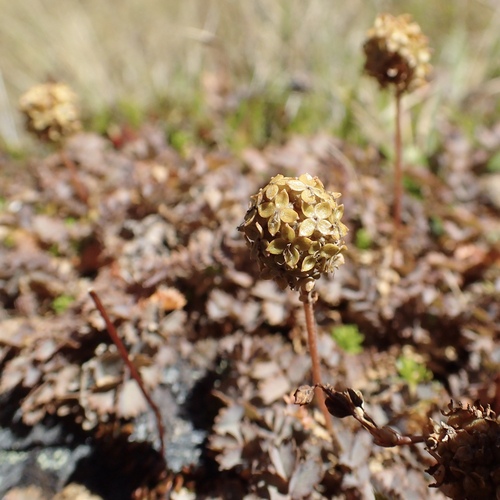
Verbatim
e0“Acaena inermis 'purpurea' (Rosaceae) having the highest growth rates in terms of area covered and the highest survival rate after 12 months”
Claim · model-written summary
All 14 endemic plant species suppressed weeds.
Verbatim
e0“All 14 plant species suppressed weeds”
Claim · model-written summary
Five named species each reduced weed cover by more than 95%.
Verbatim
e0“Leptinella squalida, Geranium sessiliforum (Geraniaceae), Hebe chathamica (Plantaginaceae), Scleranthus uniflorus (Caryophyllaceae) and L. dioica, each reducing weed cover by >95%”
Claim · model-written summary
Arthropod diversity supported by the plant species varied from zero to 1.3 on the Shannon Wiener index.
- Taxon
- Plant speciese0
- Interactor
- arthropodsArthropodae0other
- Outcome
- diversity of arthropodse0
- Value
- 0 to 1.3e0
Verbatim
e0“Plant species also differed in the diversity of arthropods that they supported, with the Shannon Wiener diversity index (H') for these taxa ranging from 0 to 1.3”
Claim · model-written summary
Geranium sessiliforum and Muehlenbeckia axillaris had the highest invertebrate diversity.
Verbatim
e0“G. sessiliforum and Muehlenbeckia axillaris (Polygonaceae) had the highest invertebrate diversity”
Claim · model-written summary
Spider density correlated with arthropod diversity.
Not reportedDirection
Verbatim
e0“Density of spiders was correlated with arthropod diversity”
t0“endemic plants in New Zealand vineyards”
Claim · model-written summary
Geranium sessiliflorum and Hebe chathamica had the highest spider densities.
- Taxon
- G. sessiliflorum and H. chathamica
 Veronica chathamica
 Geranium sessiliflorume0
- Outcome
- densities of these arthropodse0
- Direction
- higheste0
Organisms pictured · Representative pictures of the matched species, not figures from the paper.


Verbatim
e0“G. sessiliflorum and H. chathamica had the highest densities of these arthropods”
e1“Density of spiders was correlated with arthropod diversity”
Claim · model-written summary
Several plant species were associated with higher soil moisture than controls.
Verbatim
e0“Several plant species associated with higher soil moisture content than in control plots”
Claim · model-written summary
Acaena inermis purpurea and Lobelia angulata performed best for soil moisture.
- Taxon
- A. inermis 'purpurea' and Lobelia angulata
 Pratia angulataAcaena inermise0
- Outcome
- soil moisture contente1
- Direction
- highere1
Organisms pictured · Representative pictures of the matched species, not figures from the paper.

Verbatim
e0“The best performing species in this context were A. inermis 'purpurea' and Lobelia angulata (Lobeliaceae)”
e1“Several plant species associated with higher soil moisture content than in control plots”
Claim · model-written summary
Soil microbial activity was higher beneath all plant species than in controls.
Verbatim
e0“Soil beneath all plant species had a higher microbial activity than in control plots”
Claim · model-written summary
Leptinella dioica had the highest soil microbial activity.
Verbatim
e0“with L. dioica being highest in this respect”
e1“Soil beneath all plant species had a higher microbial activity than in control plots”
Claim · model-written summary
The moth pest had poor adult survival on all plant species, below 0.3.
- Taxon
- plant speciese0
- Interactor
- E. postvittana
 Epiphyas postvittanae0pest
- Outcome
- Survival proportion to the adult stage of the moth pest, E. postvittanae0
- Value
- <0.3e0
Organisms pictured · Representative pictures of the matched species, not figures from the paper.

Verbatim
e0“Survival proportion to the adult stage of the moth pest, E. postvittana, on all plant species was poor (<0.3)”
Claim · model-written summary
A combined ranking placed eight species in descending order, led by G. sessiliflorum.
Verbatim
e0“the most promising plant species were (in decreasing order) G. sessiliflorum, A. inermis 'purpurea', H. chathamica, M. axillaris, L. dioica, L. angulata, L. squalida and S. uniflorus”
Claim · model-written summary
Surveyed winegrowers said they probably would deploy endemic plants around vines.
Verbatim
e0“Winegrowers surveyed said that they probably would deploy endemic plants around their vines”