Abstract
Dicranopteris pedata often forms consocies in communities,and its allelopathy is one of the important factors.In the lab test with grass Amaranthus spinosus and crop soybean as tested plant acceptorsm,the water extracts with concentration of 0.05,0.2 and 0.4 g Fw/ml were made by the methods of diluting and compress distillation,and the mechamisms of allelopathy of Dicranopteris pedata on the anylase activities of seed germination,the content of soluble sugar and chlorophyll contert of plant acceptor was studied preliminarily.The results showed that the extracts of Dicranopteris pedata could remarkably inhibit the amylase activities,the content of soluble sugar and chlorophyll content in seed germination of plant acceptors.
Abstract from the paper’s OpenAlex record, shown for indexing and research. Copyright remains with the authors or the publisher. Read at the source ↗
The text the model read, with the source record’s inline markup (italics, sub- and superscripts) rendered and its character entities decoded; quote offsets refer to the raw text.
Claims 6
Claim · model-written summary
Dicranopteris extracts inhibited amylase activities in Amaranthus spinosus.
- Taxon
- Amaranthus spinosus
 Amaranthus spinosuse1
- Treatment
- extracts of Dicranopteris pedatae0
- Interactor
- Dicranopteris pedata
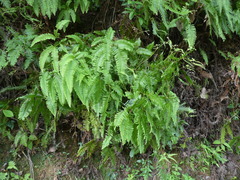 Dicranopteris pedatae0other
- Outcome
- amylase activitiese0
- Direction
- inhibite0
Not reportedComparator
Organisms pictured · Representative pictures of the matched species, not figures from the paper.

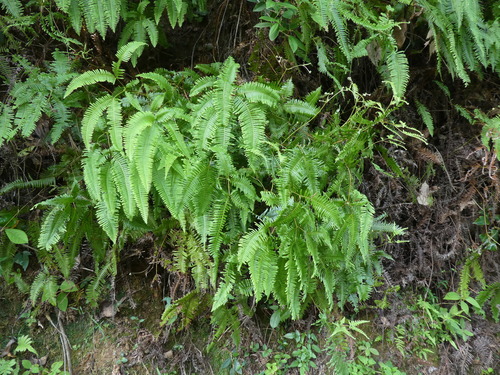
Verbatim
e0“The results showed that the extracts of Dicranopteris pedata could remarkably inhibit the amylase activities,the content of soluble sugar and chlorophyll content in seed germination of plant acceptors”
e1“grass Amaranthus spinosus and crop soybean as tested plant acceptorsm”
Claim · model-written summary
Dicranopteris extracts inhibited content of soluble sugar in Amaranthus spinosus.
- Taxon
- Amaranthus spinosusAmaranthus spinosuse1
- Treatment
- extracts of Dicranopteris pedatae0
- Interactor
- Dicranopteris pedataDicranopteris pedatae0other
- Outcome
- content of soluble sugare0
- Direction
- inhibite0
Not reportedComparator
Organisms pictured · Representative pictures of the matched species, not figures from the paper.
Verbatim
e0“The results showed that the extracts of Dicranopteris pedata could remarkably inhibit the amylase activities,the content of soluble sugar and chlorophyll content in seed germination of plant acceptors”
e1“grass Amaranthus spinosus and crop soybean as tested plant acceptorsm”
Claim · model-written summary
Dicranopteris extracts inhibited chlorophyll content in Amaranthus spinosus.
- Taxon
- Amaranthus spinosusAmaranthus spinosuse1
- Treatment
- extracts of Dicranopteris pedatae0
- Interactor
- Dicranopteris pedataDicranopteris pedatae0other
- Outcome
- chlorophyll contente0
- Direction
- inhibite0
Not reportedComparator
Organisms pictured · Representative pictures of the matched species, not figures from the paper.
Verbatim
e0“The results showed that the extracts of Dicranopteris pedata could remarkably inhibit the amylase activities,the content of soluble sugar and chlorophyll content in seed germination of plant acceptors”
e1“grass Amaranthus spinosus and crop soybean as tested plant acceptorsm”
Claim · model-written summary
Dicranopteris extracts inhibited amylase activities in soybean.
- Taxon
- soybean
 Glycine maxe1
- Treatment
- extracts of Dicranopteris pedatae0
- Interactor
- Dicranopteris pedataDicranopteris pedatae0other
- Outcome
- amylase activitiese0
- Direction
- inhibite0
Not reportedComparator
Organisms pictured · Representative pictures of the matched species, not figures from the paper.

Verbatim
e0“The results showed that the extracts of Dicranopteris pedata could remarkably inhibit the amylase activities,the content of soluble sugar and chlorophyll content in seed germination of plant acceptors”
e1“grass Amaranthus spinosus and crop soybean as tested plant acceptorsm”
Claim · model-written summary
Dicranopteris extracts inhibited content of soluble sugar in soybean.
- Taxon
- soybeanGlycine maxe1
- Treatment
- extracts of Dicranopteris pedatae0
- Interactor
- Dicranopteris pedataDicranopteris pedatae0other
- Outcome
- content of soluble sugare0
- Direction
- inhibite0
Not reportedComparator
Organisms pictured · Representative pictures of the matched species, not figures from the paper.
Verbatim
e0“The results showed that the extracts of Dicranopteris pedata could remarkably inhibit the amylase activities,the content of soluble sugar and chlorophyll content in seed germination of plant acceptors”
e1“grass Amaranthus spinosus and crop soybean as tested plant acceptorsm”
Claim · model-written summary
Dicranopteris extracts inhibited chlorophyll content in soybean.
- Taxon
- soybeanGlycine maxe1
- Treatment
- extracts of Dicranopteris pedatae0
- Interactor
- Dicranopteris pedataDicranopteris pedatae0other
- Outcome
- chlorophyll contente0
- Direction
- inhibite0
Not reportedComparator
Organisms pictured · Representative pictures of the matched species, not figures from the paper.
Verbatim
e0“The results showed that the extracts of Dicranopteris pedata could remarkably inhibit the amylase activities,the content of soluble sugar and chlorophyll content in seed germination of plant acceptors”
e1“grass Amaranthus spinosus and crop soybean as tested plant acceptorsm”
The same questions in other papers
botanical · physiology: enzyme activity · Glycine max (soybean)Positive and negative results
2 in the opposite direction
- positive
- positive
botanical · physiology: osmolytes · Glycine max (soybean)Positive and negative results
2 papers in the same direction as this paper · 1 in the opposite direction
- positive
- negative
- negative
botanical · physiology: pigments · Glycine max (soybean)Positive and negative results
1 paper in the same direction as this paper · 14 in the opposite direction
- positive
- positive
- positive
12 papers more in this group
See all 16 papers →Claims are grouped by organism, treatment and what was measured or targeted. A paper counts as positive when any of its claims in the group is positive.