Abstract
Abstract Understanding the impact of herbivory on plant populations is a fundamental goal of ecology. Damage to individual plants can be visually striking and affect the fates of individuals, but these impacts do not necessarily translate into population‐level differences in vital rates (survival, growth, or fecundity) or population growth rates. In biological control of weeds, quantitative assessments of population‐level impacts of released agents on both target invasive plants and native, nontarget plants are needed to inform evaluations of the benefits and risks of releasing agents into new regions. Here we present a 3‐yr experimental demographic field study using the European root‐feeding biocontrol weevil, Mogulones crucifer, first released in Canada in 1997 to control the invasive weed Cynoglossum officinale (Boraginaceae). Mogulones crucifer is an effective “search and destroy” agent in Canada, but sporadically feeds, oviposits, and develops on native nontarget Boraginaceae. We investigated the population‐level impacts of this biocontrol insect on its target weed and a native nontarget plant, Hackelia micrantha (Boraginaceae), by releasing large numbers of weevils into naturally occurring patches of H. micrantha growing isolated from or interspersed with C. officinale . We followed the fates of individual plants on release and nonrelease (control) sites for two transition years, developed matrix models to project population growth rates (λ) for each plant species, and examined the contributions from differences in vital rates to changes in λ using life table response experiments ( LTRE ). In contrast to studies of the insect–plant interaction in its native range, as a biocontrol agent, M. crucifer increased mortality of C. officinale rosettes in the year immediately following release, depressing the weed's λ to below the population replacement level. However, λ for H. micrantha was never depressed below the replacement level, and any differences between release and nonrelease sites in the nontarget could not be explained by significant contributions from vital rates in the LTRE . This study is the first to simultaneously and experimentally examine target and nontarget population‐level impacts of a weed biocontrol insect in the field, and supports the theoretical prediction that plant life history characteristics and uneven herbivore host preferences can interact to produce differences in population‐level impacts between target and nontarget plant species.
Abstract from the paper’s OpenAlex record; open copy licensed cc-by. Read at the source ↗
The text the model read, with the source record’s inline markup (italics, sub- and superscripts) rendered and its character entities decoded; quote offsets refer to the raw text.
Claims 5
Claim · model-written summary
Mogulones crucifer increased mortality of Cynoglossum officinale rosettes in the year after release.
- Taxon
- Cynoglossum officinale
 Cynoglossum officinalee2
- Treatment
- releasee1
- Interactor
- M. crucifer
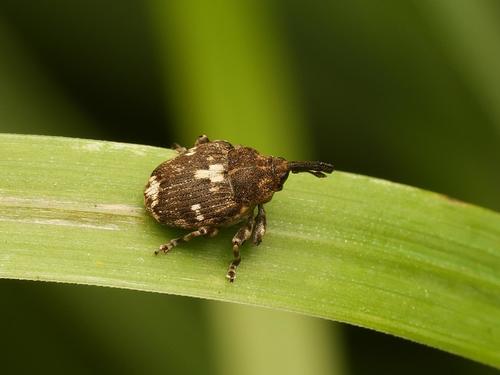
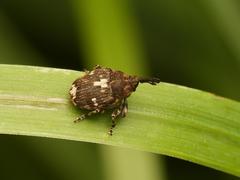 Mogulones crucifere1biocontrol_agent
- Outcome
- mortality of C. officinale rosettese1
- Direction
- increasede1
Not reportedComparator
Organisms pictured · Representative pictures of the matched species, not figures from the paper.

Verbatim
e1“M. crucifer increased mortality of C. officinale rosettes in the year immediately following release, depressing the weed's λ to below the population replacement level”
e2“control the invasive weed Cynoglossum officinale”
Claim · model-written summary
Mogulones crucifer depressed the population growth rate of Cynoglossum officinale below the replacement level.
- Taxon
- Cynoglossum officinaleCynoglossum officinalee2
- Treatment
- releasee1
- Interactor
- M. cruciferMogulones crucifere1biocontrol_agent
- Outcome
- λe1
- Direction
- depressinge1
- Qualifier
- to below the population replacement levele1
Not reportedComparator
Organisms pictured · Representative pictures of the matched species, not figures from the paper.
Verbatim
e1“M. crucifer increased mortality of C. officinale rosettes in the year immediately following release, depressing the weed's λ to below the population replacement level”
e2“control the invasive weed Cynoglossum officinale”
Claim · model-written summary
The population growth rate of Hackelia micrantha was never depressed below the replacement level.
- Taxon
- Hackelia micrantha
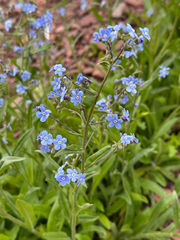 Hackelia micranthae2
- Treatment
- releasee1
- Outcome
- λ for H. micranthae1
- Direction
- never depressede1
- Comparator
- nonrelease sitese1
Organisms pictured · Representative pictures of the matched species, not figures from the paper.

Verbatim
e1“However, λ for H. micrantha was never depressed below the replacement level, and any differences between release and nonrelease sites in the nontarget could not be explained by significant contributions from vital rates in the LTRE”
e2“a native nontarget plant, Hackelia micrantha”
Claim · model-written summary
Differences between release and nonrelease sites in Hackelia micrantha could not be explained by vital rates.
- Taxon
- Hackelia micranthaHackelia micranthae2
- Treatment
- releasee1
- Outcome
- differencese1
- Comparator
- nonrelease sitese1
Not reportedDirection
Organisms pictured · Representative pictures of the matched species, not figures from the paper.
Verbatim
e1“However, λ for H. micrantha was never depressed below the replacement level, and any differences between release and nonrelease sites in the nontarget could not be explained by significant contributions from vital rates in the LTRE”
e2“a native nontarget plant, Hackelia micrantha”
Claim · model-written summary
Plant life history and uneven herbivore host preferences may interact to produce differences in population-level impacts between target and nontarget plants.
- Taxon
- Cynoglossum officinaleCynoglossum officinalee2
- Outcome
- differencese1
- Qualifier
- plant life history characteristics and uneven herbivore host preferences can interacte1
Organisms pictured · Representative pictures of the matched species, not figures from the paper.
Verbatim
e1“supports the theoretical prediction that plant life history characteristics and uneven herbivore host preferences can interact to produce differences”
e2“control the invasive weed Cynoglossum officinale”