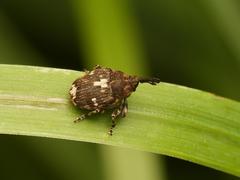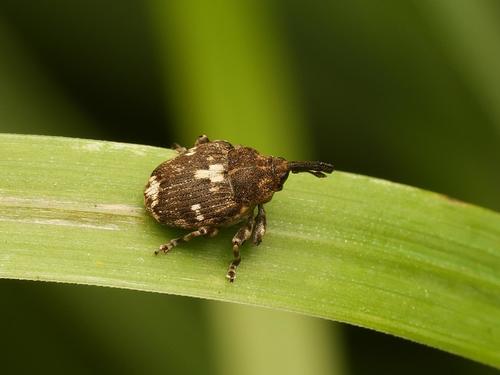
Mogulones crucifer 46 claims

species · family Curculionidae · animal · NCBI Taxonomy ↗

Also written in claims: M. cruciger · Mogulones cruciger — NCBI synonyms: Mogulones cruciger

5 spellings

Mogulones crucifer
Mogulones cruciferAlexis Tinker-Tsavalas · CC BY 4.0 · iNaturalist ↗
Associationobservedoriginal resultpositivemeasured

Claim · model-written summary

Mogulones crucifer rested longer and arrested more frequently in response to Cynoglossum officinale volatiles than to other plant species.

Taxon
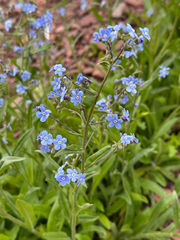
Cynoglossum officinale L.Cynoglossum officinalee1
Treatment
C. officinale volatilese0
Interactor
Mogulones cruciferMogulones crucifere0other
Outcome
duration of resting and frequencies of arrestment behaviore0
Direction
greatere0
Comparator
other plant speciese0

Verbatim

e0

“Mogulones crucifer consistently responded to C. officinale volatiles with greater duration of resting and frequencies of arrestment behavior compared to other plant species.”

✓ located verbatim in the source · abstract, characters 1347–1520
e1

“its host, the invasive herbaceous Cynoglossum officinale L. (Boraginaceae)”

✓ located verbatim in the source · abstract, characters 767–841

Title

Locomotory responses to olfactory cues during host‐finding can inform environmental safety assessments of biological weed control agents

Jessica M. Fung; Karuna Nepal; Basu D. Kafle; et al. Entomologia Experimentalis et Applicata 2021. doi:10.1111/eea.13069

Other claims from this paper (4)
Associationobservedoriginal resultpositivemeasured

Claim · model-written summary

Mogulones crucifer behavior was unaffected by odors from confamilial nontarget plants.

Taxon
Cynoglossum officinale L.Cynoglossum officinalee2
Treatment
odors of confamilials of C. officinalee0
Interactor
Mogulones cruciferMogulones crucifere1other
Outcome
M. crucifer behaviore0
Direction
unaffectede0

Verbatim

e0

“M. crucifer behavior was unaffected by odors of confamilials of C. officinale”

✓ located verbatim in the source · abstract, characters 1534–1611
e1

“biocontrol agent Mogulones crucifer Pallas”

✓ located verbatim in the source · abstract, characters 651–693
e2

“the invasive herbaceous Cynoglossum officinale L.”

✓ located verbatim in the source · abstract, characters 777–826

Title

Locomotory responses to olfactory cues during host‐finding can inform environmental safety assessments of biological weed control agents

Jessica M. Fung; Karuna Nepal; Basu D. Kafle; et al. Entomologia Experimentalis et Applicata 2021. doi:10.1111/eea.13069

Other claims from this paper (4)
Associationobservedoriginal resultpositivemeasured

Claim · model-written summary

Odors from confamilial plants repelled Mogulones crucifer in some assays.

Taxon
Cynoglossum officinale L.Cynoglossum officinalee3
Treatment
odors of confamilials of C. officinalee1
Interactor
Mogulones cruciferMogulones crucifere2other
Outcome
repellence to these odorse0

Not reportedDirection

Verbatim

e0

“responded with repellence to these odors in the olfactometer”

✓ located verbatim in the source · abstract, characters 1615–1675
e1

“M. crucifer behavior was unaffected by odors of confamilials of C. officinale”

✓ located verbatim in the source · abstract, characters 1534–1611
e2

“biocontrol agent Mogulones crucifer Pallas”

✓ located verbatim in the source · abstract, characters 651–693
e3

“the invasive herbaceous Cynoglossum officinale L.”

✓ located verbatim in the source · abstract, characters 777–826

Title

Locomotory responses to olfactory cues during host‐finding can inform environmental safety assessments of biological weed control agents

Jessica M. Fung; Karuna Nepal; Basu D. Kafle; et al. Entomologia Experimentalis et Applicata 2021. doi:10.1111/eea.13069

Other claims from this paper (4)
Observationauthor interpretationoriginal resultpositivemeasured

Claim · model-written summary

The authors infer that Mogulones crucifer is unlikely to use nontarget olfactory cues to contact tested nontarget plants in North America, including threatened and endangered species.

Taxon
nontarget plantse0
Interactor
Mogulones cruciferMogulones crucifere1other
Outcome
unlikely to use nontarget olfactory cues to find or come into contact with tested nontarget plantse0
Setting
invaded North American rangee0

Verbatim

e0

“in the invaded North American range, M. crucifer is unlikely to use nontarget olfactory cues to find or come into contact with tested nontarget plants, including the tested T&E species”

✓ located verbatim in the source · abstract, characters 1701–1885
e1

“biocontrol agent Mogulones crucifer Pallas”

✓ located verbatim in the source · abstract, characters 651–693

Title

Locomotory responses to olfactory cues during host‐finding can inform environmental safety assessments of biological weed control agents

Jessica M. Fung; Karuna Nepal; Basu D. Kafle; et al. Entomologia Experimentalis et Applicata 2021. doi:10.1111/eea.13069

Other claims from this paper (4)
Method / resourceauthor interpretationoriginal resultpositivemeasured

Claim · model-written summary

Olfactometer responses improve predictions of Mogulones crucifer host use and may inform prerelease safety assessments.
Taxon
Cynoglossum officinale L.Cynoglossum officinalee2
Interactor
Mogulones cruciferMogulones crucifere1other
Outcome
predictions of M. crucifer ’s host‐usee0
Qualifier
component of pre‐release environmental safety assessmentse0

Not reportedComparatorValue

Verbatim

e0

“Results from this study improve predictions of M. crucifer ’s host‐use in the introduced range and illustrate the potential of this novel approach as a component of pre‐release environmental safety assessments of weed biocontrol agents.”

✓ located verbatim in the source · abstract, characters 1887–2123
e1

“biocontrol agent Mogulones crucifer Pallas”

✓ located verbatim in the source · abstract, characters 651–693
e2

“the invasive herbaceous Cynoglossum officinale L.”

✓ located verbatim in the source · abstract, characters 777–826

Title

Locomotory responses to olfactory cues during host‐finding can inform environmental safety assessments of biological weed control agents

Jessica M. Fung; Karuna Nepal; Basu D. Kafle; et al. Entomologia Experimentalis et Applicata 2021. doi:10.1111/eea.13069

Other claims from this paper (4)
Intervention effectobservedoriginal resultpositivemeasured

Claim · model-written summary

Mogulones crucifer increased mortality of Cynoglossum officinale rosettes in the year after release.

Taxon
Cynoglossum officinaleCynoglossum officinalee2
Treatment
releasee1
Interactor
M. cruciferMogulones crucifere1biocontrol_agent
Outcome
mortality of C. officinale rosettese1
Direction
increasede1

Not reportedComparator

Verbatim

e1

“M. crucifer increased mortality of C. officinale rosettes in the year immediately following release, depressing the weed's λ to below the population replacement level”

✓ located verbatim in the source · abstract, characters 1722–1888
e2

“control the invasive weed Cynoglossum officinale”

✓ located verbatim in the source · abstract, characters 777–825

Title

Biocontrol insect impacts population growth of its target plant species but not an incidentally used nontarget

Haley A. Catton; Robert G. Lalonde; Yvonne M. Buckley; et al. Ecosphere 2016. doi:10.1002/ecs2.1280

Other claims from this paper (4)
Intervention effectobservedoriginal resultpositivemeasured

Claim · model-written summary

Mogulones crucifer depressed the population growth rate of Cynoglossum officinale below the replacement level.

Taxon
Cynoglossum officinaleCynoglossum officinalee2
Treatment
releasee1
Interactor
M. cruciferMogulones crucifere1biocontrol_agent
Outcome
λe1
Direction
depressinge1
Qualifier
to below the population replacement levele1

Not reportedComparator

Verbatim

e1

“M. crucifer increased mortality of C. officinale rosettes in the year immediately following release, depressing the weed's λ to below the population replacement level”

✓ located verbatim in the source · abstract, characters 1722–1888
e2

“control the invasive weed Cynoglossum officinale”

✓ located verbatim in the source · abstract, characters 777–825

Title

Biocontrol insect impacts population growth of its target plant species but not an incidentally used nontarget

Haley A. Catton; Robert G. Lalonde; Yvonne M. Buckley; et al. Ecosphere 2016. doi:10.1002/ecs2.1280

Other claims from this paper (4)
Observationobservedoriginal resultmeasured

Claim · model-written summary

M. crucifer was not detected without C. officinale after two years.

Taxon
H. micranthaHackelia micranthae1
Interactor
M. cruciferMogulones crucifere0biocontrol_agent
Outcome
M. crucifer was not detectede0
Setting
experimental sitese0

Verbatim

e0

“M. crucifer was not detected on experimental sites without C. officinale after two years”

✓ located verbatim in the source · abstract, characters 1491–1579
e1

“H. micrantha growing interspersed with the target weed or in the near absence of the target weed”

✓ located verbatim in the source · abstract, characters 1011–1107

Title

Nontarget herbivory by a weed biocontrol insect is limited to spillover, reducing the chance of population‐level impacts

Haley A. Catton; Robert G. Lalonde; Rosemarie A. De Clerck-Floate Ecological Applications 2015. doi:10.1890/14-0250.1

Other claims from this paper (5)
Observationobservedoriginal resultmeasured

Claim · model-written summary

Nontarget herbivory was rare low-level spillover.

Taxon
H. micranthaHackelia micranthae1
Interactor
M. cruciferMogulones crucifere2biocontrol_agent
Outcome
nontarget herbivorye0
Qualifier
rare, low-level spillovere0

Verbatim

e0

“nontarget herbivory was restricted to rare, low-level spillover”

✓ located verbatim in the source · abstract, characters 1585–1648
e1

“H. micrantha growing interspersed with the target weed or in the near absence of the target weed”

✓ located verbatim in the source · abstract, characters 1011–1107
e2

“M. crucifer was not detected”

✓ located verbatim in the source · abstract, characters 1491–1519

Title

Nontarget herbivory by a weed biocontrol insect is limited to spillover, reducing the chance of population‐level impacts

Haley A. Catton; Robert G. Lalonde; Rosemarie A. De Clerck-Floate Ecological Applications 2015. doi:10.1890/14-0250.1

Other claims from this paper (5)
Associationobservedoriginal resultmeasured

Claim · model-written summary

Adult herbivory scars were associated with oviposition in 90% of target plants.

Taxon
Cynoglossum officinaleCynoglossum officinalee1
Organ / stage
shootse0
Interactor
M. cruciferMogulones crucifere2biocontrol_agent
Outcome
ovipositione0
Value
90%e0

Not reportedDirection

Verbatim

e0

“Visible evidence of adult herbivory (i.e., scars on shoots) was associated with oviposition in 90% of targets but only 30% of nontarget plants”

✓ located verbatim in the source · abstract, characters 1650–1792
e1

“Cynoglossum officinale”

✓ located verbatim in the source · abstract, characters 715–737
e2

“M. crucifer exhibits”

✓ located verbatim in the source · abstract, characters 838–858

Title

Nontarget herbivory by a weed biocontrol insect is limited to spillover, reducing the chance of population‐level impacts

Haley A. Catton; Robert G. Lalonde; Rosemarie A. De Clerck-Floate Ecological Applications 2015. doi:10.1890/14-0250.1

Other claims from this paper (5)