Abstract
This paper describes the effect of plant growth-promoting bacteria on sunflower growth and its phytoremediation efficiency under Cd-contaminated soils. Four levels of bacteria inoculation (non-inoculation, inoculation by Bacillus safensis, Kocuria rosea and co-inoculation by Bacillus safensis+Kocuria rosea) and four Cd concentrations (0, 50, 100 and 150 mg Cd per kg soil) were arranged as factorial experiment based on a completely randomized design (CRD). Results showed that Cd significantly decreased growth by decreasing the shoot and root length and biomass (p < 0.01). In addition, Cd dramatically decreases photosynthetic pigments, Fe transport to shoot and Zn uptake (p < 0.01). Bacterial inoculation increased Fe and Zn uptake by plants, Cd concentration in the aboveground part of plants and Cd uptake by the enhancement of Cd concentration in plant tissue and biomass production. Results showed that the highest shoot Cd uptake was observed in inoculated plants by Bacillus safensis at Cd100 (20.35 mg pot−1). However, in average of Cd treatments, the performance of co-inoculation in Cd uptake (13.04 mg pot−1) was better than singular inoculation (10.68 and 12.58 mg pot−1 for Bacillus safensis and Kocuria rosea, respectively). Results revealed that bacterial inoculation increased the Cd uptake performance in shoot and total biomass by 30% and 25%, respectively.
Abstract from the paper’s OpenAlex record, shown for indexing and research. Copyright remains with the authors or the publisher. Read at the source ↗
The text the model read, with the source record’s inline markup (italics, sub- and superscripts) rendered and its character entities decoded; quote offsets refer to the raw text.
Claims 8
Claim · model-written summary
Cadmium significantly reduced sunflower shoot and root length and biomass.
- Taxon
- sunflower
 Helianthus annuuse1
- Treatment
- Cde0
- Outcome
- shoot and root length and biomasse0
- Direction
- decreasinge0
Not reportedComparator
Organisms pictured · Representative pictures of the matched species, not figures from the paper.

Verbatim
e0“Cd significantly decreased growth by decreasing the shoot and root length and biomass (p < 0.01).”
e1“sunflower growth”
Claim · model-written summary
Cadmium reduced photosynthetic pigments, iron transport to shoots and zinc uptake.
- Taxon
- sunflowerHelianthus annuuse1
- Treatment
- Cde0
- Outcome
- photosynthetic pigments, Fe transport to shoot and Zn uptakee0
- Direction
- decreasese0
Not reportedComparator
Organisms pictured · Representative pictures of the matched species, not figures from the paper.
Verbatim
e0“Cd dramatically decreases photosynthetic pigments, Fe transport to shoot and Zn uptake (p < 0.01).”
e1“sunflower growth”
Claim · model-written summary
Bacterial inoculation increased sunflower iron and zinc uptake.
- Taxon
- sunflowerHelianthus annuuse1
- Treatment
- Bacterial inoculatione0
- Outcome
- Fe and Zn uptakee0
- Direction
- increasede0
Not reportedComparator
Organisms pictured · Representative pictures of the matched species, not figures from the paper.
Verbatim
e0“Bacterial inoculation increased Fe and Zn uptake by plants”
e1“sunflower growth”
Claim · model-written summary
Bacterial inoculation increased cadmium concentration in aboveground sunflower tissue and cadmium uptake.
- Taxon
- sunflowerHelianthus annuuse1
- Treatment
- Bacterial inoculatione0
- Outcome
- Cd concentration in the aboveground part of plants and Cd uptakee0
- Direction
- increasede0
Not reportedComparator
Organisms pictured · Representative pictures of the matched species, not figures from the paper.
Verbatim
e0“Bacterial inoculation increased Fe and Zn uptake by plants, Cd concentration in the aboveground part of plants and Cd uptake by the enhancement of Cd concentration in plant tissue and biomass production.”
e1“sunflower growth”
Claim · model-written summary
Bacillus safensis inoculation at Cd100 gave the highest shoot cadmium uptake, 20.35 mg per pot.
- Taxon
- sunflowerHelianthus annuuse1
- Treatment
- inoculated plants by Bacillus safensis at Cd100e0
- Interactor
- Bacillus safensisBacillus safensise0symbiont
- Outcome
- shoot Cd uptakee0
- Direction
- higheste0
- Value
- 20.35 mg pot−1e0
Not reportedComparator
Organisms pictured · Representative pictures of the matched species, not figures from the paper.
Verbatim
e0“the highest shoot Cd uptake was observed in inoculated plants by Bacillus safensis at Cd100 (20.35 mg pot−1)”
e1“sunflower growth”
Claim · model-written summary
Co-inoculation yielded greater mean cadmium uptake than single inoculations.
- Taxon
- sunflowerHelianthus annuuse1
- Treatment
- co-inoculatione0
- Interactor
- Bacillus safensisBacillus safensise0symbiont
- Second interactor
- Kocuria rosea
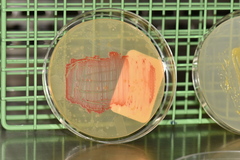 Kocuria roseae0symbiont
- Outcome
- Cd uptakee0
- Direction
- bettere0
- Value
- 13.04 mg pot−1e0
- Qualifier
- 10.68 and 12.58 mg pot−1e0
- Comparator
- singular inoculatione0
Organisms pictured · Representative pictures of the matched species, not figures from the paper.

Verbatim
e0“in average of Cd treatments, the performance of co-inoculation in Cd uptake (13.04 mg pot−1) was better than singular inoculation (10.68 and 12.58 mg pot−1 for Bacillus safensis and Kocuria rosea, respectively).”
e1“sunflower growth”
Claim · model-written summary
Bacterial inoculation increased shoot cadmium uptake performance by 30%.
- Taxon
- sunflowerHelianthus annuuse1
- Treatment
- bacterial inoculatione0
- Outcome
- Cd uptake performance in shoote0
- Direction
- increasede0
- Value
- 30%e0
Not reportedComparator
Organisms pictured · Representative pictures of the matched species, not figures from the paper.
Verbatim
e0“bacterial inoculation increased the Cd uptake performance in shoot and total biomass by 30% and 25%, respectively.”
e1“sunflower growth”
Claim · model-written summary
Bacterial inoculation increased total-biomass cadmium uptake performance by 25%.
- Taxon
- sunflowerHelianthus annuuse1
- Treatment
- bacterial inoculatione0
- Outcome
- Cd uptake performance in shoot and total biomasse0
- Direction
- increasede0
- Value
- 25%e0
Not reportedComparator
Organisms pictured · Representative pictures of the matched species, not figures from the paper.
Verbatim
e0“bacterial inoculation increased the Cd uptake performance in shoot and total biomass by 30% and 25%, respectively.”
e1“sunflower growth”
The same questions in other papers
cadmium atom · growth · Helianthus annuus (common sunflower)Results differ
21 papers in the same direction as this paper · 2 in the opposite direction
- negative
- negative
- negative
20 papers more in this group
See all 24 papers →Bacillus safensis · nutrient: content · Helianthus annuus (common sunflower)Results agree
1 paper in the same direction as this paper
- positive
cadmium atom · physiology: photosynthesis · Helianthus annuus (common sunflower)Results agree
8 papers in the same direction as this paper
- negative
- no effect
- negative
5 papers more in this group
See all 9 papers →inoculation · nutrient: content · Helianthus annuus (common sunflower)Positive and negative results
28 papers in the same direction as this paper · 6 in the opposite direction
- positive
- positive
- no effect
31 papers more in this group
See all 35 papers →inoculation · growth · Helianthus annuus (common sunflower)Positive and negative results
53 papers in the same direction as this paper · 7 in the opposite direction · 1 reporting no difference from an alternative
- negative
- negative
- no effect
58 papers more in this group
See all 62 papers →inoculation · Bacillus safensis · Helianthus annuus (common sunflower)Results agree
1 paper in the same direction as this paper
- positive
Claims are grouped by organism, treatment and what was measured or targeted. A paper counts as positive when any of its claims in the group is positive.