Abstract
Purpose: To evaluate the larvicidal, nematicidal, antifeedant, and antifungal effects of 10 solvent extracts of Mentha spicata root.Methods: Ten solvent extracts were investigated for their total flavonoid and phenolic content and screened for larvicidal, nematicidal, antifeedant, and antifungal activities. The total phenolic content of the extracts was determined using the Folin–Ciocalteu method, while total flavonoid content was determined by aluminium chloride (AlCl3) colorimetric assay. Four solvents extracts were screened for antifungal activity against Aspergillus niger, Candida albicans, recultured Cryptococcus neoformans, and Microsporum audouinii using the agar diffusion method. The nematicidal activity of the compounds was evaluated against the juvenile Meloidogyne javanica organism, while larvicidal properties were evaluated against the urban mosquito Culex quinquefasciatus using a standard bioassay protocol. The antifeedant activity of marine acclimated Oreochromis mossambicus was used for evaluating ichthyotoxic potential.Results: The total flavonoid content in the extracts ranged from 18.5 to 83.4 mg/g, and the amount of free phenolic compounds ranged from 14.7 to 91.9 mg/g of extract powder. The water extract of these plants exhibited significant antioxidant activity and significant levels of phenolics and flavonoids. The water extract exhibited higher larvicidal (LD50 = 11.77 μg/mL), nematicidal (LD50 = 11.78 μg/mL), antifeedant (LD50 > 40 μg/mL), and antifungal activities (minimum inhibitory concentration: 16 μg/mL) against M. audouinii compared with the other extracts.Conclusion: These results show that the water extract of Mentha spicata may be used as a potential natural alternative source of nutritional and pharmaceutical ingredients.Keywords: Mentha spicata, Larvicidal, Nematicidal, Antifeedant and Antifungal activities, Nutritional supplement, Pharmaceutical ingredients
Abstract from the paper’s OpenAlex record; open copy licensed cc-by. Read at the source ↗
The text the model read, with the source record’s inline markup (italics, sub- and superscripts) rendered and its character entities decoded; quote offsets refer to the raw text.
Claims 8
Claim · model-written summary
Root-extract total flavonoid content ranged from 18.5 to 83.4 mg/g.
- Taxon
- Mentha spicata
 Mentha spicatat0
- Outcome
- total flavonoid contente0
- Value
- 18.5 to 83.4 mg/ge0
Not reportedDirection
Organisms pictured · Representative pictures of the matched species, not figures from the paper.

Verbatim
e0“The total flavonoid content in the extracts ranged from 18.5 to 83.4 mg/g”
t0“Mentha spicata”
Claim · model-written summary
Free phenolic compound amounts ranged from 14.7 to 91.9 mg/g of extract powder.
- Taxon
- Mentha spicataMentha spicatat0
- Outcome
- amount of free phenolic compoundse0
- Value
- 14.7 to 91.9 mg/ge0
- Qualifier
- of extract powdere0
Not reportedDirection
Organisms pictured · Representative pictures of the matched species, not figures from the paper.
Verbatim
e0“the amount of free phenolic compounds ranged from 14.7 to 91.9 mg/g of extract powder.”
t0“Mentha spicata”
Claim · model-written summary
The water extract exhibited significant antioxidant activity and significant phenolic and flavonoid levels.
- Taxon
- Mentha spicataMentha spicatat0
- Outcome
- antioxidant activity and significant levels of phenolics and flavonoidse0
- Qualifier
- water extracte0
Not reportedMaterialDirection
Organisms pictured · Representative pictures of the matched species, not figures from the paper.
Verbatim
e0“The water extract of these plants exhibited significant antioxidant activity and significant levels of phenolics and flavonoids.”
t0“Mentha spicata”
Claim · model-written summary
The water extract had higher larvicidal activity than other extracts, with LD50 of 11.77 μg/mL.
- Taxon
- Culex quinquefasciatus
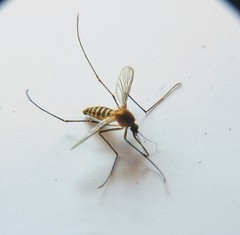 Culex quinquefasciatuse2
- Treatment
- water extracte0
- Outcome
- larvicidale0
- Direction
- highere0
- Value
- 11.77 μg/mLe0
- Comparator
- other extractse1
Organisms pictured · Representative pictures of the matched species, not figures from the paper.

Verbatim
e0“The water extract exhibited higher larvicidal (LD50 = 11.77 μg/mL)”
e1“compared with the other extracts”
e2“larvicidal properties were evaluated against the urban mosquito Culex quinquefasciatus”
Claim · model-written summary
The water extract had higher nematicidal activity than other extracts, with LD50 of 11.78 μg/mL.
Verbatim
e0“The water extract exhibited higher larvicidal (LD50 = 11.77 μg/mL), nematicidal (LD50 = 11.78 μg/mL)”
e1“compared with the other extracts”
e2“the juvenile Meloidogyne javanica organism”
Claim · model-written summary
The water extract had higher antifeedant activity than other extracts, with LD50 above 40 μg/mL.
- Taxon
- Oreochromis mossambicus
 Oreochromis mossambicuse2
- Treatment
- water extracte0
- Outcome
- antifeedante0
- Direction
- highere0
- Value
- > 40 μg/mLe0
- Qualifier
- marine acclimatede2
- Comparator
- other extractse1
Organisms pictured · Representative pictures of the matched species, not figures from the paper.

Verbatim
e0“The water extract exhibited higher larvicidal (LD50 = 11.77 μg/mL), nematicidal (LD50 = 11.78 μg/mL), antifeedant (LD50 > 40 μg/mL)”
e1“compared with the other extracts”
e2“The antifeedant activity of marine acclimated Oreochromis mossambicus was used for evaluating ichthyotoxic potential.”
Claim · model-written summary
The water extract had higher antifungal activity against M. audouinii than other extracts, with minimum inhibitory concentration 16 μg/mL.
- Taxon
- M. audouinii
 Microsporum audouiniie0
- Treatment
- water extracte0
- Outcome
- antifungal activitiese0
- Direction
- highere0
- Value
- 16 μg/mLe0
- Comparator
- other extractse0
Organisms pictured · Representative pictures of the matched species, not figures from the paper.

Verbatim
e0“The water extract exhibited higher larvicidal (LD50 = 11.77 μg/mL), nematicidal (LD50 = 11.78 μg/mL), antifeedant (LD50 > 40 μg/mL), and antifungal activities (minimum inhibitory concentration: 16 μg/mL) against M. audouinii compared with the other extracts.”
Claim · model-written summary
The authors suggest Mentha spicata water extract as a potential natural source of nutritional and pharmaceutical ingredients.
- Taxon
- Mentha spicataMentha spicatae0
- Outcome
- potential natural alternative source of nutritional and pharmaceutical ingredientse0
- Qualifier
- may be usede0
Organisms pictured · Representative pictures of the matched species, not figures from the paper.
Verbatim
e0“These results show that the water extract of Mentha spicata may be used as a potential natural alternative source of nutritional and pharmaceutical ingredients.”