Abstract
Calea genus, belonging to the Asteraceae, is composed by approximately 125 species. Some of these species were chemically investigated and sesquiterpene lactones as well as furan sesquiterpenes have been identified [1]. There are several biological activities related to the compounds present in the genus Calea, such as anti-inflammatory, antiplasmodial, antifungal, antimicrobial and cytotoxic, which are credited to the presence of sesquiterpene lactones, mainly germacranolide derivatives [2]. C. pinnatifida, popularly known as "aruca" and “cipó-cruz”, has been encountered specially in Brazilian Cerrado biome (“savanna like”) and has been used in folk medicine to treat stomachaches, giardiasis and amebiasis. In Brazil this species is commercially available in popular market as an ethanol extract of the leaves to treat amoebic dysentery. Chemically, the aerial parts are composed of fatty esters, glycoside of p-hydroxybenzoic acid, anisic acid, sitosterol, stigmasterol, polyacetylene derivatives and germacranolides [3]. Previous studies revealed germacranolides displayed cytotoxic potential inducing apoptosis in different tumor cells, as well as displayed inhibitory activity of NF-κB factor [4]. In present work, the bioactivity guided fractionation of crude ethanol extract from leaves of C. pinnatifida led to isolation of two sesquiterpene lactones: arucanolide and calealactone C, which structures were established on the basis of spectroscopic analysis. These compounds displayed potent activity against promastigote forms of Leishmania (L.) amazonensis with EC50 of 1.7 and 4.6 µg/mL to arucanolide and calealactone C, respectively. These compounds caused ultrastructural changes in L. amazonensis promastigotes leading to a loss of their classical structural morphology, as evidenced by electron microscopy. Additionally, calealactone C presented low cytotoxicity for J774 macrophages (CC50 31.73 µg/mL), similar to positive controls and presented antiamastigote activity with EC50 of 4.24 µg/mL.
Abstract from the paper’s OpenAlex record, shown for indexing and research. Copyright remains with the authors or the publisher. Read at the source ↗
The text the model read, with the source record’s inline markup (italics, sub- and superscripts) rendered and its character entities decoded; quote offsets refer to the raw text.
Claims 6
Claim · model-written summary
Bioactivity-guided fractionation of Calea pinnatifida leaf extract isolated two sesquiterpene lactones, arucanolide and calealactone C.
- Taxon
- C. pinnatifida
 Calea pinnatifidae0
- Organ / stage
- leavese0
- Outcome
- isolation of two sesquiterpene lactonese0
Organisms pictured · Representative pictures of the matched species, not figures from the paper.
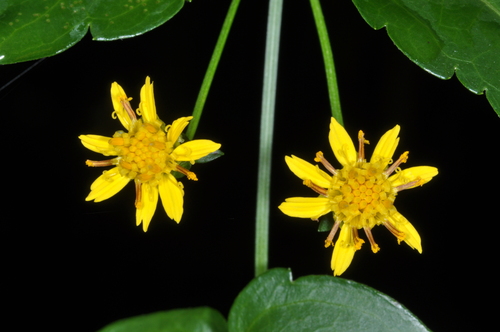
Verbatim
e0“In present work, the bioactivity guided fractionation of crude ethanol extract from leaves of C. pinnatifida led to isolation of two sesquiterpene lactones: arucanolide and calealactone C, which structures were established on the basis of spectroscopic analysis”
Claim · model-written summary
Arucanolide was active against promastigotes of Leishmania amazonensis, with EC50 of 1.7.
- Taxon
- C. pinnatifidaCalea pinnatifidae0
- Interactor
- Leishmania (L.) amazonensis
 Leishmania amazonensise1other
- Compound
- arucanolidee1
- Outcome
- activity against promastigote formse1
- Value
- 1.7e1
Organisms pictured · Representative pictures of the matched species, not figures from the paper.

Verbatim
e0“In present work, the bioactivity guided fractionation of crude ethanol extract from leaves of C. pinnatifida led to isolation of two sesquiterpene lactones: arucanolide and calealactone C, which structures were established on the basis of spectroscopic analysis”
e1“These compounds displayed potent activity against promastigote forms of Leishmania (L.) amazonensis with EC50 of 1.7 and 4.6 µg/mL to arucanolide and calealactone C, respectively”
Claim · model-written summary
Calealactone C was active against promastigotes of Leishmania amazonensis, with EC50 of 4.6.
- Taxon
- C. pinnatifidaCalea pinnatifidae0
- Interactor
- Leishmania (L.) amazonensisLeishmania amazonensise1other
- Compound
- calealactone Ce1
- Outcome
- activity against promastigote formse1
- Value
- 4.6e1
Organisms pictured · Representative pictures of the matched species, not figures from the paper.
Verbatim
e0“In present work, the bioactivity guided fractionation of crude ethanol extract from leaves of C. pinnatifida led to isolation of two sesquiterpene lactones: arucanolide and calealactone C, which structures were established on the basis of spectroscopic analysis”
e1“These compounds displayed potent activity against promastigote forms of Leishmania (L.) amazonensis with EC50 of 1.7 and 4.6 µg/mL to arucanolide and calealactone C, respectively”
Claim · model-written summary
The two compounds caused ultrastructural changes in Leishmania amazonensis promastigotes, with loss of their classical structural morphology.
- Taxon
- C. pinnatifidaCalea pinnatifidae0
- Interactor
- L. amazonensisLeishmania amazonensise2other
- Outcome
- ultrastructural changese2
- Qualifier
- loss of their classical structural morphologye2
Organisms pictured · Representative pictures of the matched species, not figures from the paper.
Verbatim
e0“In present work, the bioactivity guided fractionation of crude ethanol extract from leaves of C. pinnatifida led to isolation of two sesquiterpene lactones: arucanolide and calealactone C, which structures were established on the basis of spectroscopic analysis”
e2“These compounds caused ultrastructural changes in L. amazonensis promastigotes leading to a loss of their classical structural morphology, as evidenced by electron microscopy”
Claim · model-written summary
Calealactone C showed low cytotoxicity for J774 macrophages, with CC50 of 31.73.
- Taxon
- C. pinnatifidaCalea pinnatifidae0
- Compound
- calealactone Ce3
- Outcome
- cytotoxicity for J774 macrophagese3
- Value
- 31.73e3
- Qualifier
- lowe3
Organisms pictured · Representative pictures of the matched species, not figures from the paper.
Verbatim
e0“In present work, the bioactivity guided fractionation of crude ethanol extract from leaves of C. pinnatifida led to isolation of two sesquiterpene lactones: arucanolide and calealactone C, which structures were established on the basis of spectroscopic analysis”
e3“Additionally, calealactone C presented low cytotoxicity for J774 macrophages (CC50 31.73 µg/mL), similar to positive controls and presented antiamastigote activity with EC50 of 4.24 µg/mL”
Claim · model-written summary
Calealactone C showed antiamastigote activity, with EC50 of 4.24.
- Taxon
- C. pinnatifidaCalea pinnatifidae0
- Compound
- calealactone Ce3
- Outcome
- antiamastigote activitye3
- Value
- 4.24e3
Organisms pictured · Representative pictures of the matched species, not figures from the paper.
Verbatim
e0“In present work, the bioactivity guided fractionation of crude ethanol extract from leaves of C. pinnatifida led to isolation of two sesquiterpene lactones: arucanolide and calealactone C, which structures were established on the basis of spectroscopic analysis”
e3“Additionally, calealactone C presented low cytotoxicity for J774 macrophages (CC50 31.73 µg/mL), similar to positive controls and presented antiamastigote activity with EC50 of 4.24 µg/mL”