Abstract
In Panamanian montane forest, the ectomycorrhizal tree Oreomunnea mexicana forms monodominant stands where it accounts for up to 70% of individuals. Monodominance is unexpected in tropical forest because the accumulation of host-specific pathogens is thought to limit the local abundance of individual species. Although rare, monodominant forests have now been recognized in all major tropical regions and include a wide diversity of tree taxa. Notably, many monodominant species associate with a particular type of mutualist: ectomycorrhizal (EM) fungi. Ectomycorrhizal associations are rare in tropical forests where most species associate with arbuscular mycorrhizal fungi. Oreomunnea associates with a diverse community of ectomycorrhizal fungi. In a survey of Oreomunnea root tips using sanger sequencing, I identified 115 EM fungal taxa from 234 EM Oreomunnea root tips collected from four sites across a soil fertility gradient. There was a high compositional turnover in the EM fungal communities associated with Oreomunnea with a significant effect of soil fertility on EM fungal compositional variation. In addition, analysis of the phylogenetic beta diversity for Russula, the most abundant and diverse EM genus in the community, revealed that Russula species show greater than expected phylogenetic dissimilarity among taxa occupying sites with contrasting fertility. Current theory on how monodominance is maintained has focused on alterations to plant-microbial interactions. I tested three potential mechanisms by which EM fungi may potentially allow a host tree species to achieve monodominance: (1) by conferring resistance to soil-borne pathogens that are responsible for negative plant-soil feedback experienced by competing species, (2) by connecting juveniles to adults through ectomycorrhizal networks that transfer water, nutrients or carbon, and (3) by altering ecosystem nutrient economies, thereby reducing the availability of limiting resources to competing species. After testing these three hypotheses I found no evidence for positive feedback on Oreomunnea abundance caused by either pathogen resistance or the formation of mycorrhizal networks. Instead, the presence of EM fungi was associated with a reduction in inorganic nitrogen availability tightening the nitrogen cycle, making it difficult for other, non-EM tree species to compete. Ectomycorrhizal fungi have been shown to respond differently to N addition depending on their functional traits. I studied EM fungal communities associated with Oreomunnea in control plots and plots that had received a nitrogen addition treatment for nine years, I found a significant difference in the species composition of the EM fungal community between plot treatments, and differences in the abundance of some genera. Members of the EM fungal genera Laccaria and Lactarius, showed an increase in their relative abundance with N addition while members of the genus Cortinarius showed a strong reduction in relative abundance. Increased N availability in tropical ecosystems could result in a reduction in EM fungal taxa specialized in organic N and P absorption (e.g., Cortinarius) along with a decrease in EM colonization of host plants potentially having implications in soil C storage, and ecosystem N cycling ultimately affecting forest productivity and diversity. The isotopic composition of EM fruiting bodies has been shown to be a useful tool for understanding the functional role of EM fungi in ecosystems. After analyzing the δ15N and δ13C of Russula fruiting bodies, and its correlation with Oreomunnea host abundance and soil inorganic N availability, I found that the isotopic composition of the Russula community reflects increased host demand for ectomycorrhizal fungal nitrogen supply with a reduction in soil inorganic nitrogen availability. These results are consistent with an increase in N sequestration by EM fungi in sites with higher host abundance. Given the high correlation of host abundance, N availability, and N transfer from EM fungi to the host (reflected in fruiting body δ15N) in our system here I provide further evidence that the formation of Oreomunnea dominated forest is facilitated by its associated EM fungi. In conclusion I found that EM fungi are highly diverse in tropical montane forest and that they can facilitate the formation of monodominant forest of EM associated tree species by altering the N cycle. Also, I predicted increase in N availability due to atmospheric N deposition, could potentially alter the interaction between EM fungi and their host plant potentially leading to biotic and abiotic changes in the ecosystem.
Abstract from the paper’s OpenAlex record, shown for indexing and research. Copyright remains with the authors or the publisher. Read at the source ↗
The text the model read, with the source record’s inline markup (italics, sub- and superscripts) rendered and its character entities decoded; quote offsets refer to the raw text.
Claims 17
Claim · model-written summary
A root-tip survey identified 115 ectomycorrhizal fungal taxa from 234 Oreomunnea root tips across four sites.
- Taxon
- Oreomunnea
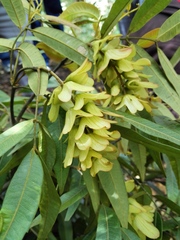 Oreomunneae0
- Organ / stage
- root tipse0
- Interactor
- EMe0symbiont
- Outcome
- EM fungal taxae0
- Value
- 115 EM fungal taxae0
- Qualifier
- 234 EM Oreomunnea root tipse0
Organisms pictured · Representative pictures of the matched species, not figures from the paper.

Verbatim
e0“In a survey of Oreomunnea root tips using sanger sequencing, I identified 115 EM fungal taxa from 234 EM Oreomunnea root tips collected from four sites across a soil fertility gradient.”
Claim · model-written summary
Oreomunnea-associated EM fungal communities showed high turnover and significant compositional variation with soil fertility.
- Taxon
- OreomunneaOreomunneae0
- Interactor
- EMe0symbiont
- Outcome
- EM fungal compositional variatione0
- Qualifier
- high compositional turnovere0
- Setting
- soil fertilitye0
Not reportedDirection
Organisms pictured · Representative pictures of the matched species, not figures from the paper.
Verbatim
e0“There was a high compositional turnover in the EM fungal communities associated with Oreomunnea with a significant effect of soil fertility on EM fungal compositional variation.”
Claim · model-written summary
Russula was the most abundant and diverse EM genus in the community.
 Russula
Organisms pictured · Representative pictures of the matched species, not figures from the paper.

Verbatim
e0“In addition, analysis of the phylogenetic beta diversity for Russula, the most abundant and diverse EM genus in the community, revealed that Russula species show greater than expected phylogenetic dissimilarity among taxa occupying sites with contrasting fertility.”
Claim · model-written summary
Russula species at sites with contrasting fertility were more phylogenetically dissimilar than expected.
- Outcome
- phylogenetic dissimilaritye0
- Direction
- greater than expectede0
- Setting
- sites with contrasting fertilitye0
Organisms pictured · Representative pictures of the matched species, not figures from the paper.
Verbatim
e0“Russula species show greater than expected phylogenetic dissimilarity among taxa occupying sites with contrasting fertility.”
Claim · model-written summary
There was no evidence that pathogen resistance generated positive feedback on Oreomunnea abundance.
- Taxon
- OreomunneaOreomunneae0
- Treatment
- pathogen resistancee0
- Outcome
- positive feedback on Oreomunnea abundancee0
- Qualifier
- no evidencee0
Organisms pictured · Representative pictures of the matched species, not figures from the paper.
Verbatim
e0“After testing these three hypotheses I found no evidence for positive feedback on Oreomunnea abundance caused by either pathogen resistance or the formation of mycorrhizal networks.”
Claim · model-written summary
There was no evidence that mycorrhizal networks generated positive feedback on Oreomunnea abundance.
- Taxon
- OreomunneaOreomunneae0
- Treatment
- formation of mycorrhizal networkse0
- Outcome
- positive feedback on Oreomunnea abundancee0
- Qualifier
- no evidencee0
Organisms pictured · Representative pictures of the matched species, not figures from the paper.
Verbatim
e0“After testing these three hypotheses I found no evidence for positive feedback on Oreomunnea abundance caused by either pathogen resistance or the formation of mycorrhizal networks.”
Claim · model-written summary
EM fungi presence was associated with lower inorganic nitrogen availability.
Not reportedTaxon
Verbatim
e0“Instead, the presence of EM fungi was associated with a reduction in inorganic nitrogen availability tightening the nitrogen cycle, making it difficult for other, non-EM tree species to compete.”
Claim · model-written summary
EM fungal nitrogen-cycle tightening made competition difficult for non-EM tree species.
Verbatim
e0“Instead, the presence of EM fungi was associated with a reduction in inorganic nitrogen availability tightening the nitrogen cycle, making it difficult for other, non-EM tree species to compete.”
Claim · model-written summary
Nine years of nitrogen addition significantly changed the composition of Oreomunnea-associated EM fungal communities relative to control plots.
- Taxon
- OreomunneaOreomunneae0
- Treatment
- nitrogen addition treatmente0
- Interactor
- EMe0symbiont
- Outcome
- species composition of the EM fungal communitye0
- Qualifier
- nine yearse0
- Comparator
- control plotse0
Not reportedDirection
Organisms pictured · Representative pictures of the matched species, not figures from the paper.
Verbatim
e0“I studied EM fungal communities associated with Oreomunnea in control plots and plots that had received a nitrogen addition treatment for nine years, I found a significant difference in the species composition of the EM fungal community between plot treatments, and differences in the abundance of some genera.”
Claim · model-written summary
Nitrogen addition increased the relative abundance of Laccaria.
 Laccaria
Not reportedComparator
Organisms pictured · Representative pictures of the matched species, not figures from the paper.

Verbatim
e0“Members of the EM fungal genera Laccaria and Lactarius, showed an increase in their relative abundance with N addition while members of the genus Cortinarius showed a strong reduction in relative abundance.”
Claim · model-written summary
Nitrogen addition increased the relative abundance of Lactarius.
Not reportedComparator
Verbatim
e0“Members of the EM fungal genera Laccaria and Lactarius, showed an increase in their relative abundance with N addition while members of the genus Cortinarius showed a strong reduction in relative abundance.”
Claim · model-written summary
Nitrogen addition strongly reduced the relative abundance of Cortinarius.
- Taxon
- Cortinarius
 Cortinariuse0
- Treatment
- N additione0
- Outcome
- relative abundancee0
- Direction
- strong reductione0
Not reportedComparator
Organisms pictured · Representative pictures of the matched species, not figures from the paper.

Verbatim
e0“Members of the EM fungal genera Laccaria and Lactarius, showed an increase in their relative abundance with N addition while members of the genus Cortinarius showed a strong reduction in relative abundance.”
Claim · model-written summary
Russula isotopic composition indicated greater host demand for fungal nitrogen as soil inorganic nitrogen declined.
- Taxon
- OreomunneaOreomunneae0
- Compound
- soil inorganic nitrogene0
- Outcome
- host demand for ectomycorrhizal fungal nitrogen supplye0
- Direction
- increasede0
- Qualifier
- reduction in soil inorganic nitrogen availabilitye0
Organisms pictured · Representative pictures of the matched species, not figures from the paper.
Verbatim
e0“After analyzing the δ15N and δ13C of Russula fruiting bodies, and its correlation with Oreomunnea host abundance and soil inorganic N availability, I found that the isotopic composition of the Russula community reflects increased host demand for ectomycorrhizal fungal nitrogen supply with a reduction in soil inorganic nitrogen availability.”
Claim · model-written summary
The results were consistent with increased fungal nitrogen sequestration at higher host abundance.
Verbatim
e0“These results are consistent with an increase in N sequestration by EM fungi in sites with higher host abundance.”
Claim · model-written summary
Host abundance, nitrogen availability and fungal nitrogen transfer to the host were highly correlated.
- Taxon
- OreomunneaOreomunneae0
- Interactor
- EM fungie0symbiont
- Compound
- Ne0
- Outcome
- host abundancee0
- Qualifier
- high correlation of host abundance, N availability, and N transfer from EM fungi to the hoste0
Not reportedDirection
Organisms pictured · Representative pictures of the matched species, not figures from the paper.
Verbatim
e0“Given the high correlation of host abundance, N availability, and N transfer from EM fungi to the host (reflected in fruiting body δ15N) in our system here I provide further evidence that the formation of Oreomunnea dominated forest is facilitated by its associated EM fungi.”
Claim · model-written summary
Associated EM fungi facilitate Oreomunnea-dominated forest formation by altering nitrogen cycling.
- Taxon
- OreomunneaOreomunneae0
- Interactor
- EM fungie0symbiont
- Outcome
- formation of Oreomunnea dominated foreste0
- Qualifier
- altering the N cyclee1
Organisms pictured · Representative pictures of the matched species, not figures from the paper.
Verbatim
e0“Given the high correlation of host abundance, N availability, and N transfer from EM fungi to the host (reflected in fruiting body δ15N) in our system here I provide further evidence that the formation of Oreomunnea dominated forest is facilitated by its associated EM fungi.”
e1“In conclusion I found that EM fungi are highly diverse in tropical montane forest and that they can facilitate the formation of monodominant forest of EM associated tree species by altering the N cycle.”
Claim · model-written summary
The author predicts atmospheric nitrogen deposition could alter EM fungus–host interactions and cause ecosystem changes.
- Taxon
- OreomunneaOreomunneae1
- Treatment
- atmospheric N depositione0
- Interactor
- EM fungie0symbiont
- Outcome
- biotic and abiotic changes in the ecosysteme0
- Qualifier
- could potentially alter the interactione0
Organisms pictured · Representative pictures of the matched species, not figures from the paper.
Verbatim
e0“Also, I predicted increase in N availability due to atmospheric N deposition, could potentially alter the interaction between EM fungi and their host plant potentially leading to biotic and abiotic changes in the ecosystem.”
e1“Oreomunnea associates with a diverse community of ectomycorrhizal fungi.”