Abstract
BACKGROUND: Soybean (Glycine max) is an important oleaginous legume that has been cultivated in new areas in Brazil, including pastures. Problems of reduced production yields have been reported by soybean growers when the crop is sown immediately after desiccation of pastures of Urochloa spp. using glyphosate. The objective of this work was to extract, isolate and identify the major chemicals from U. ruziziensis that have phytotoxic activity and to evaluate the possible relation between this effect and reduced soybean yield. RESULTS: . The plants were collected between five and ten days after treatment. Extracts of dried and ground shoots were obtained by sequential extraction with hexane, dichloromethane and methanol. The results of wheat coleoptile bioassays indicated that the methanol extract was more inhibitory than the dichloromethane extract regardless of glyphosate application. CONCLUSION: Protodioscin, a steroidal saponin, was isolated from the extract as the major component and the activities of this compound were in good agreement with those found for the extract. The release of this compound into the soil is a plausible explanation for the decrease in production observed in transgenic soybean crop after desiccation of U. ruziziensis. © 2017 Society of Chemical Industry.
Abstract from the paper’s OpenAlex record, shown for indexing and research. Copyright remains with the authors or the publisher. Read at the source ↗
The text the model read, with the source record’s inline markup (italics, sub- and superscripts) rendered and its character entities decoded; quote offsets refer to the raw text.
Claims 4
Claim · model-written summary
Methanol extract of U. ruziziensis shoots was more inhibitory than dichloromethane extract in wheat coleoptile bioassays, regardless of glyphosate application.
- Taxon
- Urochloa ruziziensis
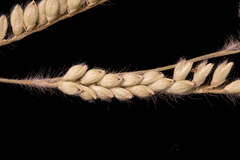 Urochloa ruziziensist0
- Treatment
- methanol extracte1
- Outcome
- inhibitorye1
- Direction
- more inhibitorye1
- Qualifier
- regardless of glyphosate applicatione1
- Comparator
- dichloromethane extracte1
Organisms pictured · Representative pictures of the matched species, not figures from the paper.

Verbatim
t0“Urochloa ruziziensis”
e1“The results of wheat coleoptile bioassays indicated that the methanol extract was more inhibitory than the dichloromethane extract regardless of glyphosate application”
Claim · model-written summary
Protodioscin, a steroidal saponin, was isolated from the U. ruziziensis extract as the major component.
- Taxon
- Urochloa ruziziensisUrochloa ruziziensist0
- Outcome
- Protodioscin, a steroidal saponin, was isolated from the extract as the major componente2
Organisms pictured · Representative pictures of the matched species, not figures from the paper.
Verbatim
t0“Urochloa ruziziensis”
e2“Protodioscin, a steroidal saponin, was isolated from the extract as the major component”
Claim · model-written summary
The activities of protodioscin were in good agreement with those of the U. ruziziensis extract.
- Taxon
- Urochloa ruziziensisUrochloa ruziziensist0
- Compound
- Protodioscine3
- Outcome
- activitiese3
- Comparator
- those found for the extracte3
Not reportedDirection
Organisms pictured · Representative pictures of the matched species, not figures from the paper.
Verbatim
t0“Urochloa ruziziensis”
e3“Protodioscin, a steroidal saponin, was isolated from the extract as the major component and the activities of this compound were in good agreement with those found for the extract”
Claim · model-written summary
Release of protodioscin into the soil is a plausible explanation for the decrease in soybean production after desiccation of U. ruziziensis.
- Taxon
- soybean
 Glycine maxe4
- Interactor
- U. ruziziensisUrochloa ruziziensise4other
- Outcome
- decrease in productione4
- Direction
- decreasee4
- Qualifier
- release of this compound into the soile4
Organisms pictured · Representative pictures of the matched species, not figures from the paper.

Verbatim
t0“Urochloa ruziziensis”
e4“The release of this compound into the soil is a plausible explanation for the decrease in production observed in transgenic soybean crop after desiccation of U. ruziziensis”