Abstract
A strain of Serratia sp. Ent16 isolated from internal tissues of pea nodule inhibited in vitro growth of the plant pathogens Fusarium oxysporum and Bipolaris sorokiniana and the model strain Rhizobium leguminosarum bv viceae 1078 but had a considerably weaker antagonistic effect on the Rhizobium strain Rh16 from its own nodule. Cells of the Ent16 strain tagged by the gfp gene (the Ent16-gfp strain) were not seen in the pea endorhizosphere when plants were grown in a rich culture medium. The development of symbiosis was favored by plant germination on filter paper. Confocal microscopy showed that individual cells of the Ent16-gfp strain were attached to the outer side of root hair cell walls, while agglomerations of fluorescent bacterial cells were detected in the zone of exoderm of lateral root formation and in root vessels. A series of scanned sections of pea root revealed the presence of the Ent16-gfp strain in lateral root primordia, through which the bacteria penetrated the endorhizosphere.
Abstract from the paper’s OpenAlex record, shown for indexing and research. Copyright remains with the authors or the publisher. Read at the source ↗
The text the model read, with the source record’s inline markup (italics, sub- and superscripts) rendered and its character entities decoded; quote offsets refer to the raw text.
Claims 9
Claim · model-written summary
Serratia Ent16 inhibited Fusarium oxysporum growth in vitro.
- Taxon
- pea
 Lathyrus oleraceust0
- Interactor
- Fusarium oxysporum
 Fusarium oxysporume0pathogen
- Second interactor
- Serratia sp. Ent16e0biocontrol_agent
- Outcome
- growth of the plant pathogens Fusarium oxysporume0
- Direction
- inhibitede0
Organisms pictured · Representative pictures of the matched species, not figures from the paper.


Verbatim
t0“pea”
e0“A strain of Serratia sp. Ent16 isolated from internal tissues of pea nodule inhibited in vitro growth of the plant pathogens Fusarium oxysporum and Bipolaris sorokiniana”
Claim · model-written summary
Serratia Ent16 inhibited Bipolaris sorokiniana growth in vitro.
- Taxon
- peaLathyrus oleraceust0
- Interactor
- Bipolaris sorokiniana
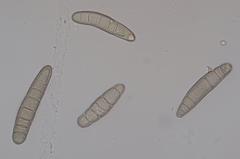 Bipolaris sorokinianae0pathogen
- Second interactor
- Serratia sp. Ent16e0biocontrol_agent
- Outcome
- growth of the plant pathogens Fusarium oxysporum and Bipolaris sorokinianae0
- Direction
- inhibitede0
Organisms pictured · Representative pictures of the matched species, not figures from the paper.
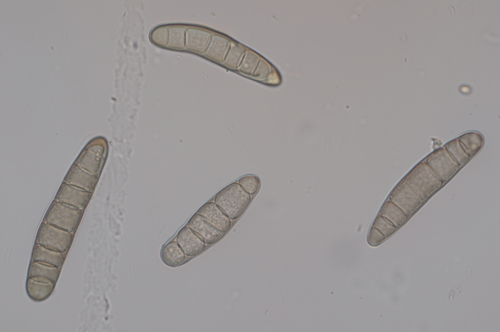
Verbatim
t0“pea”
e0“A strain of Serratia sp. Ent16 isolated from internal tissues of pea nodule inhibited in vitro growth of the plant pathogens Fusarium oxysporum and Bipolaris sorokiniana”
Claim · model-written summary
Serratia Ent16 inhibited Rhizobium leguminosarum bv viceae 1078.
- Taxon
- peaLathyrus oleraceust0
- Interactor
- Rhizobium leguminosarum bv viceae 1078
 Rhizobium leguminosarume0symbiont
- Second interactor
- Serratia sp. Ent16e1other
- Outcome
- growth of the plant pathogens Fusarium oxysporum and Bipolaris sorokiniana and the model strain Rhizobium leguminosarum bv viceae 1078e0
- Direction
- inhibitede0
Organisms pictured · Representative pictures of the matched species, not figures from the paper.

Verbatim
t0“pea”
e0“inhibited in vitro growth of the plant pathogens Fusarium oxysporum and Bipolaris sorokiniana and the model strain Rhizobium leguminosarum bv viceae 1078”
e1“A strain of Serratia sp. Ent16”
Claim · model-written summary
Antagonism by Serratia Ent16 was weaker toward Rhizobium Rh16 from the same nodule.
- Taxon
- peaLathyrus oleraceust0
- Interactor
- Rhizobium strain Rh16e0symbiont
- Second interactor
- Serratia sp. Ent16e1other
- Outcome
- antagonistic effect on the Rhizobium strain Rh16e0
- Direction
- weakere0
Organisms pictured · Representative pictures of the matched species, not figures from the paper.
Verbatim
t0“pea”
e0“had a considerably weaker antagonistic effect on the Rhizobium strain Rh16 from its own nodule”
e1“A strain of Serratia sp. Ent16”
Claim · model-written summary
Tagged Serratia Ent16 was not seen in the pea endorhizosphere in rich culture medium.
- Taxon
- peaLathyrus oleraceuse0
- Interactor
- Ent16-gfp straine0symbiont
- Gene
- gfp genee0
- Outcome
- Ent16-gfp strain) were not seen in the pea endorhizospheree0
- Setting
- rich culture mediume0
Not reportedDirection
Organisms pictured · Representative pictures of the matched species, not figures from the paper.
Verbatim
e0“Cells of the Ent16 strain tagged by the gfp gene (the Ent16-gfp strain) were not seen in the pea endorhizosphere when plants were grown in a rich culture medium”
Claim · model-written summary
Germination on filter paper favored development of symbiosis.
- Taxon
- peaLathyrus oleraceust0
- Treatment
- plant germination on filter papere0
- Outcome
- development of symbiosise0
- Direction
- favorede0
Not reportedComparator
Organisms pictured · Representative pictures of the matched species, not figures from the paper.
Verbatim
t0“pea”
e0“The development of symbiosis was favored by plant germination on filter paper”
Claim · model-written summary
Individual tagged Ent16 cells attached to outer root-hair cell walls.
- Taxon
- peaLathyrus oleraceust0
- Organ / stage
- root hair cell wallse0
- Interactor
- Ent16-gfp straine0symbiont
- Outcome
- attached to the outer side of root hair cell wallse0
Organisms pictured · Representative pictures of the matched species, not figures from the paper.
Verbatim
t0“pea”
e0“individual cells of the Ent16-gfp strain were attached to the outer side of root hair cell walls”
Claim · model-written summary
Tagged Ent16 bacterial cell aggregates were detected in the lateral-root exoderm zone and root vessels.
- Taxon
- peaLathyrus oleraceust0
- Organ / stage
- zone of exoderm of lateral root formation and in root vesselse0
- Interactor
- Ent16-gfp straine1symbiont
- Outcome
- agglomerations of fluorescent bacterial cells were detectede0
Organisms pictured · Representative pictures of the matched species, not figures from the paper.
Verbatim
t0“pea”
e0“agglomerations of fluorescent bacterial cells were detected in the zone of exoderm of lateral root formation and in root vessels”
e1“individual cells of the Ent16-gfp strain were attached”
Claim · model-written summary
Tagged Ent16 was present in lateral-root primordia, providing a route into the endorhizosphere.
- Taxon
- peaLathyrus oleraceuse0
- Organ / stage
- lateral root primordiae0
- Interactor
- Ent16-gfp straine0symbiont
- Outcome
- presence of the Ent16-gfp strain in lateral root primordiae0
Organisms pictured · Representative pictures of the matched species, not figures from the paper.
Verbatim
e0“A series of scanned sections of pea root revealed the presence of the Ent16-gfp strain in lateral root primordia, through which the bacteria penetrated the endorhizosphere”
The same questions in other papers
processing · growth · Lathyrus oleraceus (pea)Positive and negative results
4 papers in the same direction as this paper · 3 in the opposite direction
- no effect
- negative
- negative
4 papers more in this group
See all 8 papers →Claims are grouped by organism, treatment and what was measured or targeted. A paper counts as positive when any of its claims in the group is positive.