Abstract
Extract of garlic (Allium sativum), Neem (Azadirachta indica), BAU-Biofungicide (Trichoderma based preparation), Bavistin DF (Carbandazim) and Potent 250 EC (Propiconazole) were studied in in-vitro test to evaluate the efficacy of plant extracts, BAU-Biofungicide and fungicides on the inhibitory effects on some selected rice pathogen. BAU-Biofungicide (2 & 3%) showed significant effect in reducing mycelial growth of Bipolaris oryzae, Cercospora oryzae, Rhizoctonia solani and Ustilaginoidea virens. Potent (0.1%) showed excellent effect in controlling mycelial growth of Ustilaginoidea virens, Sarocladium oryzae, Rhizoctonia solani, Bipolaris oryzae and Cercospora oryzae. Bavistin (0.1%) was found to have better result in inhibiting the mycelial growth of Cercospora oryzae, Sarocladium oryzae and Rhizoctonia solani. Highest increase (16.67%) in seed germination was recorded over control when seeds were treated with BAU-Biofungicide (3%). BAU-Biofungicide (3%) also resulted in higher increase vigour index compared to control.
Abstract from the paper’s OpenAlex record; open copy licensed cc-by. Read at the source ↗
The text the model read, with the source record’s inline markup (italics, sub- and superscripts) rendered and its character entities decoded; quote offsets refer to the raw text.
Claims 14
Claim · model-written summary
BAU-Biofungicide at 2 and 3% significantly reduced Bipolaris oryzae mycelial growth.
- Taxon
- Bipolaris oryzae
 Bipolaris oryzaee0
- Treatment
- BAU-Biofungicide (2 & 3%)e0
- Interactor
- Trichoderma
 Trichodermae1biocontrol_agent
- Outcome
- mycelial growth of Bipolaris oryzaee0
- Direction
- reducinge0
Not reportedComparator
Organisms pictured · Representative pictures of the matched species, not figures from the paper.
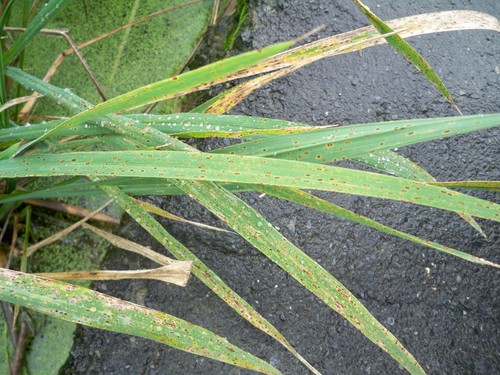

Verbatim
e0“BAU-Biofungicide (2 & 3%) showed significant effect in reducing mycelial growth of Bipolaris oryzae, Cercospora oryzae, Rhizoctonia solani and Ustilaginoidea virens.”
e1“BAU-Biofungicide (Trichoderma based preparation)”
Claim · model-written summary
BAU-Biofungicide at 2 and 3% significantly reduced Cercospora oryzae mycelial growth.
- Taxon
- Cercospora oryzaeCercospora janseanae0
- Treatment
- BAU-Biofungicide (2 & 3%)e0
- Interactor
- TrichodermaTrichodermae1biocontrol_agent
- Outcome
- mycelial growthe0
- Direction
- reducinge0
Not reportedComparator
Organisms pictured · Representative pictures of the matched species, not figures from the paper.
Verbatim
e0“BAU-Biofungicide (2 & 3%) showed significant effect in reducing mycelial growth of Bipolaris oryzae, Cercospora oryzae, Rhizoctonia solani and Ustilaginoidea virens.”
e1“BAU-Biofungicide (Trichoderma based preparation)”
Claim · model-written summary
BAU-Biofungicide at 2 and 3% significantly reduced Rhizoctonia solani mycelial growth.
- Taxon
- Rhizoctonia solani
 Rhizoctonia solanie0
- Treatment
- BAU-Biofungicide (2 & 3%)e0
- Interactor
- TrichodermaTrichodermae1biocontrol_agent
- Outcome
- mycelial growthe0
- Direction
- reducinge0
Not reportedComparator
Organisms pictured · Representative pictures of the matched species, not figures from the paper.

Verbatim
e0“BAU-Biofungicide (2 & 3%) showed significant effect in reducing mycelial growth of Bipolaris oryzae, Cercospora oryzae, Rhizoctonia solani and Ustilaginoidea virens.”
e1“BAU-Biofungicide (Trichoderma based preparation)”
Claim · model-written summary
BAU-Biofungicide at 2 and 3% significantly reduced Ustilaginoidea virens mycelial growth.
- Taxon
- Ustilaginoidea virens
 Ustilaginoidea virense0
- Treatment
- BAU-Biofungicide (2 & 3%)e0
- Interactor
- TrichodermaTrichodermae1biocontrol_agent
- Outcome
- mycelial growthe0
- Direction
- reducinge0
Not reportedComparator
Organisms pictured · Representative pictures of the matched species, not figures from the paper.

Verbatim
e0“BAU-Biofungicide (2 & 3%) showed significant effect in reducing mycelial growth of Bipolaris oryzae, Cercospora oryzae, Rhizoctonia solani and Ustilaginoidea virens.”
e1“BAU-Biofungicide (Trichoderma based preparation)”
Claim · model-written summary
Potent at 0.1% excellently controlled Ustilaginoidea virens mycelial growth.
- Taxon
- Ustilaginoidea virensUstilaginoidea virense0
- Treatment
- Potent (0.1%)e0
- Outcome
- mycelial growth of Ustilaginoidea virense0
- Direction
- controllinge0
Not reportedComparator
Organisms pictured · Representative pictures of the matched species, not figures from the paper.
Verbatim
e0“Potent (0.1%) showed excellent effect in controlling mycelial growth of Ustilaginoidea virens, Sarocladium oryzae, Rhizoctonia solani, Bipolaris oryzae and Cercospora oryzae.”
Claim · model-written summary
Potent at 0.1% excellently controlled Sarocladium oryzae mycelial growth.
- Taxon
- Sarocladium oryzae
 Sarocladium oryzaee0
- Treatment
- Potent (0.1%)e0
- Outcome
- mycelial growthe0
- Direction
- controllinge0
Not reportedComparator
Organisms pictured · Representative pictures of the matched species, not figures from the paper.

Verbatim
e0“Potent (0.1%) showed excellent effect in controlling mycelial growth of Ustilaginoidea virens, Sarocladium oryzae, Rhizoctonia solani, Bipolaris oryzae and Cercospora oryzae.”
Claim · model-written summary
Potent at 0.1% excellently controlled Rhizoctonia solani mycelial growth.
- Taxon
- Rhizoctonia solaniRhizoctonia solanie0
- Treatment
- Potent (0.1%)e0
- Outcome
- mycelial growthe0
- Direction
- controllinge0
Not reportedComparator
Organisms pictured · Representative pictures of the matched species, not figures from the paper.
Verbatim
e0“Potent (0.1%) showed excellent effect in controlling mycelial growth of Ustilaginoidea virens, Sarocladium oryzae, Rhizoctonia solani, Bipolaris oryzae and Cercospora oryzae.”
Claim · model-written summary
Potent at 0.1% excellently controlled Bipolaris oryzae mycelial growth.
- Taxon
- Bipolaris oryzaeBipolaris oryzaee0
- Treatment
- Potent (0.1%)e0
- Outcome
- mycelial growthe0
- Direction
- controllinge0
Not reportedComparator
Organisms pictured · Representative pictures of the matched species, not figures from the paper.
Verbatim
e0“Potent (0.1%) showed excellent effect in controlling mycelial growth of Ustilaginoidea virens, Sarocladium oryzae, Rhizoctonia solani, Bipolaris oryzae and Cercospora oryzae.”
Claim · model-written summary
Potent at 0.1% excellently controlled Cercospora oryzae mycelial growth.
- Taxon
- Cercospora oryzaeCercospora janseanae0
- Treatment
- Potent (0.1%)e0
- Outcome
- mycelial growthe0
- Direction
- controllinge0
Not reportedComparator
Verbatim
e0“Potent (0.1%) showed excellent effect in controlling mycelial growth of Ustilaginoidea virens, Sarocladium oryzae, Rhizoctonia solani, Bipolaris oryzae and Cercospora oryzae.”
Claim · model-written summary
Bavistin at 0.1% gave a better result inhibiting Cercospora oryzae mycelial growth.
- Taxon
- Cercospora oryzaeCercospora janseanae0
- Treatment
- Bavistin (0.1%)e0
- Outcome
- mycelial growth of Cercospora oryzaee0
- Direction
- inhibitinge0
Not reportedComparator
Verbatim
e0“Bavistin (0.1%) was found to have better result in inhibiting the mycelial growth of Cercospora oryzae, Sarocladium oryzae and Rhizoctonia solani.”
Claim · model-written summary
Bavistin at 0.1% gave a better result inhibiting Sarocladium oryzae mycelial growth.
- Taxon
- Sarocladium oryzaeSarocladium oryzaee0
- Treatment
- Bavistin (0.1%)e0
- Outcome
- mycelial growthe0
- Direction
- inhibitinge0
Not reportedComparator
Organisms pictured · Representative pictures of the matched species, not figures from the paper.
Verbatim
e0“Bavistin (0.1%) was found to have better result in inhibiting the mycelial growth of Cercospora oryzae, Sarocladium oryzae and Rhizoctonia solani.”
Claim · model-written summary
Bavistin at 0.1% gave a better result inhibiting Rhizoctonia solani mycelial growth.
- Taxon
- Rhizoctonia solaniRhizoctonia solanie0
- Treatment
- Bavistin (0.1%)e0
- Outcome
- mycelial growthe0
- Direction
- inhibitinge0
Not reportedComparator
Organisms pictured · Representative pictures of the matched species, not figures from the paper.
Verbatim
e0“Bavistin (0.1%) was found to have better result in inhibiting the mycelial growth of Cercospora oryzae, Sarocladium oryzae and Rhizoctonia solani.”
Claim · model-written summary
BAU-Biofungicide at 3% produced the highest seed germination increase, 16.67% over control.
- Taxon
- Rice
 Oryza sativat0
- Treatment
- BAU-Biofungicide (3%)e0
- Interactor
- TrichodermaTrichodermae1biocontrol_agent
- Outcome
- seed germinatione0
- Direction
- Highest increasee0
- Value
- 16.67%e0
- Comparator
- controle0
Organisms pictured · Representative pictures of the matched species, not figures from the paper.

Verbatim
e0“Highest increase (16.67%) in seed germination was recorded over control when seeds were treated with BAU-Biofungicide (3%).”
e1“BAU-Biofungicide (Trichoderma based preparation)”
t0“Rice”
Claim · model-written summary
BAU-Biofungicide at 3% increased vigour index relative to control.
- Taxon
- RiceOryza sativat0
- Treatment
- BAU-Biofungicide (3%)e0
- Interactor
- TrichodermaTrichodermae1biocontrol_agent
- Outcome
- vigour indexe0
- Direction
- higher increasee0
- Comparator
- controle0
Organisms pictured · Representative pictures of the matched species, not figures from the paper.
Verbatim
e0“BAU-Biofungicide (3%) also resulted in higher increase vigour index compared to control.”
e1“BAU-Biofungicide (Trichoderma based preparation)”
t0“Rice”
The same questions in other papers
carbendazim · disease · Rhizoctonia solaniResults agree
1 paper in the same direction as this paper
- positive
Claims are grouped by organism, treatment and what was measured or targeted. A paper counts as positive when any of its claims in the group is positive.