Abstract
The key enzymatic step in betalain biosynthesis involves conversion of l-3,4-dihydroxyphenylalanine (l-DOPA) to betalamic acid. One class of enzymes capable of this is 3,4-dihydroxyphenylalanine 4,5-dioxygenase (DODA). In betalain-producing species, multiple paralogs of this gene are maintained. This study demonstrates which paralogs function in the betalain pathway and determines the residue changes required to evolve a betalain-nonfunctional DODA into a betalain-functional DODA. Functionalities of two pairs of DODAs were tested by expression in beets, Arabidopsis and yeast, and gene silencing was performed by virus-induced gene silencing. Site-directed mutagenesis identified amino acid residues essential for betalamic acid production. Beta vulgaris and Mirabilis jalapa both possess a DODA1 lineage that functions in the betalain pathway and at least one other lineage, DODA2, that does not. Site-directed mutagenesis resulted in betalain biosynthesis by a previously nonfunctional DODA, revealing key residues required for evolution of the betalain pathway. Divergent functionality of DODA paralogs, one clade involved in betalain biosynthesis but others not, is present in various Caryophyllales species. A minimum of seven amino acid residue changes conferred betalain enzymatic activity to a betalain-nonfunctional DODA paralog, providing insight into the evolution of the betalain pigment pathway in plants.
Abstract from the paper’s OpenAlex record, shown for indexing and research. Copyright remains with the authors or the publisher. Read at the source ↗
The text the model read, with the source record’s inline markup (italics, sub- and superscripts) rendered and its character entities decoded; quote offsets refer to the raw text.
Claims 8
Claim · model-written summary
The DODA1 lineage functions in the betalain pathway in Beta vulgaris.
- Taxon
- Beta vulgaris
 Beta vulgarise1
- Gene
- DODA1e1
- Outcome
- functions in the betalain pathwaye1
Not reportedDirection
Organisms pictured · Representative pictures of the matched species, not figures from the paper.
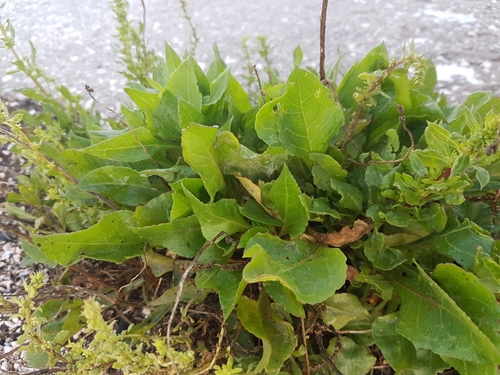
Verbatim
e1“Beta vulgaris and Mirabilis jalapa both possess a DODA1 lineage that functions in the betalain pathway and at least one other lineage, DODA2, that does not”
Claim · model-written summary
The DODA1 lineage functions in the betalain pathway in Mirabilis jalapa.
- Taxon
- Mirabilis jalapa
 Mirabilis jalapae1
- Gene
- DODA1e1
- Outcome
- functions in the betalain pathwaye1
Not reportedDirection
Organisms pictured · Representative pictures of the matched species, not figures from the paper.

Verbatim
e1“Beta vulgaris and Mirabilis jalapa both possess a DODA1 lineage that functions in the betalain pathway and at least one other lineage, DODA2, that does not”
Claim · model-written summary
The DODA2 lineage does not function in the betalain pathway in Beta vulgaris.
- Taxon
- Beta vulgarisBeta vulgarise1
- Gene
- DODA2e1
- Outcome
- functions in the betalain pathwaye1
Not reportedDirection
Organisms pictured · Representative pictures of the matched species, not figures from the paper.
Verbatim
e1“Beta vulgaris and Mirabilis jalapa both possess a DODA1 lineage that functions in the betalain pathway and at least one other lineage, DODA2, that does not”
Claim · model-written summary
The DODA2 lineage does not function in the betalain pathway in Mirabilis jalapa.
- Taxon
- Mirabilis jalapaMirabilis jalapae1
- Gene
- DODA2e1
- Outcome
- functions in the betalain pathwaye1
Not reportedDirection
Organisms pictured · Representative pictures of the matched species, not figures from the paper.
Verbatim
e1“Beta vulgaris and Mirabilis jalapa both possess a DODA1 lineage that functions in the betalain pathway and at least one other lineage, DODA2, that does not”
Claim · model-written summary
Functionality of DODA paralogs is divergent across Caryophyllales species, with one clade involved in betalain biosynthesis and others not.
Not reportedDirection
Verbatim
e2“Divergent functionality of DODA paralogs, one clade involved in betalain biosynthesis but others not, is present in various Caryophyllales species”
Claim · model-written summary
Site-directed mutagenesis identified amino acid residues essential for betalamic acid production in beet.
- Taxon
- beetBeta vulgarist0
- Treatment
- Site-directed mutagenesise3
- Outcome
- betalamic acid productione3
Not reportedComparatorDirection
Organisms pictured · Representative pictures of the matched species, not figures from the paper.
Verbatim
e3“Site-directed mutagenesis identified amino acid residues essential for betalamic acid production”
t0“in beet DODA2”
Claim · model-written summary
Site-directed mutagenesis resulted in betalain biosynthesis by a previously nonfunctional DODA in beet.
- Taxon
- beetBeta vulgarist0
- Treatment
- Site-directed mutagenesise4
- Gene
- DODAe4
- Outcome
- betalain biosynthesise4
- Comparator
- previously nonfunctional DODAe4
Not reportedDirection
Organisms pictured · Representative pictures of the matched species, not figures from the paper.
Verbatim
e4“Site-directed mutagenesis resulted in betalain biosynthesis by a previously nonfunctional DODA”
t0“in beet DODA2”
Claim · model-written summary
A minimum of seven amino acid residue changes conferred betalain enzymatic activity to a betalain-nonfunctional DODA paralog in beet.
- Taxon
- beetBeta vulgarist0
- Treatment
- amino acid residue changese5
- Outcome
- betalain enzymatic activitye5
- Value
- A minimum of sevene5
- Comparator
- betalain-nonfunctional DODA paraloge5
Not reportedDirection
Organisms pictured · Representative pictures of the matched species, not figures from the paper.
Verbatim
e5“A minimum of seven amino acid residue changes conferred betalain enzymatic activity to a betalain-nonfunctional DODA paralog”
t0“in beet DODA2”
The same questions in other papers
climate site · molecular: metabolites · Beta vulgaris (beet)Positive and negative results
1 paper in the same direction as this paper · 1 in the opposite direction
- negative
- positive
climate site · yield · Beta vulgaris (beet)Positive and negative results
5 papers in the same direction as this paper · 4 in the opposite direction
- negative
- negative
- negative
6 papers more in this group
See all 10 papers →Claims are grouped by organism, treatment and what was measured or targeted. A paper counts as positive when any of its claims in the group is positive.