Abstract
Abstract The natural grasslands in South America have soils with low phosphorus (P) availability (1.0 to 7.5 mg kg −1 ), possibly altering the absorption and accumulation of P in grasses. We evaluated the chemical fractionation of P in the leaves of the most important grasses present in these grasslands to better understand the mechanisms involved in the storage of P. The grasses studied were Axonopus affinis and Paspalum notatum (fast tissue cycling and high nutrient demand) and Andropogon lateralis and Aristida laevis (slow tissue cycling and low nutrient demand). They were grown in pots filled with an Ultisol with two levels of P: control, and addition of 50 mg P kg –1 . The main P fractions were the inorganic soluble (44%) and P in RNA (26%). Addition of P increased the total P concentration, following the order A. affinis (140%) > P. notatum (116%) > A. lateralis (81%) > A. laevis (21%). In conclusion, the species A . affinis and P . notatum responded to P fertilization with high variation and accumulating P in less-structural chemical forms, such as inorganic P. The species A . lateralis and A . laevis showed low variation in the concentration of P forms, with higher P concentrations in structural forms.
Abstract from the paper’s OpenAlex record; open copy licensed other-oa. Read at the source ↗
The text the model read, with the source record’s inline markup (italics, sub- and superscripts) rendered and its character entities decoded; quote offsets refer to the raw text.
Claims 10
Claim · model-written summary
Soluble inorganic phosphorus was the main leaf fraction at 44%.
Verbatim
e0“The main P fractions were the inorganic soluble (44%) and P in RNA (26%).”
t0“grasses”
Claim · model-written summary
RNA phosphorus comprised 26% of leaf phosphorus.
Verbatim
e0“The main P fractions were the inorganic soluble (44%) and P in RNA (26%).”
t0“grasses”
Claim · model-written summary
Added phosphorus increased total phosphorus in A. affinis by 140%.
- Taxon
- A. affinis
 Axonopus fissifoliuse0
- Treatment
- Addition of Pe0
- Outcome
- total P concentratione0
- Direction
- increasede0
- Value
- 140%e0
Not reportedComparator
Organisms pictured · Representative pictures of the matched species, not figures from the paper.

Verbatim
e0“Addition of P increased the total P concentration, following the order A. affinis (140%) > P. notatum (116%) > A. lateralis (81%) > A. laevis (21%).”
Claim · model-written summary
Added phosphorus increased total phosphorus in P. notatum by 116%.
- Taxon
- P. notatume0
- Treatment
- Addition of Pe0
- Outcome
- total P concentratione0
- Direction
- increasede0
- Value
- 116%e0
Not reportedComparator
Verbatim
e0“Addition of P increased the total P concentration, following the order A. affinis (140%) > P. notatum (116%) > A. lateralis (81%) > A. laevis (21%).”
Claim · model-written summary
Added phosphorus increased total phosphorus in A. lateralis by 81%.
- Taxon
- A. lateralis
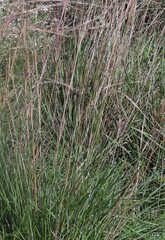 Anatherum lateralee0
- Treatment
- Addition of Pe0
- Outcome
- total P concentratione0
- Direction
- increasede0
- Value
- 81%e0
Not reportedComparator
Organisms pictured · Representative pictures of the matched species, not figures from the paper.
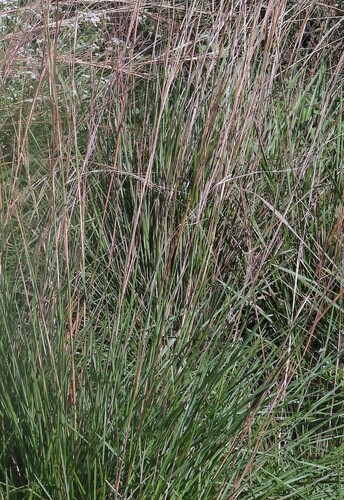
Verbatim
e0“Addition of P increased the total P concentration, following the order A. affinis (140%) > P. notatum (116%) > A. lateralis (81%) > A. laevis (21%).”
Claim · model-written summary
Added phosphorus increased total phosphorus in A. laevis by 21%.
- Taxon
- A. laevise0
- Treatment
- Addition of Pe0
- Outcome
- total P concentratione0
- Direction
- increasede0
- Value
- 21%e0
Not reportedComparator
Verbatim
e0“Addition of P increased the total P concentration, following the order A. affinis (140%) > P. notatum (116%) > A. lateralis (81%) > A. laevis (21%).”
Claim · model-written summary
A. affinis accumulated phosphorus in less-structural forms following fertilization.
- Taxon
- A . affinisAxonopus fissifoliuse0
- Treatment
- P fertilizatione0
- Outcome
- accumulating P in less-structural chemical formse0
Organisms pictured · Representative pictures of the matched species, not figures from the paper.
Verbatim
e0“A . affinis and P . notatum responded to P fertilization with high variation and accumulating P in less-structural chemical forms, such as inorganic P.”
Claim · model-written summary
P. notatum accumulated phosphorus in less-structural forms following fertilization.
Verbatim
e0“A . affinis and P . notatum responded to P fertilization with high variation and accumulating P in less-structural chemical forms, such as inorganic P.”
Claim · model-written summary
A. lateralis showed little phosphorus fraction variation and higher structural phosphorus.
- Taxon
- A . lateralisAnatherum lateralee0
- Outcome
- concentration of P formse0
- Direction
- low variatione0
Organisms pictured · Representative pictures of the matched species, not figures from the paper.
Verbatim
e0“A . lateralis and A . laevis showed low variation in the concentration of P forms, with higher P concentrations in structural forms.”
Claim · model-written summary
A. laevis showed little phosphorus fraction variation and higher structural phosphorus.
Verbatim
e0“A . lateralis and A . laevis showed low variation in the concentration of P forms, with higher P concentrations in structural forms.”