Abstract
This experiment was carried out at Sakha Agricultural Research Station from June 2011 to May 2012 to study the problem of reduction of cumin (Cuminum cyminum) seed germination. Cumin seeds were obtained from different sources for conducting the study. Several microbial species including sixteen fungal taxa, some yeasts and bacteria, were isolated from tested cumin seeds. The results exhibited suppressive of Fusarium spp. and Aspergillus in seed borne fungi. The most storage fungi which attack stored seeds led to decrease the germination percent. Ten essential oils plants (peppermint, eucalyptus, rosemary, nigella, caraway, thyme, marjoram, clove, double jasmine and celery) were used as seed coating materials in two forms, one as commercial and the other was as extraction. All oils used increased germination percent as comparing with vitavax except caraway and clove oils, in addition nigella oil proved to be the highest germination % (42.88%) comparing with 38.33% for the control . At the same time, caraway oil gave the lowest mean percent of germination (4.44%). The treated cumin seeds stored for one year maintaining it in petri dishes under room conditions and examination of seeds associated fungi and bacteria and germination after an equal period. Generally, germination percent increased with increasing the period of coating seeds with essential oils. All oils significantly reduced the percent of fungi associated the seeds especially Fusarium and Aspergillus. At the end of the storage period some of treatments were deteriorated and the other were observed at the healthy shape(seeds coating with caraway, celery, eucalyptus,double jasmine, thyme and rosemary oils). Oils of nigella; peppermint and eucalyptus inhibited Fusarium percent (100% reduction), while caraway oil inhibited Aspergillus (100% reduction). The bacterial infection inhibited by marjoram; peppermint; nigella and clove. The deterioration by insects suppressed by craway; celery; eucalyptus and jasmine treatments. The fungicidal and insecticidal effect of craway may occurs from the highly percent of carvon (61.58%) and limonene (29.11%). While, the bactericidal and insecticidal effect of marjoram oil may come from α-terpineol (35.4%). This work gives highlights on the potential of using essential oils as seed coating before storage for the pest managements.
Abstract from the paper’s OpenAlex record; open copy licensed cc-by. Read at the source ↗
The text the model read, with the source record’s inline markup (italics, sub- and superscripts) rendered and its character entities decoded; quote offsets refer to the raw text.
Claims 12
Claim · model-written summary
Nigella oil seed coating gave the highest germination percentage of cumin seeds (42.88%), compared with 38.33% for the control.
- Taxon
- Cuminum cyminum
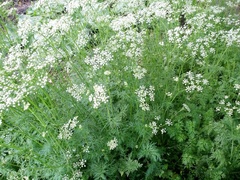 Cuminum cyminume0
- Treatment
- nigella oile1
- Outcome
- germination %e1
- Direction
- higheste1
- Value
- 42.88%e1
- Comparator
- controle1
Organisms pictured · Representative pictures of the matched species, not figures from the paper.
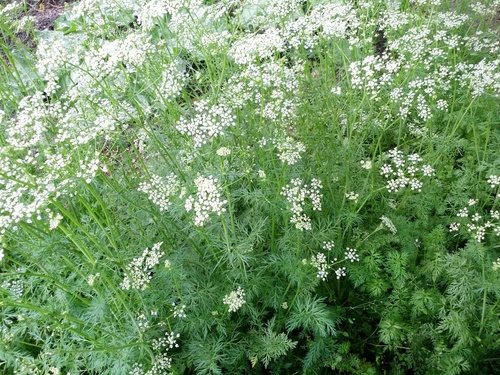
Verbatim
e0“reduction of cumin (Cuminum cyminum) seed germination”
e1“nigella oil proved to be the highest germination % (42.88%) comparing with 38.33% for the control”
Claim · model-written summary
Caraway oil seed coating gave the lowest mean germination percentage of cumin seeds (4.44%).
- Taxon
- Cuminum cyminumCuminum cyminume0
- Treatment
- caraway oile2
- Outcome
- mean percent of germinatione2
- Direction
- loweste2
- Value
- 4.44%e2
Not reportedComparator
Organisms pictured · Representative pictures of the matched species, not figures from the paper.
Verbatim
e0“reduction of cumin (Cuminum cyminum) seed germination”
e2“caraway oil gave the lowest mean percent of germination (4.44%)”
Claim · model-written summary
Nigella, peppermint and eucalyptus oils inhibited Fusarium (100% reduction).
- Taxon
- Cuminum cyminumCuminum cyminume0
- Treatment
- nigella; peppermint and eucalyptuse3
- Outcome
- Fusarium percente3
- Direction
- inhibitede3
- Value
- 100%e3
 Fusarium
Not reportedComparator
Organisms pictured · Representative pictures of the matched species, not figures from the paper.

Verbatim
e0“reduction of cumin (Cuminum cyminum) seed germination”
e3“Oils of nigella; peppermint and eucalyptus inhibited Fusarium percent (100% reduction)”
Claim · model-written summary
Caraway oil inhibited Aspergillus (100% reduction).
- Taxon
- Cuminum cyminumCuminum cyminume0
- Treatment
- caraway oile4
- Interactor
- Aspergillus
 Aspergilluse4pathogen
- Outcome
- Aspergilluse4
- Direction
- inhibitede4
- Value
- 100%e4
Not reportedComparator
Organisms pictured · Representative pictures of the matched species, not figures from the paper.

Verbatim
e0“reduction of cumin (Cuminum cyminum) seed germination”
e4“caraway oil inhibited Aspergillus (100% reduction)”
Claim · model-written summary
Marjoram, peppermint, nigella and clove oils inhibited bacterial infection of cumin seeds.
- Taxon
- Cuminum cyminumCuminum cyminume0
- Treatment
- marjoram; peppermint; nigella and clovee5
- Outcome
- bacterial infectione5
- Direction
- inhibitede5
Not reportedComparator
Organisms pictured · Representative pictures of the matched species, not figures from the paper.
Verbatim
e0“reduction of cumin (Cuminum cyminum) seed germination”
e5“The bacterial infection inhibited by marjoram; peppermint; nigella and clove”
Claim · model-written summary
Caraway, celery, eucalyptus and jasmine oils suppressed the deterioration of cumin seeds by insects.
- Taxon
- Cuminum cyminumCuminum cyminume0
- Treatment
- craway; celery; eucalyptus and jasminee6
- Outcome
- deterioration by insectse6
- Direction
- suppressede6
Not reportedComparator
Organisms pictured · Representative pictures of the matched species, not figures from the paper.
Verbatim
e0“reduction of cumin (Cuminum cyminum) seed germination”
e6“The deterioration by insects suppressed by craway; celery; eucalyptus and jasmine treatments”
Claim · model-written summary
Germination percentage of cumin seeds increased with a longer period of coating with essential oils.
- Taxon
- Cuminum cyminumCuminum cyminume0
- Treatment
- period of coating seeds with essential oilse7
- Outcome
- germination percente7
- Direction
- increasede7
Organisms pictured · Representative pictures of the matched species, not figures from the paper.
Verbatim
e0“reduction of cumin (Cuminum cyminum) seed germination”
e7“germination percent increased with increasing the period of coating seeds with essential oils”
Claim · model-written summary
All oils significantly reduced the percentage of seed-associated fungi, especially Fusarium and Aspergillus.
- Taxon
- Cuminum cyminumCuminum cyminume0
- Treatment
- All oilse2
- Outcome
- percent of fungi associated the seedse2
- Direction
- reducede2
Not reportedComparator
Organisms pictured · Representative pictures of the matched species, not figures from the paper.
Verbatim
e0“reduction of cumin (Cuminum cyminum) seed germination”
e2“All oils significantly reduced the percent of fungi associated the seeds especially Fusarium and Aspergillus”
Claim · model-written summary
The fungicidal and insecticidal effect of caraway oil may come from its high carvone content (61.58%) and limonene (29.11%).
- Taxon
- Cuminum cyminumCuminum cyminume0
- Compound
- carvone2
- Outcome
- fungicidal and insecticidal effecte2
- Qualifier
- limonene (29.11%)e2
Organisms pictured · Representative pictures of the matched species, not figures from the paper.
Verbatim
e0“reduction of cumin (Cuminum cyminum) seed germination”
e2“The fungicidal and insecticidal effect of craway may occurs from the highly percent of carvon (61.58%) and limonene (29.11%)”
Claim · model-written summary
The bactericidal and insecticidal effect of marjoram oil may come from alpha-terpineol (35.4%).
- Taxon
- Cuminum cyminumCuminum cyminume0
- Treatment
- marjoram oile2
- Compound
- α-terpineole2
- Outcome
- bactericidal and insecticidal effecte2
Organisms pictured · Representative pictures of the matched species, not figures from the paper.
Verbatim
e0“reduction of cumin (Cuminum cyminum) seed germination”
e2“the bactericidal and insecticidal effect of marjoram oil may come from α-terpineol (35.4%)”
Claim · model-written summary
The most common storage fungi attacking stored cumin seeds led to a decrease in germination percentage.
- Taxon
- Cuminum cyminumCuminum cyminume0
- Interactor
- storage fungie2pathogen
- Outcome
- germination percente2
- Direction
- decreasee2
Organisms pictured · Representative pictures of the matched species, not figures from the paper.
Verbatim
e0“reduction of cumin (Cuminum cyminum) seed germination”
e2“The most storage fungi which attack stored seeds led to decrease the germination percent”
Claim · model-written summary
All oils increased germination percentage compared with vitavax, except caraway and clove oils.
- Taxon
- Cuminum cyminumCuminum cyminume0
- Treatment
- All oilse2
- Outcome
- germination percente2
- Direction
- increasede2
- Qualifier
- except caraway and clove oilse2
- Comparator
- vitavaxe2
Organisms pictured · Representative pictures of the matched species, not figures from the paper.
Verbatim
e0“reduction of cumin (Cuminum cyminum) seed germination”
e2“All oils used increased germination percent as comparing with vitavax except caraway and clove oils”