Abstract
Leucoptera coffeella (Guérin-Méneville) (Lepidoptera: Lyonetiidae) is one of the major pests of coffee in South America, causing severe defoliation in coffee plants. Chemical control has been widely used for the management of this insect. However, this practice is becoming gradually less efficient due to the selection of coffee leaf miner populations resistant to synthetic insecticides. Plants extracts can be a valuable tool for the management of L. coffeella, due to the potential of plants insecticidal properties of them being compatible with the integrated pest management. This study evaluated the effect of nine botanic aqueous extracts on the oviposition and biology of L. coffeella, under laboratory conditions. The extracts of Toona ciliata, Trichilia casaretti and Trichilia pallida decreased the oviposition rate of L. coffeella on coffee leaves. Along with Trichilia catigua, Chenopodium ambrosioides and Melia azedarach, these extracts were classified as deterrent to oviposition by a preference index and the C. ambrosioides, T. casaretti and T. ciliata extracts caused high egg mortality of L. coffeella. Extracts of seeds of A. indica and T. pallida negatively affected the development and survival of L. coffeella, and reduced the mined area by larvae. In conclusion, the extracts of A. indica (S), T. pallida, C. ambrosioides, T. casaretti and T. ciliata exhibited high insecticidal activity and might be useful in integrated management programs for L. coffeella.
Abstract from the paper’s OpenAlex record; open copy licensed other-oa. Read at the source ↗
The text the model read, with the source record’s inline markup (italics, sub- and superscripts) rendered and its character entities decoded; quote offsets refer to the raw text.
Claims 14
Claim · model-written summary
Toona ciliata extract decreased leaf miner oviposition on coffee leaves.
- Treatment
- Toona ciliatae0
- Interactor
- L. coffeella
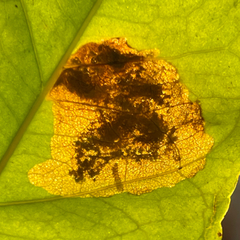 Leucoptera coffeellae0pest
- Outcome
- oviposition rate of L. coffeellae0
- Direction
- decreasede0
 Coffea
Not reportedComparator
Organisms pictured · Representative pictures of the matched species, not figures from the paper.

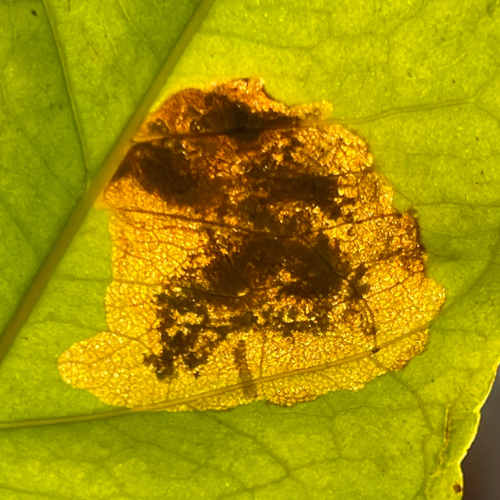
Verbatim
e0“The extracts of Toona ciliata, Trichilia casaretti and Trichilia pallida decreased the oviposition rate of L. coffeella on coffee leaves”
Claim · model-written summary
Trichilia casaretti extract decreased leaf miner oviposition on coffee leaves.
- Treatment
- Trichilia casarettie0
- Interactor
- L. coffeellaLeucoptera coffeellae0pest
- Outcome
- oviposition rate of L. coffeellae0
- Direction
- decreasede0
Not reportedComparator
Organisms pictured · Representative pictures of the matched species, not figures from the paper.
Verbatim
e0“The extracts of Toona ciliata, Trichilia casaretti and Trichilia pallida decreased the oviposition rate of L. coffeella on coffee leaves”
Claim · model-written summary
Trichilia pallida extract decreased leaf miner oviposition on coffee leaves.
- Treatment
- Trichilia pallidae0
- Interactor
- L. coffeellaLeucoptera coffeellae0pest
- Outcome
- oviposition rate of L. coffeellae0
- Direction
- decreasede0
Not reportedComparator
Organisms pictured · Representative pictures of the matched species, not figures from the paper.
Verbatim
e0“The extracts of Toona ciliata, Trichilia casaretti and Trichilia pallida decreased the oviposition rate of L. coffeella on coffee leaves”
Claim · model-written summary
Trichilia catigua extract was classified as deterrent to leaf miner oviposition.
- Treatment
- Trichilia catiguae0
- Interactor
- Leucoptera coffeellaLeucoptera coffeellat0pest
- Outcome
- deterrent to ovipositione0
Organisms pictured · Representative pictures of the matched species, not figures from the paper.
Verbatim
e0“Along with Trichilia catigua, Chenopodium ambrosioides and Melia azedarach, these extracts were classified as deterrent to oviposition by a preference index”
t0“Leucoptera coffeella (lepidoptera: Lyonetiidae) attack in coffee”
Claim · model-written summary
Chenopodium ambrosioides extract was classified as deterrent to leaf miner oviposition.
- Treatment
- Chenopodium ambrosioidese0
- Interactor
- Leucoptera coffeellaLeucoptera coffeellat0pest
- Outcome
- deterrent to ovipositione0
Organisms pictured · Representative pictures of the matched species, not figures from the paper.
Verbatim
e0“Trichilia catigua, Chenopodium ambrosioides and Melia azedarach, these extracts were classified as deterrent to oviposition by a preference index”
t0“Leucoptera coffeella (lepidoptera: Lyonetiidae) attack in coffee”
Claim · model-written summary
Melia azedarach extract was classified as deterrent to leaf miner oviposition.
- Treatment
- Melia azedarache0
- Interactor
- Leucoptera coffeellaLeucoptera coffeellat0pest
- Outcome
- deterrent to ovipositione0
Organisms pictured · Representative pictures of the matched species, not figures from the paper.
Verbatim
e0“Trichilia catigua, Chenopodium ambrosioides and Melia azedarach, these extracts were classified as deterrent to oviposition by a preference index”
t0“Leucoptera coffeella (lepidoptera: Lyonetiidae) attack in coffee”
Claim · model-written summary
C. ambrosioides extract caused high leaf miner egg mortality.
- Treatment
- C. ambrosioidese0
- Interactor
- L. coffeellaLeucoptera coffeellae0pest
- Outcome
- egg mortality of L. coffeellae0
- Direction
- highe0
Not reportedComparator
Organisms pictured · Representative pictures of the matched species, not figures from the paper.
Verbatim
e0“C. ambrosioides, T. casaretti and T. ciliata extracts caused high egg mortality of L. coffeella”
t0“attack in coffee”
Claim · model-written summary
T. casaretti extract caused high leaf miner egg mortality.
- Treatment
- T. casarettie0
- Interactor
- L. coffeellaLeucoptera coffeellae0pest
- Outcome
- egg mortality of L. coffeellae0
- Direction
- highe0
Not reportedComparator
Organisms pictured · Representative pictures of the matched species, not figures from the paper.
Verbatim
e0“C. ambrosioides, T. casaretti and T. ciliata extracts caused high egg mortality of L. coffeella”
t0“attack in coffee”
Claim · model-written summary
T. ciliata extract caused high leaf miner egg mortality.
- Treatment
- T. ciliatae0
- Interactor
- L. coffeellaLeucoptera coffeellae0pest
- Outcome
- egg mortality of L. coffeellae0
- Direction
- highe0
Not reportedComparator
Organisms pictured · Representative pictures of the matched species, not figures from the paper.
Verbatim
e0“C. ambrosioides, T. casaretti and T. ciliata extracts caused high egg mortality of L. coffeella”
t0“attack in coffee”
Claim · model-written summary
A. indica seed extract negatively affected leaf miner development and survival and reduced larval mined area.
- Treatment
- Extracts of seeds of A. indicae0
- Interactor
- L. coffeellaLeucoptera coffeellae0pest
- Outcome
- development and survival of L. coffeellae0
- Direction
- negatively affectede0
Not reportedComparator
Organisms pictured · Representative pictures of the matched species, not figures from the paper.
Verbatim
e0“Extracts of seeds of A. indica and T. pallida negatively affected the development and survival of L. coffeella, and reduced the mined area by larvae”
t0“attack in coffee”
Claim · model-written summary
T. pallida seed extract negatively affected leaf miner development and survival.
- Treatment
- T. pallidae0
- Interactor
- L. coffeellaLeucoptera coffeellae0pest
- Outcome
- development and survival of L. coffeellae0
- Direction
- negatively affectede0
Not reportedComparator
Organisms pictured · Representative pictures of the matched species, not figures from the paper.
Verbatim
e0“Extracts of seeds of A. indica and T. pallida negatively affected the development and survival of L. coffeella”
t0“attack in coffee”
Claim · model-written summary
A. indica seed extract reduced area mined by leaf miner larvae.
- Treatment
- Extracts of seeds of A. indicae0
- Interactor
- L. coffeellaLeucoptera coffeellae0pest
- Outcome
- mined area by larvaee0
- Direction
- reducede0
Not reportedComparator
Organisms pictured · Representative pictures of the matched species, not figures from the paper.
Verbatim
e0“Extracts of seeds of A. indica and T. pallida negatively affected the development and survival of L. coffeella, and reduced the mined area by larvae”
t0“attack in coffee”
Claim · model-written summary
T. pallida seed extract reduced area mined by leaf miner larvae.
- Treatment
- T. pallidae0
- Interactor
- L. coffeellaLeucoptera coffeellae0pest
- Outcome
- mined area by larvaee0
- Direction
- reducede0
Not reportedComparator
Organisms pictured · Representative pictures of the matched species, not figures from the paper.
Verbatim
e0“Extracts of seeds of A. indica and T. pallida negatively affected the development and survival of L. coffeella, and reduced the mined area by larvae”
t0“attack in coffee”
Claim · model-written summary
The authors suggest five extracts may be useful in integrated leaf miner management.
- Interactor
- L. coffeellaLeucoptera coffeellae0pest
- Outcome
- might be useful in integrated management programs for L. coffeellae0
Organisms pictured · Representative pictures of the matched species, not figures from the paper.
Verbatim
e0“the extracts of A. indica (S), T. pallida, C. ambrosioides, T. casaretti and T. ciliata exhibited high insecticidal activity and might be useful in integrated management programs for L. coffeella”
t0“attack in coffee”
The same questions in other papers
Toona ciliata · Leucoptera coffeella · Coffea (coffee)Results agree
1 paper in the same direction as this paper
- positive
Trichilia casaretti · Leucoptera coffeella · Coffea (coffee)Results agree
1 paper in the same direction as this paper
- positive
Trichilia pallida · Leucoptera coffeella · Coffea (coffee)Results agree
1 paper in the same direction as this paper
- positive
Dysphania ambrosioides · Leucoptera coffeella · Coffea (coffee)Results agree
1 paper in the same direction as this paper
- positive
botanical · Leucoptera coffeella · Coffea (coffee)Results agree
5 papers in the same direction as this paper
- positive
- positive
- positive
2 papers more in this group
See all 6 papers →Claims are grouped by organism, treatment and what was measured or targeted. A paper counts as positive when any of its claims in the group is positive.