Abstract
This project investigates the prevalence, causal factors and key weeds associated with weed seed contamination in sheep across southern Australia, in an effort to identify optimal IWM strategies for effective long term management of seed contamination in sheep production systems. An analysis of Australian abattoir, weather and weed datasets were undertaken during 2016, while replicated trials from 2016 to 2018 were undertaken at Wagga Wagga, NSW to investigate individual and IWM strategies against Hordeum spp. in lucerne pasture. Trials provided key data for the development of a barley grass submodel and a bioeconomic model for simulating the impacts of barley grass seed contamination and associated weed control programs on lamb profitability in lucerne pastures. Abattoir analysis results revealed significant variability in carcass contamination incidence with time and region, and was associated with Hordeum and Bromus spp. distribution. Contamination rates were highest in adult male sheep, varied between abattoirs, fluctuated between states in response to mean monthly temperature and increased with mean monthly rainfall. Incidence also decreased with elevation, varying between years. Field trial results in 2016 demonstrated propaquizafop to be 99% effective against barley grass. Paraquat was less so (58%), attributed to suboptimal timing of applications, but resulted in increased lucerne and other weed biomass. Repeated mowing applied at barley grass boot stage reduced seedling emergence 12 months after application. Integrating mowing with herbicide application significantly influenced lucerne and other weed biomass after 24 months, highlighting the crucial influence of control timing and frequency on botanical composition in infested legume pastures. Further investigations in 2017 revealed haloxyfop-R + simazine, or paraquat, applied at the early tillering stage, to be over 95% effective against barley grass. Repeat defoliations conducted at post-inflorescence emergence at all population densities, reduced barley grass survival and fecundity by 35% and 75% respectively under heaviest competition. A dynamic and stochastic bioeconomic model was constructed using these results to simulate the efficacy of individual and IWM strategies against barley grass on lamb production at various weed density thresholds within an infested lucerne pasture over ten years. Simulations demonstrated the superiority of integrated management to individual applications against barley grass seedbanks. Livestock enterprise profitability was maximised at $67.98/ha/yr when IWM strategies were implemented at low barley grass densities, representing an economic benefit of $169.98/ha/yr from utilising IWM in comparison to no control (-$102/ha/yr). Findings demonstrate the value of proactive and accurately timed IWM strategies for influencing legume pasture botanical composition, reducing barley grass populations in heavily infested regions across Australia, and mitigating losses associated with barley grass seed contamination in grazing sheep across southern Australia. Further research is required to 1) more accurately match contamination rates with causal weed distribution patterns to predict future contamination prevalence, 2) better elucidate relationships between weed density and carcass contamination, improving model prediction and capacity, 3) investigate barley grass phenology and IWM impacts under variable climatic conditions, and 4) develop and validate the bioeconomic model under various field conditions to inform development of subsequent models simulating weed impacts on livestock production systems.
Abstract from the paper’s OpenAlex record; open copy licensed other-oa. Read at the source ↗
The text the model read, with the source record’s inline markup (italics, sub- and superscripts) rendered and its character entities decoded; quote offsets refer to the raw text.
Claims 17
Claim · model-written summary
Carcass contamination varied with time and region.
- Taxon
- lucerne
 Medicago sativat0
- Outcome
- carcass contamination incidencee0
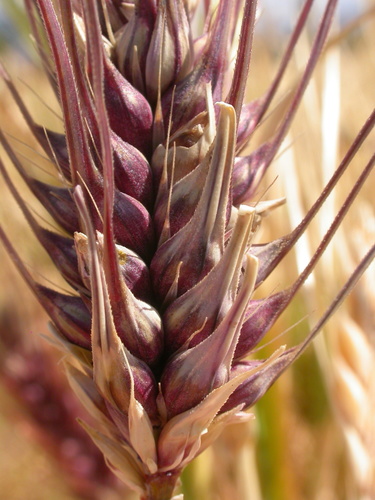
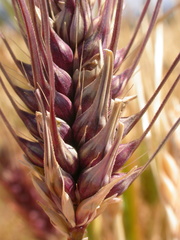 Hordeum
Organisms pictured · Representative pictures of the matched species, not figures from the paper.

Verbatim
e0“Abattoir analysis results revealed significant variability in carcass contamination incidence with time and region, and was associated with Hordeum and Bromus spp. distribution.”
t0“Hordeum spp. in lucerne pasture”
Claim · model-written summary
Contamination was associated with Hordeum and Bromus distributions.
- Taxon
- lucerneMedicago sativat0
- Outcome
- carcass contamination incidencee0
 Bromus
Not reportedDirection
Organisms pictured · Representative pictures of the matched species, not figures from the paper.

Verbatim
e0“Abattoir analysis results revealed significant variability in carcass contamination incidence with time and region, and was associated with Hordeum and Bromus spp. distribution.”
t0“Hordeum spp. in lucerne pasture”
Claim · model-written summary
Contamination increased with mean monthly rainfall.
- Taxon
- lucerneMedicago sativat0
- Outcome
- Contamination ratese0
- Direction
- increasede0
- Setting
- statese0
Organisms pictured · Representative pictures of the matched species, not figures from the paper.
Verbatim
e0“Contamination rates were highest in adult male sheep, varied between abattoirs, fluctuated between states in response to mean monthly temperature and increased with mean monthly rainfall.”
t0“Hordeum spp. in lucerne pasture”
Claim · model-written summary
Contamination incidence decreased with elevation.
- Taxon
- lucerneMedicago sativat0
- Outcome
- Incidencee0
- Direction
- decreasede0
- Setting
- elevatione0
Organisms pictured · Representative pictures of the matched species, not figures from the paper.
Verbatim
e0“Incidence also decreased with elevation, varying between years.”
t0“Hordeum spp. in lucerne pasture”
Claim · model-written summary
Propaquizafop controlled barley grass by 99%.
- Taxon
- lucerneMedicago sativat0
- Treatment
- propaquizafope0
- Interactor
- barley grasse0weed
- Outcome
- effective against barley grasse0
- Direction
- effectivee0
- Value
- 99%e0
Not reportedComparator
Organisms pictured · Representative pictures of the matched species, not figures from the paper.
Verbatim
e0“Field trial results in 2016 demonstrated propaquizafop to be 99% effective against barley grass.”
t0“Hordeum spp. in lucerne pasture”
Claim · model-written summary
Paraquat increased lucerne biomass.
- Taxon
- lucerneMedicago sativae0
- Treatment
- Paraquate0
- Outcome
- lucernee0
- Direction
- increasede0
Not reportedComparator
Organisms pictured · Representative pictures of the matched species, not figures from the paper.
Verbatim
e0“Paraquat was less so (58%), attributed to suboptimal timing of applications, but resulted in increased lucerne and other weed biomass.”
Claim · model-written summary
Paraquat increased other weed biomass.
- Taxon
- lucerneMedicago sativae0
- Treatment
- Paraquate0
- Interactor
- other weede0weed
- Outcome
- other weed biomasse0
- Direction
- increasede0
Not reportedComparator
Organisms pictured · Representative pictures of the matched species, not figures from the paper.
Verbatim
e0“Paraquat was less so (58%), attributed to suboptimal timing of applications, but resulted in increased lucerne and other weed biomass.”
Claim · model-written summary
Repeated mowing at boot stage reduced barley grass emergence after 12 months.
- Taxon
- lucerneMedicago sativat0
- Treatment
- Repeated mowinge0
- Interactor
- barley grasse0weed
- Outcome
- seedling emergencee0
- Direction
- reducede0
Not reportedComparator
Organisms pictured · Representative pictures of the matched species, not figures from the paper.
Verbatim
e0“Repeated mowing applied at barley grass boot stage reduced seedling emergence 12 months after application.”
t0“Hordeum spp. in lucerne pasture”
Claim · model-written summary
Integrated mowing and herbicide significantly influenced lucerne biomass after 24 months.
- Taxon
- lucerneMedicago sativae0
- Treatment
- Integrating mowing with herbicide applicatione0
- Outcome
- lucernee0
Not reportedComparatorDirection
Organisms pictured · Representative pictures of the matched species, not figures from the paper.
Verbatim
e0“Integrating mowing with herbicide application significantly influenced lucerne and other weed biomass after 24 months”
Claim · model-written summary
Integrated mowing and herbicide significantly influenced other weed biomass after 24 months.
- Taxon
- lucerneMedicago sativae0
- Treatment
- Integrating mowing with herbicide applicatione0
- Interactor
- other weede0weed
- Outcome
- other weed biomasse0
Not reportedComparatorDirection
Organisms pictured · Representative pictures of the matched species, not figures from the paper.
Verbatim
e0“Integrating mowing with herbicide application significantly influenced lucerne and other weed biomass after 24 months”
Claim · model-written summary
Haloxyfop-R plus simazine controlled barley grass by over 95%.
- Taxon
- lucerneMedicago sativat0
- Treatment
- haloxyfop-R + simazinee0
- Interactor
- barley grasse0weed
- Outcome
- effective against barley grasse0
- Direction
- effectivee0
- Value
- over 95%e0
Not reportedComparator
Organisms pictured · Representative pictures of the matched species, not figures from the paper.
Verbatim
e0“haloxyfop-R + simazine, or paraquat, applied at the early tillering stage, to be over 95% effective against barley grass.”
t0“Hordeum spp. in lucerne pasture”
Claim · model-written summary
Early tillering paraquat controlled barley grass by over 95%.
- Taxon
- lucerneMedicago sativat0
- Treatment
- paraquate0
- Interactor
- barley grasse0weed
- Outcome
- effective against barley grasse0
- Direction
- effectivee0
- Value
- over 95%e0
Not reportedComparator
Organisms pictured · Representative pictures of the matched species, not figures from the paper.
Verbatim
e0“haloxyfop-R + simazine, or paraquat, applied at the early tillering stage, to be over 95% effective against barley grass.”
t0“Hordeum spp. in lucerne pasture”
Claim · model-written summary
Repeat defoliations reduced barley grass survival by 35% under heaviest competition.
- Taxon
- lucerneMedicago sativat0
- Treatment
- Repeat defoliationse0
- Interactor
- barley grasse0weed
- Outcome
- barley grass survivale0
- Direction
- reducede0
- Value
- 35%e0
Not reportedComparator
Organisms pictured · Representative pictures of the matched species, not figures from the paper.
Verbatim
e0“Repeat defoliations conducted at post-inflorescence emergence at all population densities, reduced barley grass survival and fecundity by 35% and 75% respectively under heaviest competition.”
t0“Hordeum spp. in lucerne pasture”
Claim · model-written summary
Repeat defoliations reduced barley grass fecundity by 75% under heaviest competition.
- Taxon
- lucerneMedicago sativat0
- Treatment
- Repeat defoliationse0
- Interactor
- barley grasse0weed
- Outcome
- fecunditye0
- Direction
- reducede0
- Value
- 75%e0
Not reportedComparator
Organisms pictured · Representative pictures of the matched species, not figures from the paper.
Verbatim
e0“Repeat defoliations conducted at post-inflorescence emergence at all population densities, reduced barley grass survival and fecundity by 35% and 75% respectively under heaviest competition.”
t0“Hordeum spp. in lucerne pasture”
Claim · model-written summary
Simulations found integrated management superior to single applications against barley grass seedbanks.
- Taxon
- lucerneMedicago sativat0
- Treatment
- integrated managemente0
- Interactor
- barley grasse0weed
- Outcome
- barley grass seedbankse0
- Direction
- superioritye0
- Comparator
- individual applicationse0
Organisms pictured · Representative pictures of the matched species, not figures from the paper.
Verbatim
e0“Simulations demonstrated the superiority of integrated management to individual applications against barley grass seedbanks.”
t0“Hordeum spp. in lucerne pasture”
Claim · model-written summary
IWM at low barley grass density maximized profit at $67.98/ha/yr.
- Taxon
- lucerneMedicago sativat0
- Treatment
- IWM strategiese0
- Interactor
- barley grasse0weed
- Outcome
- Livestock enterprise profitabilitye0
- Direction
- maximisede0
- Value
- $67.98/ha/yre0
- Comparator
- no controle0
Organisms pictured · Representative pictures of the matched species, not figures from the paper.
Verbatim
e0“Livestock enterprise profitability was maximised at $67.98/ha/yr when IWM strategies were implemented at low barley grass densities, representing an economic benefit of $169.98/ha/yr from utilising IWM in comparison to no control (-$102/ha/yr).”
t0“Hordeum spp. in lucerne pasture”
Claim · model-written summary
IWM gave an economic benefit of $169.98/ha/yr against no control.
- Taxon
- lucerneMedicago sativat0
- Treatment
- IWMe0
- Interactor
- barley grasse0weed
- Outcome
- economic benefite0
- Direction
- benefite0
- Value
- $169.98/ha/yre0
- Comparator
- no controle0
Organisms pictured · Representative pictures of the matched species, not figures from the paper.
Verbatim
e0“Livestock enterprise profitability was maximised at $67.98/ha/yr when IWM strategies were implemented at low barley grass densities, representing an economic benefit of $169.98/ha/yr from utilising IWM in comparison to no control (-$102/ha/yr).”
t0“Hordeum spp. in lucerne pasture”
The same questions in other papers
paraquat · organism · Medicago sativa (alfalfa)Positive and negative results
1 paper in the same direction as this paper · 1 in the opposite direction
- negative
- positive
paraquat · weed · Medicago sativa (alfalfa)Positive and negative results
2 papers in the same direction as this paper · 5 in the opposite direction
- positive
- positive
- positive
4 papers more in this group
See all 8 papers →pruning · survival · Medicago sativa (alfalfa)Positive and negative results
1 paper in the same direction as this paper · 1 in the opposite direction
- negative
- positive
pruning · pest · Medicago sativa (alfalfa)Positive and negative results
6 papers in the same direction as this paper · 4 in the opposite direction · 1 reporting no difference from an alternative
- no effect
- no effect
- negative
8 papers more in this group
See all 12 papers →pruning · growth · Medicago sativa (alfalfa)Positive and negative results
22 papers in the same direction as this paper · 19 in the opposite direction · 1 reporting no difference from an alternative
- no effect
- negative
- negative
39 papers more in this group
See all 43 papers →Claims are grouped by organism, treatment and what was measured or targeted. A paper counts as positive when any of its claims in the group is positive.