Abstract
Ustilago maydis is the causal agent of maize smut disease. During the colonization process, the fungus secretes effector proteins that suppress immune responses and redirect the host metabolism in favor of the pathogen. As effectors play a critical role during plant colonization, their identification and functional characterization are essential to understanding biotrophy and disease. Using biochemical, molecular, and transcriptomic techniques, we performed a functional characterization of the U. maydis effector Jasmonate/Ethylene signaling inducer 1 (Jsi1). Jsi1 interacts with several members of the plant corepressor family Topless/Topless related (TPL/TPR). Jsi1 expression in Zea mays and Arabidopsis thaliana leads to transcriptional induction of the ethylene response factor (ERF) branch of the jasmonate/ethylene (JA/ET) signaling pathway. In A. thaliana, activation of the ERF branch leads to biotrophic susceptibility. Jsi1 likely activates the ERF branch via an EAR (ET-responsive element binding-factor-associated amphiphilic repression) motif, which resembles EAR motifs from plant ERF transcription factors, that interacts with TPL/TPR proteins. EAR-motif-containing effector candidates were identified from different fungal species, including Magnaporthe oryzae, Sporisorium scitamineum, and Sporisorium reilianum. Interaction between plant TPL proteins and these effector candidates from biotrophic and hemibiotrophic fungi indicates the convergent evolution of effectors modulating the TPL/TPR corepressor hub.
Abstract from the paper’s OpenAlex record; open copy licensed cc-by. Read at the source ↗
The text the model read, with the source record’s inline markup (italics, sub- and superscripts) rendered and its character entities decoded; quote offsets refer to the raw text.
Claims 9
Claim · model-written summary
Jsi1 interacts with several plant TPL/TPR corepressors.
- Taxon
- plante0
- Gene
- Jsi1e0
- Outcome
- interacts with several members of the plant corepressor family Topless/Topless related (TPL/TPR)e0
Not reportedInteractor
Verbatim
e0“Jsi1 interacts with several members of the plant corepressor family Topless/Topless related (TPL/TPR).”
t0“plant jasmonate/ethylene signaling”
Claim · model-written summary
Jsi1 expression induces the ERF branch of jasmonate/ethylene signaling in Zea mays.
- Treatment
- Jsi1 expressione0
- Gene
- Jsi1e0
- Outcome
- ethylene response factor (ERF) branch of the jasmonate/ethylene (JA/ET) signaling pathwaye0
- Direction
- inductione0
 Zea mays
Not reportedComparator
Organisms pictured · Representative pictures of the matched species, not figures from the paper.

Verbatim
e0“Jsi1 expression in Zea mays and Arabidopsis thaliana leads to transcriptional induction of the ethylene response factor (ERF) branch of the jasmonate/ethylene (JA/ET) signaling pathway.”
Claim · model-written summary
Jsi1 expression induces the ERF branch of jasmonate/ethylene signaling in Arabidopsis thaliana.
- Taxon
- Arabidopsis thaliana
 Arabidopsis thalianae0
- Treatment
- Jsi1 expressione0
- Gene
- Jsi1e0
- Outcome
- ethylene response factor (ERF) branch of the jasmonate/ethylene (JA/ET) signaling pathwaye0
- Direction
- inductione0
Not reportedComparator
Organisms pictured · Representative pictures of the matched species, not figures from the paper.

Verbatim
e0“Jsi1 expression in Zea mays and Arabidopsis thaliana leads to transcriptional induction of the ethylene response factor (ERF) branch of the jasmonate/ethylene (JA/ET) signaling pathway.”
Claim · model-written summary
ERF branch activation causes biotrophic susceptibility in A. thaliana.
- Taxon
- A. thalianaArabidopsis thalianae0
- Outcome
- biotrophic susceptibilitye0
- Qualifier
- activation of the ERF branche0
Not reportedDirection
Organisms pictured · Representative pictures of the matched species, not figures from the paper.
Verbatim
e0“In A. thaliana, activation of the ERF branch leads to biotrophic susceptibility.”
Claim · model-written summary
Jsi1 likely activates the ERF branch through an EAR motif that interacts with TPL/TPR proteins.
Verbatim
e0“Jsi1 likely activates the ERF branch via an EAR (ET-responsive element binding-factor-associated amphiphilic repression) motif, which resembles EAR motifs from plant ERF transcription factors, that interacts with TPL/TPR proteins.”
t0“plant jasmonate/ethylene signaling”
Claim · model-written summary
EAR motif effector candidates were identified in Magnaporthe oryzae.
- Taxon
- plantt0
- Interactor
- Magnaporthe oryzae
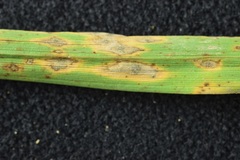 Pyricularia oryzaee0pathogen
- Outcome
- effector candidatese0
Organisms pictured · Representative pictures of the matched species, not figures from the paper.
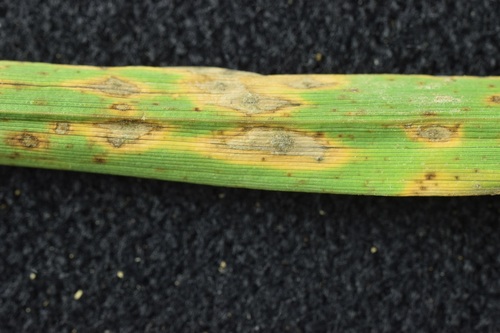
Verbatim
e0“EAR-motif-containing effector candidates were identified from different fungal species, including Magnaporthe oryzae, Sporisorium scitamineum, and Sporisorium reilianum.”
t0“plant jasmonate/ethylene signaling”
Claim · model-written summary
EAR motif effector candidates were identified in Sporisorium scitamineum.
- Taxon
- plantt0
- Interactor
- Sporisorium scitamineum
 Sporisorium scitamineume0pathogen
- Outcome
- effector candidatese0
Organisms pictured · Representative pictures of the matched species, not figures from the paper.

Verbatim
e0“EAR-motif-containing effector candidates were identified from different fungal species, including Magnaporthe oryzae, Sporisorium scitamineum, and Sporisorium reilianum.”
t0“plant jasmonate/ethylene signaling”
Claim · model-written summary
EAR motif effector candidates were identified in Sporisorium reilianum.
- Taxon
- plantt0
- Interactor
- Sporisorium reilianumSporisorium reilianume0pathogen
- Outcome
- effector candidatese0
Verbatim
e0“EAR-motif-containing effector candidates were identified from different fungal species, including Magnaporthe oryzae, Sporisorium scitamineum, and Sporisorium reilianum.”
t0“plant jasmonate/ethylene signaling”
Claim · model-written summary
Plant TPL interacts with fungal effector candidates, which the authors interpret as convergent evolution.
Verbatim
e0“Interaction between plant TPL proteins and these effector candidates from biotrophic and hemibiotrophic fungi indicates the convergent evolution of effectors modulating the TPL/TPR corepressor hub.”
The same questions in other papers
ethene · physiology: hormones · Arabidopsis thaliana (thale cress)Positive and negative results
3 papers in the same direction as this paper · 1 in the opposite direction
- positive
- no effect
- negative
1 paper more in this group
See all 5 papers →ethene · physiology: hormones · Zea mays (maize)Results agree
1 paper in the same direction as this paper
- no effect
Claims are grouped by organism, treatment and what was measured or targeted. A paper counts as positive when any of its claims in the group is positive.