Abstract
The capability of native plant species grown in polluted post-mining soils to accumulate metals was evaluated in view of their possible suitability for phytoremediation. The study areas included two environmental liabilities in the Cajamarca region in the Peruvian Andes. The content of As, Ag, Cd, Cu, Pb, and Zn was determined in individual plant organs and correlated with soil characteristics. The degree of the pollution depended on the metal with results ranging from uncontaminated (Cd) to moderately (Zn), strongly (As, Cu), and extremely contaminated (Pb, Ag) soils. The metals were mainly present in the fractions with limited metal mobility. The bioaccumulation of the metals in plants as well the translocation into overground organs was determined. Out of the 21 plants evaluated, Pernettya prostrata and Gaultheria glomerate were suitable for Zn, and Gaultheria glomerata and Festuca sp. for Cd, phytostabilization. The native species applicable for Cd phytoremediation were Ageratina glechonophylla, Bejaria sp., whereas Pernettya prostrata Achyrocline alata,Ageratina fastigiate, Baccharis alnifolia, Calceolaria tetragona, Arenaria digyna, Hypericum laricifolium, Brachyotum radula, and Nicotiana thyrsiflora were suitable for both Cd and Zn. None of the studied plants appeared to be suitable for phytoremediation of Pb, Cu, As and Ag.
Abstract from the paper’s OpenAlex record; open copy licensed cc-by. Read at the source ↗
The text the model read, with the source record’s inline markup (italics, sub- and superscripts) rendered and its character entities decoded; quote offsets refer to the raw text.
Claims 20
Claim · model-written summary
Mining soils ranged from uncontaminated for Cd to moderately contaminated for Zn.
- Outcome
- uncontaminated (Cd) to moderately (Zn)e0
Not reportedTaxon
Verbatim
e0“results ranging from uncontaminated (Cd) to moderately (Zn), strongly (As, Cu), and extremely contaminated (Pb, Ag) soils”
Claim · model-written summary
Mining soils were strongly contaminated with As and Cu.
- Outcome
- strongly (As, Cu)e0
Not reportedTaxon
Verbatim
e0“strongly (As, Cu), and extremely contaminated (Pb, Ag) soils”
Claim · model-written summary
Mining soils were extremely contaminated with Pb and Ag.
- Outcome
- extremely contaminated (Pb, Ag) soilse0
Not reportedTaxon
Verbatim
e0“extremely contaminated (Pb, Ag) soils”
Claim · model-written summary
Metals occurred mainly in fractions with limited mobility.
- Outcome
- metals were mainly present in the fractions with limited metal mobilitye0
Not reportedTaxon
Verbatim
e0“The metals were mainly present in the fractions with limited metal mobility”
Claim · model-written summary
Pernettya prostrata was suitable for Zn phytostabilization.
- Taxon
- Pernettya prostrata
 Pernettya prostratae0
- Outcome
- suitable for Zne0
Organisms pictured · Representative pictures of the matched species, not figures from the paper.

Verbatim
e0“Pernettya prostrata and Gaultheria glomerate were suitable for Zn, and Gaultheria glomerata and Festuca sp. for Cd, phytostabilization”
Claim · model-written summary
Gaultheria glomerate was suitable for Zn phytostabilization.
Verbatim
e0“Pernettya prostrata and Gaultheria glomerate were suitable for Zn, and Gaultheria glomerata and Festuca sp. for Cd, phytostabilization”
Claim · model-written summary
Gaultheria glomerata was suitable for Cd phytostabilization.
- Taxon
- Gaultheria glomerata
 Gaultheria glomeratae0
- Outcome
- Cd, phytostabilizatione0
Organisms pictured · Representative pictures of the matched species, not figures from the paper.

Verbatim
e0“Gaultheria glomerata and Festuca sp. for Cd, phytostabilization”
Claim · model-written summary
Festuca sp. was suitable for Cd phytostabilization.
- Outcome
- Cd, phytostabilizatione0
 Festuca
Organisms pictured · Representative pictures of the matched species, not figures from the paper.

Verbatim
e0“Gaultheria glomerata and Festuca sp. for Cd, phytostabilization”
Claim · model-written summary
Ageratina glechonophylla was applicable for Cd phytoremediation.
- Taxon
- Ageratina glechonophylla
 Ageratina glechonophyllae0
- Outcome
- applicable for Cd phytoremediatione0
Organisms pictured · Representative pictures of the matched species, not figures from the paper.

Verbatim
e0“The native species applicable for Cd phytoremediation were Ageratina glechonophylla, Bejaria sp.”
Claim · model-written summary
Bejaria sp. was applicable for Cd phytoremediation.
- Outcome
- applicable for Cd phytoremediatione0
 Bejaria
Organisms pictured · Representative pictures of the matched species, not figures from the paper.

Verbatim
e0“The native species applicable for Cd phytoremediation were Ageratina glechonophylla, Bejaria sp.”
Claim · model-written summary
Pernettya prostrata was suitable for both Cd and Zn phytoremediation.
- Taxon
- Pernettya prostrataPernettya prostratae0
- Outcome
- suitable for both Cd and Zne0
Organisms pictured · Representative pictures of the matched species, not figures from the paper.
Verbatim
e0“Pernettya prostrata Achyrocline alata,Ageratina fastigiate, Baccharis alnifolia, Calceolaria tetragona, Arenaria digyna, Hypericum laricifolium, Brachyotum radula, and Nicotiana thyrsiflora were suitable for both Cd and Zn”
Claim · model-written summary
Achyrocline alata was suitable for both Cd and Zn phytoremediation.
- Taxon
- Achyrocline alata
 Achyrocline alatae0
- Outcome
- suitable for both Cd and Zne0
Organisms pictured · Representative pictures of the matched species, not figures from the paper.

Verbatim
e0“Pernettya prostrata Achyrocline alata,Ageratina fastigiate, Baccharis alnifolia, Calceolaria tetragona, Arenaria digyna, Hypericum laricifolium, Brachyotum radula, and Nicotiana thyrsiflora were suitable for both Cd and Zn”
Claim · model-written summary
Ageratina fastigiate was suitable for both Cd and Zn phytoremediation.
Verbatim
e0“Pernettya prostrata Achyrocline alata,Ageratina fastigiate, Baccharis alnifolia, Calceolaria tetragona, Arenaria digyna, Hypericum laricifolium, Brachyotum radula, and Nicotiana thyrsiflora were suitable for both Cd and Zn”
Claim · model-written summary
Baccharis alnifolia was suitable for both Cd and Zn phytoremediation.
- Taxon
- Baccharis alnifoliaBaccharis alnifoliae0
- Outcome
- suitable for both Cd and Zne0
Verbatim
e0“Pernettya prostrata Achyrocline alata,Ageratina fastigiate, Baccharis alnifolia, Calceolaria tetragona, Arenaria digyna, Hypericum laricifolium, Brachyotum radula, and Nicotiana thyrsiflora were suitable for both Cd and Zn”
Claim · model-written summary
Calceolaria tetragona was suitable for both Cd and Zn phytoremediation.
- Taxon
- Calceolaria tetragonaCalceolaria tetragonae0
- Outcome
- suitable for both Cd and Zne0
Verbatim
e0“Pernettya prostrata Achyrocline alata,Ageratina fastigiate, Baccharis alnifolia, Calceolaria tetragona, Arenaria digyna, Hypericum laricifolium, Brachyotum radula, and Nicotiana thyrsiflora were suitable for both Cd and Zn”
Claim · model-written summary
Arenaria digyna was suitable for both Cd and Zn phytoremediation.
- Taxon
- Arenaria digyna
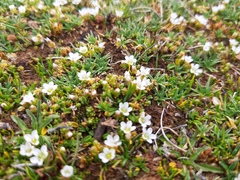 Arenaria digynae0
- Outcome
- suitable for both Cd and Zne0
Organisms pictured · Representative pictures of the matched species, not figures from the paper.

Verbatim
e0“Pernettya prostrata Achyrocline alata,Ageratina fastigiate, Baccharis alnifolia, Calceolaria tetragona, Arenaria digyna, Hypericum laricifolium, Brachyotum radula, and Nicotiana thyrsiflora were suitable for both Cd and Zn”
Claim · model-written summary
Hypericum laricifolium was suitable for both Cd and Zn phytoremediation.
- Taxon
- Hypericum laricifolium
 Hypericum laricifoliume0
- Outcome
- suitable for both Cd and Zne0
Organisms pictured · Representative pictures of the matched species, not figures from the paper.

Verbatim
e0“Pernettya prostrata Achyrocline alata,Ageratina fastigiate, Baccharis alnifolia, Calceolaria tetragona, Arenaria digyna, Hypericum laricifolium, Brachyotum radula, and Nicotiana thyrsiflora were suitable for both Cd and Zn”
Claim · model-written summary
Brachyotum radula was suitable for both Cd and Zn phytoremediation.
Verbatim
e0“Pernettya prostrata Achyrocline alata,Ageratina fastigiate, Baccharis alnifolia, Calceolaria tetragona, Arenaria digyna, Hypericum laricifolium, Brachyotum radula, and Nicotiana thyrsiflora were suitable for both Cd and Zn”
Claim · model-written summary
Nicotiana thyrsiflora was suitable for both Cd and Zn phytoremediation.
- Taxon
- Nicotiana thyrsiflora
 Nicotiana thyrsiflorae0
- Outcome
- suitable for both Cd and Zne0
Organisms pictured · Representative pictures of the matched species, not figures from the paper.

Verbatim
e0“Pernettya prostrata Achyrocline alata,Ageratina fastigiate, Baccharis alnifolia, Calceolaria tetragona, Arenaria digyna, Hypericum laricifolium, Brachyotum radula, and Nicotiana thyrsiflora were suitable for both Cd and Zn”
Claim · model-written summary
None of the studied plants was suitable for phytoremediation of Pb, Cu, As or Ag.
Verbatim
e0“None of the studied plants appeared to be suitable for phytoremediation of Pb, Cu, As and Ag”