Abstract
Abstract Background The whitefly, Bemisia tabaci (Genn.) (Hemiptera: Aleyrodidae), is one of the most damaging pests of crops grown in open field and under protected conditions. Owing to the indiscriminate use of insecticides, whitefly has developed resistance against various insecticides belonging to different chemical groups. Use of microbial biopesticides (entomopathogenic fungi) can be an effective alternate to chemical insecticides. Results This study was planned for the evaluation of entomopathogenic fungi (EPF) formulations, namely, Beauveria bassiana Balsamo (Vuillemin), Lecanicillium lecanii (Zimmerman) Viegas and Metarhizium anisopliae (Metschnikoff) Sorokin and botanical pesticide, Neem Baan, for the management of different life stages of B. tabaci on parthenocarpic cucumber grown under protected conditions. The liquid formulations of Neem Baan at 10 and 15 ml/l were the most effective (90.7 to 93.3% in eggs, 93.3 to 97.1% in nymphs, and 92.4 to 94.2% reduction in whitefly adults after 3rd spray, respectively) as compared to EPF. Among the EPF, L. lecanii and B. bassiana at 10 and 15 ml/l (80.6 to 86.5% in eggs, 85.7 to 91.5% in nymphs, and 58.5 to 69.2% in whitefly adults after 3rd spray, respectively) were found to be more effective than M. anisopliae at 10 and 15 ml/l (78.4 to 82.8% in eggs, 82.5 to 85.9% in nymphs, and 57.7 to 62.8% in whitefly adults after third spray, respectively) in reducing different life stages of B. tabaci on cucumber. Significantly high yield of cucumber fruits was obtained from the plot where Neem Baan at 10 and 15 ml/l (2337.5 to 2420.8 g/plant) was used. Minimum fruit yield were recorded in untreated control plots. Conclusions The integration of these biopesticides in the management schedule of the whitefly under protected conditions will enhance the quality and market value of parthenocarpic cucumbers.
Abstract from the paper’s OpenAlex record; open copy licensed cc-by. Read at the source ↗
The text the model read, with the source record’s inline markup (italics, sub- and superscripts) rendered and its character entities decoded; quote offsets refer to the raw text.
Claims 9
Claim · model-written summary
Neem Baan reduced whitefly eggs by 90.7 to 93.3% after the third spray.
- Taxon
- cucumber
 Cucumis sativust0
- Treatment
- Neem Baan at 10 and 15 ml/le0
- Interactor
- whiteflye0pest
- Outcome
- eggse0
- Direction
- reductione0
- Value
- 90.7 to 93.3%e0
- Comparator
- EPFe0
Organisms pictured · Representative pictures of the matched species, not figures from the paper.

Verbatim
e0“The liquid formulations of Neem Baan at 10 and 15 ml/l were the most effective (90.7 to 93.3% in eggs, 93.3 to 97.1% in nymphs, and 92.4 to 94.2% reduction in whitefly adults after 3rd spray, respectively) as compared to EPF.”
t0“cucumber”
Claim · model-written summary
Neem Baan reduced whitefly nymphs by 93.3 to 97.1% after the third spray.
- Taxon
- cucumberCucumis sativust0
- Treatment
- Neem Baan at 10 and 15 ml/le0
- Interactor
- whiteflye0pest
- Outcome
- nymphse0
- Direction
- reductione0
- Value
- 93.3 to 97.1%e0
- Comparator
- EPFe0
Organisms pictured · Representative pictures of the matched species, not figures from the paper.
Verbatim
e0“The liquid formulations of Neem Baan at 10 and 15 ml/l were the most effective (90.7 to 93.3% in eggs, 93.3 to 97.1% in nymphs, and 92.4 to 94.2% reduction in whitefly adults after 3rd spray, respectively) as compared to EPF.”
t0“cucumber”
Claim · model-written summary
Neem Baan reduced whitefly whitefly adults by 92.4 to 94.2% after the third spray.
- Taxon
- cucumberCucumis sativust0
- Treatment
- Neem Baan at 10 and 15 ml/le0
- Interactor
- whiteflye0pest
- Outcome
- whitefly adultse0
- Direction
- reductione0
- Value
- 92.4 to 94.2%e0
- Comparator
- EPFe0
Organisms pictured · Representative pictures of the matched species, not figures from the paper.
Verbatim
e0“The liquid formulations of Neem Baan at 10 and 15 ml/l were the most effective (90.7 to 93.3% in eggs, 93.3 to 97.1% in nymphs, and 92.4 to 94.2% reduction in whitefly adults after 3rd spray, respectively) as compared to EPF.”
t0“cucumber”
Claim · model-written summary
L. lecanii and B. bassiana were more effective than M. anisopliae against whitefly eggs.
- Taxon
- cucumberCucumis sativuse0
- Treatment
- L. lecanii and B. bassiana at 10 and 15 ml/le0
- Interactor
- B. tabaci
 Bemisia tabacie0pest
- Second interactor
- L. lecanii
 Akanthomyces lecaniie0biocontrol_agent
- Outcome
- eggse0
- Direction
- more effectivee0
- Value
- 80.6 to 86.5%e0
- Comparator
- M. anisopliae at 10 and 15 ml/le0
Organisms pictured · Representative pictures of the matched species, not figures from the paper.

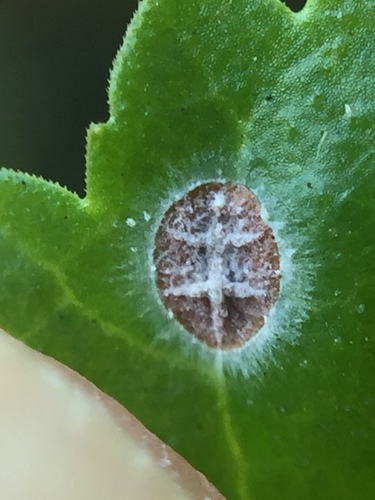
Verbatim
e0“Among the EPF, L. lecanii and B. bassiana at 10 and 15 ml/l (80.6 to 86.5% in eggs, 85.7 to 91.5% in nymphs, and 58.5 to 69.2% in whitefly adults after 3rd spray, respectively) were found to be more effective than M. anisopliae at 10 and 15 ml/l (78.4 to 82.8% in eggs, 82.5 to 85.9% in nymphs, and 57.7 to 62.8% in whitefly adults after third spray, respectively) in reducing different life stages of B. tabaci on cucumber.”
Claim · model-written summary
L. lecanii and B. bassiana were more effective than M. anisopliae against whitefly nymphs.
- Taxon
- cucumberCucumis sativuse0
- Treatment
- L. lecanii and B. bassiana at 10 and 15 ml/le0
- Interactor
- B. tabaciBemisia tabacie0pest
- Second interactor
- L. lecaniiAkanthomyces lecaniie0biocontrol_agent
- Outcome
- nymphse0
- Direction
- more effectivee0
- Value
- 85.7 to 91.5%e0
- Comparator
- M. anisopliae at 10 and 15 ml/le0
Organisms pictured · Representative pictures of the matched species, not figures from the paper.
Verbatim
e0“Among the EPF, L. lecanii and B. bassiana at 10 and 15 ml/l (80.6 to 86.5% in eggs, 85.7 to 91.5% in nymphs, and 58.5 to 69.2% in whitefly adults after 3rd spray, respectively) were found to be more effective than M. anisopliae at 10 and 15 ml/l (78.4 to 82.8% in eggs, 82.5 to 85.9% in nymphs, and 57.7 to 62.8% in whitefly adults after third spray, respectively) in reducing different life stages of B. tabaci on cucumber.”
Claim · model-written summary
L. lecanii and B. bassiana were more effective than M. anisopliae against whitefly whitefly adults.
- Taxon
- cucumberCucumis sativuse0
- Treatment
- L. lecanii and B. bassiana at 10 and 15 ml/le0
- Interactor
- B. tabaciBemisia tabacie0pest
- Second interactor
- L. lecaniiAkanthomyces lecaniie0biocontrol_agent
- Outcome
- whitefly adultse0
- Direction
- more effectivee0
- Value
- 58.5 to 69.2%e0
- Comparator
- M. anisopliae at 10 and 15 ml/le0
Organisms pictured · Representative pictures of the matched species, not figures from the paper.
Verbatim
e0“Among the EPF, L. lecanii and B. bassiana at 10 and 15 ml/l (80.6 to 86.5% in eggs, 85.7 to 91.5% in nymphs, and 58.5 to 69.2% in whitefly adults after 3rd spray, respectively) were found to be more effective than M. anisopliae at 10 and 15 ml/l (78.4 to 82.8% in eggs, 82.5 to 85.9% in nymphs, and 57.7 to 62.8% in whitefly adults after third spray, respectively) in reducing different life stages of B. tabaci on cucumber.”
Claim · model-written summary
Neem Baan treatment produced high cucumber fruit yield.
- Taxon
- cucumberCucumis sativuse0
- Treatment
- Neem Baan at 10 and 15 ml/le0
- Outcome
- yield of cucumber fruitse0
- Direction
- highe0
- Value
- 2337.5 to 2420.8 g/plante0
Not reportedComparator
Organisms pictured · Representative pictures of the matched species, not figures from the paper.
Verbatim
e0“Significantly high yield of cucumber fruits was obtained from the plot where Neem Baan at 10 and 15 ml/l (2337.5 to 2420.8 g/plant) was used.”
Claim · model-written summary
Untreated controls had minimum cucumber fruit yield.
- Taxon
- cucumberCucumis sativust0
- Outcome
- fruit yielde0
- Direction
- Minimume0
Organisms pictured · Representative pictures of the matched species, not figures from the paper.
Verbatim
e0“Minimum fruit yield were recorded in untreated control plots.”
t0“cucumber”
Claim · model-written summary
The authors conclude that integrating biopesticides into whitefly management will enhance cucumber quality and market value.
- Taxon
- cucumberCucumis sativuse0
- Outcome
- enhance the quality and market value of parthenocarpic cucumberse0
Not reportedDirection
Organisms pictured · Representative pictures of the matched species, not figures from the paper.
Verbatim
e0“The integration of these biopesticides in the management schedule of the whitefly under protected conditions will enhance the quality and market value of parthenocarpic cucumbers.”
The same questions in other papers
botanical · pest · Cucumis sativus (cucumber)Positive and negative results
17 papers in the same direction as this paper · 1 reporting no difference from an alternative
- no effect
- positive
- positive
15 papers more in this group
See all 19 papers →botanical · yield · Cucumis sativus (cucumber)Positive and negative results
33 papers in the same direction as this paper · 1 in the opposite direction
- no effect
- positive
- positive
31 papers more in this group
See all 35 papers →Claims are grouped by organism, treatment and what was measured or targeted. A paper counts as positive when any of its claims in the group is positive.