Abstract
This research evaluated the efficacy of essential oils in the management of cucumber powdery mildew. Essential oils of lemongrass, lemon, thyme, peppermint, abundance blend, purification blend, and thieves blend were tested in vitro and under greenhouse conditions in two separate experiments. The effects of essential oils were tested against powdery mildew disease at concentrations of 1.0–2.5 mL/L, and the consequent impact of the oils on plant growth was evaluated. Powdery mildew fungus, Podosphaera xanthii, was identified using sequencing of the ITS region. The essential oils significantly reduced disease incidence up to 77.3% compared with the positive control (p < 0.5). Moreover, the essential oils increased the plant length (up to 187 cm), leaf area (up to 27.5 cm2), fresh weight (up to 123 g), dry weight (up to 22.5 g), number of flowers (16.3), and metabolite content compared with the positive control (p < 0.5). Cell membrane injury decreased significantly in the oil-treated pants (p < 0.5), indicating the protective effect of essential oils. This study recommends the application of essential oils in an appropriate dose (2.5 mL/L) to protect cucumber plants against powdery mildew. Overdose of the oils (more than 2.5 mL/L) should be avoided due to adverse effects.
Abstract from the paper’s OpenAlex record; open copy licensed cc-by. Read at the source ↗
The text the model read, with the source record’s inline markup (italics, sub- and superscripts) rendered and its character entities decoded; quote offsets refer to the raw text.
Claims 11
Claim · model-written summary
The mildew fungus was identified as Podosphaera xanthii by ITS sequencing.
- Taxon
- Cucumber
 Cucumis sativust0
- Interactor
- Podosphaera xanthii
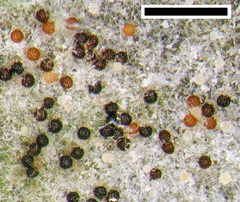 Podosphaera xanthiie0pathogen
- Outcome
- Powdery mildew funguse0
Not reportedComparator
Organisms pictured · Representative pictures of the matched species, not figures from the paper.


Verbatim
e0“Powdery mildew fungus, Podosphaera xanthii, was identified using sequencing of the ITS region.”
t0“Cucumber”
Claim · model-written summary
Essential oils reduced cucumber powdery mildew incidence by up to 77.3% versus positive control.
- Taxon
- CucumberCucumis sativust0
- Treatment
- essential oilse0
- Interactor
- Podosphaera xanthiiPodosphaera xanthiie1pathogen
- Outcome
- disease incidencee0
- Direction
- reducede0
- Value
- 77.3%e0
- Comparator
- positive controle0
Organisms pictured · Representative pictures of the matched species, not figures from the paper.
Verbatim
e0“The essential oils significantly reduced disease incidence up to 77.3% compared with the positive control (p < 0.5).”
t0“Cucumber”
e1“Podosphaera xanthii”
Claim · model-written summary
Essential oils increased cucumber plant length up to 187 cm.
- Taxon
- CucumberCucumis sativust0
- Treatment
- essential oilse0
- Outcome
- plant lengthe0
- Direction
- increasede0
- Value
- up to 187 cme0
- Comparator
- positive controle0
Organisms pictured · Representative pictures of the matched species, not figures from the paper.
Verbatim
e0“the essential oils increased the plant length (up to 187 cm), leaf area (up to 27.5 cm2), fresh weight (up to 123 g), dry weight (up to 22.5 g), number of flowers (16.3), and metabolite content compared with the positive control (p < 0.5).”
t0“Cucumber”
Claim · model-written summary
Essential oils increased cucumber leaf area up to 27.5 cm2.
- Taxon
- CucumberCucumis sativust0
- Treatment
- essential oilse0
- Outcome
- leaf areae0
- Direction
- increasede0
- Value
- up to 27.5 cm2e0
- Comparator
- positive controle0
Organisms pictured · Representative pictures of the matched species, not figures from the paper.
Verbatim
e0“the essential oils increased the plant length (up to 187 cm), leaf area (up to 27.5 cm2), fresh weight (up to 123 g), dry weight (up to 22.5 g), number of flowers (16.3), and metabolite content compared with the positive control (p < 0.5).”
t0“Cucumber”
Claim · model-written summary
Essential oils increased cucumber fresh weight up to 123 g.
- Taxon
- CucumberCucumis sativust0
- Treatment
- essential oilse0
- Outcome
- fresh weighte0
- Direction
- increasede0
- Value
- up to 123 ge0
- Comparator
- positive controle0
Organisms pictured · Representative pictures of the matched species, not figures from the paper.
Verbatim
e0“the essential oils increased the plant length (up to 187 cm), leaf area (up to 27.5 cm2), fresh weight (up to 123 g), dry weight (up to 22.5 g), number of flowers (16.3), and metabolite content compared with the positive control (p < 0.5).”
t0“Cucumber”
Claim · model-written summary
Essential oils increased cucumber dry weight up to 22.5 g.
- Taxon
- CucumberCucumis sativust0
- Treatment
- essential oilse0
- Outcome
- dry weighte0
- Direction
- increasede0
- Value
- up to 22.5 ge0
- Comparator
- positive controle0
Organisms pictured · Representative pictures of the matched species, not figures from the paper.
Verbatim
e0“the essential oils increased the plant length (up to 187 cm), leaf area (up to 27.5 cm2), fresh weight (up to 123 g), dry weight (up to 22.5 g), number of flowers (16.3), and metabolite content compared with the positive control (p < 0.5).”
t0“Cucumber”
Claim · model-written summary
Essential oils increased cucumber flower number to 16.3.
- Taxon
- CucumberCucumis sativust0
- Treatment
- essential oilse0
- Outcome
- number of flowerse0
- Direction
- increasede0
- Value
- 16.3e0
- Comparator
- positive controle0
Organisms pictured · Representative pictures of the matched species, not figures from the paper.
Verbatim
e0“the essential oils increased the plant length (up to 187 cm), leaf area (up to 27.5 cm2), fresh weight (up to 123 g), dry weight (up to 22.5 g), number of flowers (16.3), and metabolite content compared with the positive control (p < 0.5).”
t0“Cucumber”
Claim · model-written summary
Essential oils increased cucumber metabolite content versus positive control.
- Taxon
- CucumberCucumis sativust0
- Treatment
- essential oilse0
- Outcome
- metabolite contente0
- Direction
- increasede0
- Comparator
- positive controle0
Organisms pictured · Representative pictures of the matched species, not figures from the paper.
Verbatim
e0“the essential oils increased the plant length (up to 187 cm), leaf area (up to 27.5 cm2), fresh weight (up to 123 g), dry weight (up to 22.5 g), number of flowers (16.3), and metabolite content compared with the positive control (p < 0.5).”
t0“Cucumber”
Claim · model-written summary
Essential oils significantly decreased cell membrane injury.
- Taxon
- CucumberCucumis sativust0
- Treatment
- oil-treatede0
- Outcome
- Cell membrane injurye0
- Direction
- decreasede0
Not reportedComparator
Organisms pictured · Representative pictures of the matched species, not figures from the paper.
Verbatim
e0“Cell membrane injury decreased significantly in the oil-treated pants (p < 0.5)”
t0“Cucumber”
Claim · model-written summary
The authors recommend essential oils at 2.5 mL/L to protect cucumber from mildew.
- Taxon
- cucumberCucumis sativuse0
- Interactor
- powdery mildewe0pathogen
- Outcome
- application of essential oils in an appropriate dose (2.5 mL/L)e0
Organisms pictured · Representative pictures of the matched species, not figures from the paper.
Verbatim
e0“This study recommends the application of essential oils in an appropriate dose (2.5 mL/L) to protect cucumber plants against powdery mildew.”
Claim · model-written summary
The authors advise avoiding oil doses over 2.5 mL/L because of adverse effects.
- Taxon
- CucumberCucumis sativust0
- Outcome
- Overdose of the oils (more than 2.5 mL/L) should be avoidede0
Organisms pictured · Representative pictures of the matched species, not figures from the paper.
Verbatim
e0“Overdose of the oils (more than 2.5 mL/L) should be avoided due to adverse effects.”
t0“Cucumber”
The same questions in other papers
botanical · Podosphaera xanthii · Cucumis sativus (cucumber)Positive and negative results
1 paper in the same direction as this paper · 1 in the opposite direction
- no effect
- positive
botanical · molecular: metabolites · Cucumis sativus (cucumber)Positive and negative results
3 papers in the same direction as this paper · 1 in the opposite direction
- negative
- positive
- positive
1 paper more in this group
See all 5 papers →botanical · yield · Cucumis sativus (cucumber)Positive and negative results
33 papers in the same direction as this paper · 1 in the opposite direction
- no effect
- positive
- positive
31 papers more in this group
See all 35 papers →botanical · growth · Cucumis sativus (cucumber)Positive and negative results
65 papers in the same direction as this paper · 44 in the opposite direction · 1 reporting no difference from an alternative
- negative
- negative
- no effect
107 papers more in this group
See all 111 papers →Claims are grouped by organism, treatment and what was measured or targeted. A paper counts as positive when any of its claims in the group is positive.