Abstract
The objective of this study was to evaluate silicon (Si) foliar spray and substrate drench effects on plant growth and morphology for container-grown edible crops during greenhouse production, as well as resistance to plant wilting during post-production. In the first greenhouse experiment, basil received Si foliar sprays at 0, 50, 100, 200, and 400 mg∙L–1 Si. In the second greenhouse experiment, Si was applied as either a foliar spray (500 mg∙L–1 Si) or substrate drench (100 mg∙L–1 Si) with six edible crop species. Supplemental Si increased shoot Si levels but had minimal effects on plant growth and morphology, except for parsley, which resulted in distorted growth and phytotoxicity. In the first experiment, 200 and 400 mg∙L–1 Si foliar sprays increased plant resistance to wilt by 2.2 and 2.5 d, respectively; however, this was not observed in the second experiment. All species accumulated Si with the control (no Si) treatments, indicating trace amounts of Si were taken up from the substrate, fertilizer, spray surfactant, and irrigation water. Only cucumber was classified as a Si “accumulator” with a high capacity for Si uptake. Results emphasize the need to conduct preliminary trials with supplemental Si to avoid issues of phytotoxicity.
Abstract from the paper’s OpenAlex record; open copy licensed cc-by. Read at the source ↗
The text the model read, with the source record’s inline markup (italics, sub- and superscripts) rendered and its character entities decoded; quote offsets refer to the raw text.
Claims 10
Claim · model-written summary
Supplemental Si increased shoot Si levels in the edible crop species.
- Taxon
- six edible crop speciese0
- Treatment
- Supplemental Sie1
- Outcome
- shoot Si levelse1
- Direction
- increasede1
Not reportedComparator
Verbatim
e0“with six edible crop species”
e1“Supplemental Si increased shoot Si levels but had minimal effects on plant growth and morphology, except for parsley, which resulted in distorted growth and phytotoxicity”
Claim · model-written summary
Supplemental Si had minimal effects on plant growth and morphology across the edible crop species.
- Taxon
- six edible crop speciese0
- Treatment
- Supplemental Sie1
- Outcome
- plant growth and morphologye1
- Direction
- minimale1
Not reportedComparator
Verbatim
e0“with six edible crop species”
e1“Supplemental Si increased shoot Si levels but had minimal effects on plant growth and morphology, except for parsley, which resulted in distorted growth and phytotoxicity”
Claim · model-written summary
Supplemental Si distorted parsley growth.
- Taxon
- parsley
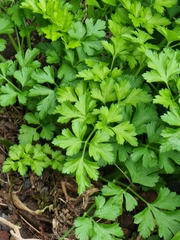 Petroselinum crispume1
- Treatment
- Supplemental Sie1
- Outcome
- growthe1
- Direction
- distortede1
Not reportedComparator
Organisms pictured · Representative pictures of the matched species, not figures from the paper.
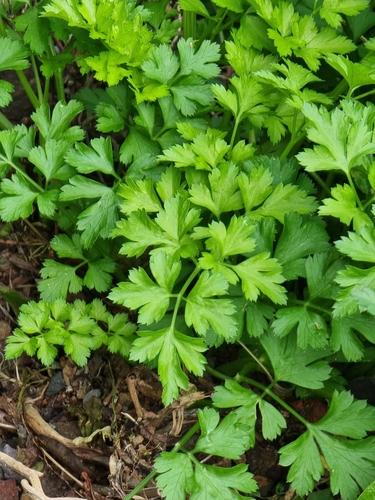
Verbatim
e1“Supplemental Si increased shoot Si levels but had minimal effects on plant growth and morphology, except for parsley, which resulted in distorted growth and phytotoxicity”
Claim · model-written summary
Supplemental Si caused phytotoxicity in parsley.
- Taxon
- parsleyPetroselinum crispume1
- Treatment
- Supplemental Sie1
- Outcome
- phytotoxicitye1
Not reportedComparatorDirection
Organisms pictured · Representative pictures of the matched species, not figures from the paper.
Verbatim
e1“Supplemental Si increased shoot Si levels but had minimal effects on plant growth and morphology, except for parsley, which resulted in distorted growth and phytotoxicity”
Claim · model-written summary
Si foliar sprays increased basil resistance to wilt by 2.2 d in the first experiment.
- Taxon
- basil
 Ocimum basilicume2
- Treatment
- Si foliar sprayse2
- Outcome
- plant resistance to wilte3
- Direction
- increasede3
- Value
- 2.2e3
- Qualifier
- first experimente3
Not reportedComparator
Organisms pictured · Representative pictures of the matched species, not figures from the paper.

Verbatim
e2“In the first greenhouse experiment, basil received Si foliar sprays at 0, 50, 100, 200, and 400 mg∙L–1 Si”
e3“In the first experiment, 200 and 400 mg∙L–1 Si foliar sprays increased plant resistance to wilt by 2.2 and 2.5 d, respectively; however, this was not observed in the second experiment”
Claim · model-written summary
Si foliar sprays increased basil resistance to wilt by 2.5 d in the first experiment.
- Taxon
- basilOcimum basilicume2
- Treatment
- Si foliar sprayse2
- Outcome
- plant resistance to wilte3
- Direction
- increasede3
- Value
- 2.5e3
- Qualifier
- first experimente3
Not reportedComparator
Organisms pictured · Representative pictures of the matched species, not figures from the paper.
Verbatim
e2“In the first greenhouse experiment, basil received Si foliar sprays at 0, 50, 100, 200, and 400 mg∙L–1 Si”
e3“In the first experiment, 200 and 400 mg∙L–1 Si foliar sprays increased plant resistance to wilt by 2.2 and 2.5 d, respectively; however, this was not observed in the second experiment”
Claim · model-written summary
The wilt-resistance increase from Si foliar sprays was not observed in the second experiment.
- Taxon
- six edible crop speciese0
- Treatment
- Si foliar sprayse3
- Outcome
- plant resistance to wilte3
- Qualifier
- second experimente3
Not reportedComparatorDirection
Verbatim
e0“with six edible crop species”
e3“In the first experiment, 200 and 400 mg∙L–1 Si foliar sprays increased plant resistance to wilt by 2.2 and 2.5 d, respectively; however, this was not observed in the second experiment”
Claim · model-written summary
All species accumulated Si under the control (no Si) treatments.
Verbatim
e0“with six edible crop species”
e4“All species accumulated Si with the control (no Si) treatments”
Claim · model-written summary
Cucumber was the only Si accumulator, with a high capacity for Si uptake.
- Taxon
- cucumber
 Cucumis sativuse5
- Outcome
- high capacity for Si uptakee5
Organisms pictured · Representative pictures of the matched species, not figures from the paper.

Verbatim
e5“Only cucumber was classified as a Si “accumulator” with a high capacity for Si uptake”
Claim · model-written summary
Preliminary trials with supplemental Si are needed to avoid phytotoxicity.
Verbatim
e0“with six edible crop species”
e6“Results emphasize the need to conduct preliminary trials with supplemental Si to avoid issues of phytotoxicity”
The same questions in other papers
silicon atom · disease · Ocimum basilicum (basil)Results agree
1 paper in the same direction as this paper
- positive
application · disease · Ocimum basilicum (basil)Results agree
6 papers in the same direction as this paper
- positive
- positive
- positive
3 papers more in this group
See all 7 papers →Claims are grouped by organism, treatment and what was measured or targeted. A paper counts as positive when any of its claims in the group is positive.