Abstract
An ethnobotanical study was conducted in the Uttarakhand state of India, through questionnaire survey, to investigate various plant species and their parts used for making chutney- a special spicy condiment made of fruits or vegetables. Thirty eight plant species belonging to 19 families were documented during the survey. Polygonaceae, Rosaceae and Rutaceae were the most dominant families in terms of use of number of species for making chutney. The fruits of majority of such species were used for this purpose, followed by flowers and leaves. Apart from making chutney, these species were also used for treatment of over 32 types of ailments, including indigestion, blood purification, cough and toothache. Most of the species were collected from the wild. Of the 38 species Rheum webbianum and Berberis asiatica are endangered.
Abstract from the paper’s OpenAlex record, shown for indexing and research. Copyright remains with the authors or the publisher. Read at the source ↗
The text the model read, with the source record’s inline markup (italics, sub- and superscripts) rendered and its character entities decoded; quote offsets refer to the raw text.
Claims 7
Claim · model-written summary
The survey documented 38 plant species from 19 families used for chutney.
Verbatim
e0“Thirty eight plant species belonging to 19 families were documented during the survey”
Claim · model-written summary
Polygonaceae, Rosaceae and Rutaceae were the most represented families for chutney use.
Verbatim
e0“Polygonaceae, Rosaceae and Rutaceae were the most dominant families in terms of use of number of species for making chutney”
Claim · model-written summary
Fruits were the most commonly used organs, followed by flowers and leaves.
Verbatim
e0“The fruits of majority of such species were used for this purpose, followed by flowers and leaves”
t0“species”
Claim · model-written summary
The species were also used to treat more than 32 kinds of ailment.
Verbatim
e0“these species were also used for treatment of over 32 types of ailments”
Claim · model-written summary
Most chutney species were collected from the wild.
Verbatim
e0“Most of the species were collected from the wild”
Claim · model-written summary
Rheum webbianum was identified as endangered.
- Taxon
- Rheum webbianum
 Rheum webbianume0
- Outcome
- endangerede0
Organisms pictured · Representative pictures of the matched species, not figures from the paper.

Verbatim
e0“Of the 38 species Rheum webbianum and Berberis asiatica are endangered”
Claim · model-written summary
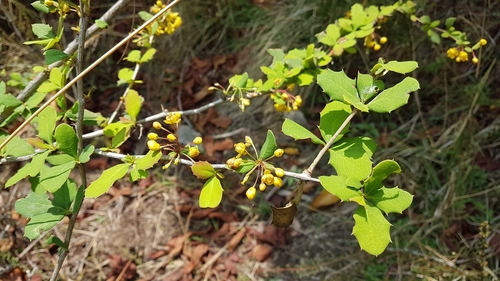
Berberis asiatica was identified as endangered.
- Taxon
- Berberis asiatica
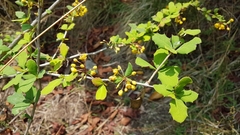 Berberis asiaticae0
- Outcome
- endangerede0
Organisms pictured · Representative pictures of the matched species, not figures from the paper.
Verbatim
e0“Of the 38 species Rheum webbianum and Berberis asiatica are endangered”