Abstract
Abstract The pollination process and breeding system of Pachygenium bonariense and Pachygenium pteryganthum were documented for native populations from Rio Grande do Sul, Brazil. The flowers secrete nectar (on average with 65% to 67% of the concentration of total sugars), which is concealed into an incurved spur. Both species are pollinated by native, large Apidae bees, and the pollinaria adhere under the ventral surface of their labrum while bees try to reach the nectar. P. bonariense is pollinated by native bumblebees Bombus ( Fervidobombus ) morio and P. pteryganthum by females of oil‐gathering Centris ( Melacentris ) sp. Both orchid species are self‐compatible but pollinator‐dependent (i.e., unable to set fruit and seed in the absence of pollinators). They also displayed high natural reproductive success (from 22% to 90%) and Nilsson's male efficiency factors ranging from 2.2 to 3.6, suggesting that, during our observations, more than one flower was pollinated for each flower acting as the pollen donor. To enrich the discussion, additional unpublished data on the pollination and breeding system of other orchid species of the Pelexia clade (the Spiranthinae group containing the studied species) are also presented and briefly illustrated. A phylogenetic framework of the clade is used to ascertain well‐supported evolutionary scenarios for pollination‐related floral traits (viscidium, protandry and a group of pollinators). The characteristic “dorsally adhesive” viscidium can be considered a synapomorphy for the subclade formed by the genera Cyclopogon , Veyretia , Sarcoglottis , Pachygenium , Pelexia and Brachystele , with a reversal to the plesiomorphic condition (ventrally adhesive) at the latter genus. Pollination by bees is likely the rule within the subclade and may be regarded as plesiomorphic for the whole Spiranthinae subtribe.
Abstract from the paper’s OpenAlex record, shown for indexing and research. Copyright remains with the authors or the publisher. Read at the source ↗
The text the model read, with the source record’s inline markup (italics, sub- and superscripts) rendered and its character entities decoded; quote offsets refer to the raw text.
Claims 10
Claim · model-written summary
The flowers of the two orchids secreted nectar averaging 65% to 67% total sugars in an incurved spur.
Verbatim
e0“Pachygenium bonariense and Pachygenium pteryganthum”
e1“The flowers secrete nectar (on average with 65% to 67% of the concentration of total sugars), which is concealed into an incurved spur”
Claim · model-written summary
Both orchid species were pollinated by native large Apidae bees, with pollinaria attaching beneath the bees’ labrum.
Verbatim
e0“Pachygenium bonariense and Pachygenium pteryganthum”
e1“Both species are pollinated by native, large Apidae bees, and the pollinaria adhere under the ventral surface of their labrum while bees try to reach the nectar”
Claim · model-written summary
P. bonariense was pollinated by Bombus ( Fervidobombus ) morio.
- Taxon
- P. bonariense
 Pelexia bonariensise0
- Interactor
- Bombus ( Fervidobombus ) morioFervidobombuse0pollinator
- Outcome
- is pollinatede0
Organisms pictured · Representative pictures of the matched species, not figures from the paper.

Verbatim
e0“P. bonariense is pollinated by native bumblebees Bombus ( Fervidobombus ) morio”
Claim · model-written summary
P. pteryganthum was pollinated by female Centris ( Melacentris ) sp.
 Centris
Organisms pictured · Representative pictures of the matched species, not figures from the paper.

Verbatim
e0“P. pteryganthum by females of oil‐gathering Centris ( Melacentris ) sp.”
Claim · model-written summary
Both orchid species were self-compatible.
Verbatim
e0“Pachygenium bonariense and Pachygenium pteryganthum”
e1“Both orchid species are self‐compatible but pollinator‐dependent”
Claim · model-written summary
Both orchids required pollinators to set fruit and seed.
Verbatim
e0“Pachygenium bonariense and Pachygenium pteryganthum”
e1“pollinator‐dependent (i.e., unable to set fruit and seed in the absence of pollinators)”
Claim · model-written summary
The orchids had natural reproductive success from 22% to 90%.
Verbatim
e0“Pachygenium bonariense and Pachygenium pteryganthum”
e1“They also displayed high natural reproductive success (from 22% to 90%)”
Claim · model-written summary
The orchids had Nilsson’s male efficiency factors from 2.2 to 3.6.
Verbatim
e0“Pachygenium bonariense and Pachygenium pteryganthum”
e1“Nilsson's male efficiency factors ranging from 2.2 to 3.6”
Claim · model-written summary
The dorsally adhesive viscidium was inferred as a synapomorphy of six named genera, with reversal in Brachystele.
- Taxon
- Cyclopogon , Veyretia , Sarcoglottis , Pachygenium , Pelexia and Brachystele
 Sarcoglottis
 Cyclopogon
 Pelexia
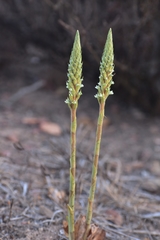 Brachystele
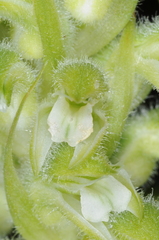 Pachygenium
 Veyretiae0
- Outcome
- “dorsally adhesive” viscidium can be considered a synapomorphye0
- Qualifier
- reversal to the plesiomorphic condition (ventrally adhesive) at the latter genuse0
Organisms pictured · Representative pictures of the matched species, not figures from the paper.


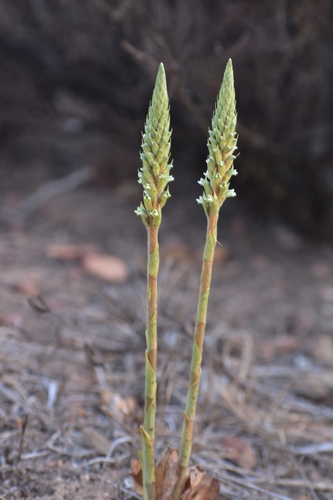
Verbatim
e0“The characteristic “dorsally adhesive” viscidium can be considered a synapomorphy for the subclade formed by the genera Cyclopogon , Veyretia , Sarcoglottis , Pachygenium , Pelexia and Brachystele , with a reversal to the plesiomorphic condition (ventrally adhesive) at the latter genus”
Claim · model-written summary
Bee pollination was inferred to predominate in the subclade and to be ancestral for Spiranthinae.
- Taxon
- SpiranthinaeSpiranthinaee0
- Outcome
- Pollination by bees is likely the rule within the subcladee0
- Qualifier
- plesiomorphic for the whole Spiranthinae subtribee0
Verbatim
e0“Pollination by bees is likely the rule within the subclade and may be regarded as plesiomorphic for the whole Spiranthinae subtribe”