Abstract
The bark of live trees provides an important microhabitat for corticolous myxomycetes. However, the association between the presence of myxomycetes and health of host trees has not been studied in detail. In this study, we aimed to investigate the relationship between tree vitality and myxomycetes on the bark of Cryptomeria japonica trees in a montane forest in western Japan. The vitality of trees was categorized into four grades based on the visual assessment of tree shape and leaf density in the upper branches. Myxomycetes on the bark surface were examined using the moist chamber culture method. A decline in tree vitality increased bark pH and decreased electrical conductivity of the bark exudates. Seventeen myxomycete species were recorded in 74 C. japonica trees. The structure of myxomycete communities varied between healthy and unhealthy trees, and species diversity increased as the vitality declined. The relative abundance of Cribraria confusa decreased as the vitality declined, while that of Paradiacheopsis solitaria increased. The results showed that acidophilic myxomycetes grew on healthy C. japonica bark, but changes in bark pH associated with vitality decline led to the weakening of acidity and shifted the community structure; thus, corticolous myxomycete diversity was enhanced as tree vitality decline.
Abstract from the paper’s OpenAlex record; open copy licensed cc-by-nc-nd. Read at the source ↗
The text the model read, with the source record’s inline markup (italics, sub- and superscripts) rendered and its character entities decoded; quote offsets refer to the raw text.
Claims 9
Claim · model-written summary
A decline in tree vitality increased bark pH of Cryptomeria japonica.
- Taxon
- Cryptomeria japonica
 Cryptomeria japonicae0
- Treatment
- decline in tree vitalitye1
- Outcome
- bark pHe1
- Direction
- increasede1
- Setting
- montane forest in western Japane0
Organisms pictured · Representative pictures of the matched species, not figures from the paper.

Verbatim
e0“on the bark of Cryptomeria japonica trees in a montane forest in western Japan”
e1“A decline in tree vitality increased bark pH and decreased electrical conductivity of the bark exudates”
Claim · model-written summary
A decline in tree vitality decreased the electrical conductivity of the bark exudates of Cryptomeria japonica.
- Taxon
- Cryptomeria japonicaCryptomeria japonicae0
- Treatment
- decline in tree vitalitye1
- Outcome
- electrical conductivity of the bark exudatese1
- Direction
- decreasede1
Organisms pictured · Representative pictures of the matched species, not figures from the paper.
Verbatim
e0“on the bark of Cryptomeria japonica trees in a montane forest in western Japan”
e1“A decline in tree vitality increased bark pH and decreased electrical conductivity of the bark exudates”
Claim · model-written summary
Seventeen myxomycete species were recorded in 74 Cryptomeria japonica trees.
- Taxon
- C. japonicaCryptomeria japonicae2
- Interactor
- myxomyceteMyxogastriae2other
- Outcome
- myxomycete speciese2
- Value
- Seventeene2
- Setting
- montane forest in western Japane0
Organisms pictured · Representative pictures of the matched species, not figures from the paper.
Verbatim
e0“on the bark of Cryptomeria japonica trees in a montane forest in western Japan”
e2“Seventeen myxomycete species were recorded in 74 C. japonica trees”
Claim · model-written summary
The structure of myxomycete communities varied between healthy and unhealthy Cryptomeria japonica trees.
- Taxon
- Cryptomeria japonicaCryptomeria japonicae0
- Outcome
- structure of myxomycete communitiese3
- Direction
- variede3
- Comparator
- healthy and unhealthy treese3
Organisms pictured · Representative pictures of the matched species, not figures from the paper.
Verbatim
e0“on the bark of Cryptomeria japonica trees in a montane forest in western Japan”
e3“The structure of myxomycete communities varied between healthy and unhealthy trees, and species diversity increased as the vitality declined”
Claim · model-written summary
Myxomycete species diversity on Cryptomeria japonica bark increased as tree vitality declined.
- Taxon
- Cryptomeria japonicaCryptomeria japonicae0
- Treatment
- vitality declinede3
- Outcome
- species diversitye3
- Direction
- increasede3
Organisms pictured · Representative pictures of the matched species, not figures from the paper.
Verbatim
e0“on the bark of Cryptomeria japonica trees in a montane forest in western Japan”
e3“The structure of myxomycete communities varied between healthy and unhealthy trees, and species diversity increased as the vitality declined”
Claim · model-written summary
The relative abundance of Cribraria confusa decreased as Cryptomeria japonica vitality declined.
- Taxon
- Cryptomeria japonicaCryptomeria japonicae0
- Treatment
- vitality declinede4
- Interactor
- Cribraria confusa
 Cribraria confusae4other
- Outcome
- relative abundancee4
- Direction
- decreasede4
Organisms pictured · Representative pictures of the matched species, not figures from the paper.
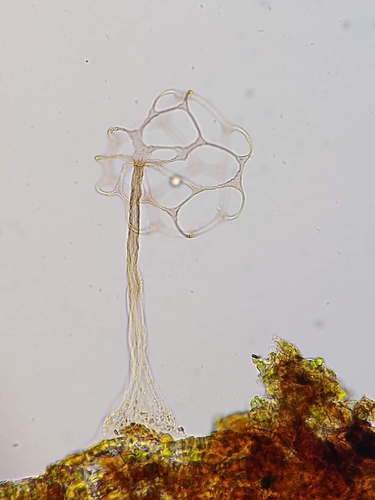
Verbatim
e0“on the bark of Cryptomeria japonica trees in a montane forest in western Japan”
e4“The relative abundance of Cribraria confusa decreased as the vitality declined, while that of Paradiacheopsis solitaria increased”
Claim · model-written summary
The relative abundance of Paradiacheopsis solitaria increased as Cryptomeria japonica vitality declined.
- Taxon
- Cryptomeria japonicaCryptomeria japonicae0
- Treatment
- vitality declinede4
- Interactor
- Paradiacheopsis solitaria
 Paradiacheopsis solitariae4other
- Outcome
- relative abundancee4
- Direction
- increasede4
Organisms pictured · Representative pictures of the matched species, not figures from the paper.

Verbatim
e0“on the bark of Cryptomeria japonica trees in a montane forest in western Japan”
e4“The relative abundance of Cribraria confusa decreased as the vitality declined, while that of Paradiacheopsis solitaria increased”
Claim · model-written summary
Acidophilic myxomycetes grew on healthy Cryptomeria japonica bark.
- Taxon
- C. japonicaCryptomeria japonicae5
- Interactor
- acidophilic myxomycetese5other
- Outcome
- grew on healthy C. japonica barke5
Organisms pictured · Representative pictures of the matched species, not figures from the paper.
Verbatim
e5“acidophilic myxomycetes grew on healthy C. japonica bark, but changes in bark pH associated with vitality decline led to the weakening of acidity and shifted the community structure”
Claim · model-written summary
Changes in bark pH associated with vitality decline weakened bark acidity and shifted the myxomycete community structure of Cryptomeria japonica.
- Taxon
- C. japonicaCryptomeria japonicae5
- Treatment
- vitality declinee5
- Outcome
- community structuree5
- Qualifier
- changes in bark pH associated with vitality decline led to the weakening of aciditye5
Organisms pictured · Representative pictures of the matched species, not figures from the paper.
Verbatim
e5“acidophilic myxomycetes grew on healthy C. japonica bark, but changes in bark pH associated with vitality decline led to the weakening of acidity and shifted the community structure”