Abstract
The chemical composition and plant pathogenic antifungal activity of tea tree essential oils (Melaleuca alternifolia) collected in Long An, Vietnam was surveyed. By gas chromatography and mass spectrometry (GC-MS), the main chemical composition in tea tree essential oils was identified to be eucalyptol with a concentration of 31.54%. Plant antifungal activity of tea tree essential oils was evaluated with many kinds of dissolvent to determine the minimum inhibitory concentration (MIC). The results showed that tea tree essential oils had the ability to inhibit the growth of five phytopathogenic fungal strains: Aspergillus niger, Corynespora cassiicola, Colletotrichum sp., Fusarium oxysporum and Pyricularia oryzae with the minimum inhibitory concentrations (MICs) were in the range of 6 ? 8 μL mL-1.
Abstract from the paper’s OpenAlex record; open copy licensed cc-by. Read at the source ↗
The text the model read, with the source record’s inline markup (italics, sub- and superscripts) rendered and its character entities decoded; quote offsets refer to the raw text.
Claims 6
Claim · model-written summary
Eucalyptol was the main constituent of tea tree essential oil at 31.54%
- Taxon
- Melaleuca alternifolia
 Melaleuca alternifoliae1
- Outcome
- eucalyptole0
- Value
- 31.54%e0
Organisms pictured · Representative pictures of the matched species, not figures from the paper.

Verbatim
e0“the main chemical composition in tea tree essential oils was identified to be eucalyptol with a concentration of 31.54%”
e1“tea tree essential oils (Melaleuca alternifolia)”
Claim · model-written summary
Tea tree essential oil inhibited growth of Aspergillus niger, with MICs reported in the range 6 ? 8 μL mL-1
- Taxon
- Aspergillus niger
 Aspergillus nigere0
- Treatment
- tea tree essential oilse0
- Outcome
- inhibit the growthe0
- Value
- 6 ? 8 μL mL-1e0
Organisms pictured · Representative pictures of the matched species, not figures from the paper.

Verbatim
e0“tea tree essential oils had the ability to inhibit the growth of five phytopathogenic fungal strains: Aspergillus niger, Corynespora cassiicola, Colletotrichum sp., Fusarium oxysporum and Pyricularia oryzae with the minimum inhibitory concentrations (MICs) were in the range of 6 ? 8 μL mL-1”
Claim · model-written summary
Tea tree essential oil inhibited growth of Corynespora cassiicola, with MICs reported in the range 6 ? 8 μL mL-1
- Taxon
- Corynespora cassiicola
 Corynespora cassiicolae0
- Treatment
- tea tree essential oilse0
- Outcome
- inhibit the growthe0
- Value
- 6 ? 8 μL mL-1e0
Organisms pictured · Representative pictures of the matched species, not figures from the paper.

Verbatim
e0“tea tree essential oils had the ability to inhibit the growth of five phytopathogenic fungal strains: Aspergillus niger, Corynespora cassiicola, Colletotrichum sp., Fusarium oxysporum and Pyricularia oryzae with the minimum inhibitory concentrations (MICs) were in the range of 6 ? 8 μL mL-1”
Claim · model-written summary
Tea tree essential oil inhibited growth of Colletotrichum sp., with MICs reported in the range 6 ? 8 μL mL-1
- Taxon
- Colletotrichum sp.
 Colletotrichume0
- Treatment
- tea tree essential oilse0
- Outcome
- inhibit the growthe0
- Value
- 6 ? 8 μL mL-1e0
Organisms pictured · Representative pictures of the matched species, not figures from the paper.

Verbatim
e0“tea tree essential oils had the ability to inhibit the growth of five phytopathogenic fungal strains: Aspergillus niger, Corynespora cassiicola, Colletotrichum sp., Fusarium oxysporum and Pyricularia oryzae with the minimum inhibitory concentrations (MICs) were in the range of 6 ? 8 μL mL-1”
Claim · model-written summary
Tea tree essential oil inhibited growth of Fusarium oxysporum, with MICs reported in the range 6 ? 8 μL mL-1
- Taxon
- Fusarium oxysporum
 Fusarium oxysporume0
- Treatment
- tea tree essential oilse0
- Outcome
- inhibit the growthe0
- Value
- 6 ? 8 μL mL-1e0
Organisms pictured · Representative pictures of the matched species, not figures from the paper.

Verbatim
e0“tea tree essential oils had the ability to inhibit the growth of five phytopathogenic fungal strains: Aspergillus niger, Corynespora cassiicola, Colletotrichum sp., Fusarium oxysporum and Pyricularia oryzae with the minimum inhibitory concentrations (MICs) were in the range of 6 ? 8 μL mL-1”
Claim · model-written summary
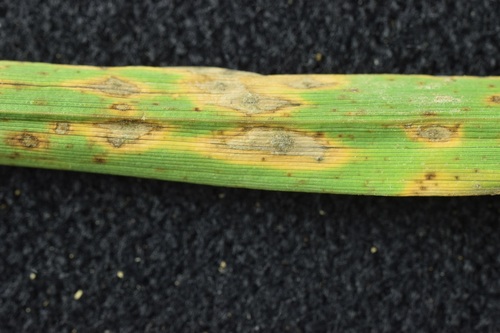
Tea tree essential oil inhibited growth of Pyricularia oryzae, with MICs reported in the range 6 ? 8 μL mL-1
- Taxon
- Pyricularia oryzae
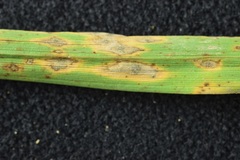 Pyricularia oryzaee0
- Treatment
- tea tree essential oilse0
- Outcome
- inhibit the growthe0
- Value
- 6 ? 8 μL mL-1e0
Organisms pictured · Representative pictures of the matched species, not figures from the paper.
Verbatim
e0“tea tree essential oils had the ability to inhibit the growth of five phytopathogenic fungal strains: Aspergillus niger, Corynespora cassiicola, Colletotrichum sp., Fusarium oxysporum and Pyricularia oryzae with the minimum inhibitory concentrations (MICs) were in the range of 6 ? 8 μL mL-1”