Abstract
Abstract The research was carried out at the Agricultural Technical College / Mosul, to study the effect of cumin extract on barley culture with three factors, the first is (comparator and cumin extract), the second is the duration of soaking (6 and 12) hours, and the third is barley varieties (local, rayhan, zanbaqa), using the design of (CRD) and three replicates. At the end of the research, the data were recorded and analyzed according to the SAS program, and the different averages were distinguished by different alphabets, and the results were: Cumin extract was significantly superior to the control treatment in all studied traits, except for the number of roots. The duration of (12) hours was significantly superior to the duration of (6) hours in the wet and dry weight of the seedling. The barley zanbaqa cultivar outperformed the local and rayhan cultivars in all the studied traits. The interaction between cumin extract and the duration of (12) hours achieved significant superiority in all the studied traits. The interaction between cumin extract and zanbaqa cultivar was significantly superior in seedling wet weight, root length and vegetative length. The interaction between the period (12) hours and the zanbaqa variety caused a significant superiority in all the studied traits. The interaction between cumin extract, duration (12) hours, and zanbaqa cultivar was significantly superior to the rest of the interactions in wet and dry weight and root length.. The active compounds separated from the aqueous extract of cumin were diagnosed by GCMS and it was found that there are 9 compounds, 2 of which are phenolic and 7 of which are fatty acids.
Abstract from the paper’s OpenAlex record; open copy licensed cc-by. Read at the source ↗
The text the model read, with the source record’s inline markup (italics, sub- and superscripts) rendered and its character entities decoded; quote offsets refer to the raw text.
Claims 9
Claim · model-written summary
Cumin extract was significantly superior to the control treatment in all studied barley seedling traits except number of roots.
- Taxon
- Barley
 Hordeum vulgaret0
- Treatment
- Cumin extracte0
- Outcome
- all studied traitse0
- Direction
- superiore0
- Comparator
- control treatmente0
Organisms pictured · Representative pictures of the matched species, not figures from the paper.

Verbatim
t0“Barley”
e0“Cumin extract was significantly superior to the control treatment in all studied traits, except for the number of roots”
Claim · model-written summary
Cumin extract did not show superiority over the control in number of roots of barley seedlings.
- Taxon
- BarleyHordeum vulgaret0
- Treatment
- Cumin extracte0
- Outcome
- number of rootse0
- Comparator
- control treatmente0
Not reportedDirection
Organisms pictured · Representative pictures of the matched species, not figures from the paper.
Verbatim
t0“Barley”
e0“Cumin extract was significantly superior to the control treatment in all studied traits, except for the number of roots”
Claim · model-written summary
A 12-hour soaking duration was significantly superior to 6 hours in wet and dry weight of the seedling.
- Taxon
- BarleyHordeum vulgaret0
- Treatment
- duration of (12) hourse0
- Outcome
- wet and dry weight of the seedlinge0
- Direction
- superiore0
- Comparator
- duration of (6) hourse0
Organisms pictured · Representative pictures of the matched species, not figures from the paper.
Verbatim
t0“Barley”
e0“The duration of (12) hours was significantly superior to the duration of (6) hours in the wet and dry weight of the seedling”
Claim · model-written summary
The barley cultivar zanbaqa outperformed the local and rayhan cultivars in all the studied traits.
- Taxon
- BarleyHordeum vulgaret0
- Material
- zanbaqae0
- Outcome
- all the studied traitse0
- Direction
- outperformede0
- Comparator
- local and rayhan cultivarse0
Organisms pictured · Representative pictures of the matched species, not figures from the paper.
Verbatim
t0“Barley”
e0“The barley zanbaqa cultivar outperformed the local and rayhan cultivars in all the studied traits”
Claim · model-written summary
The interaction between cumin extract and 12-hour soaking was significantly superior in all the studied traits.
- Taxon
- BarleyHordeum vulgaret0
- Treatment
- cumin extract and the duration of (12) hourse0
- Outcome
- all the studied traitse0
- Direction
- superioritye0
Not reportedComparator
Organisms pictured · Representative pictures of the matched species, not figures from the paper.
Verbatim
t0“Barley”
e0“The interaction between cumin extract and the duration of (12) hours achieved significant superiority in all the studied traits”
Claim · model-written summary
The interaction between cumin extract and the zanbaqa cultivar was significantly superior in seedling wet weight, root length and vegetative length.
- Taxon
- BarleyHordeum vulgaret0
- Material
- zanbaqae0
- Treatment
- cumin extracte0
- Outcome
- seedling wet weight, root length and vegetative lengthe0
- Direction
- superiore0
Not reportedComparator
Organisms pictured · Representative pictures of the matched species, not figures from the paper.
Verbatim
t0“Barley”
e0“The interaction between cumin extract and zanbaqa cultivar was significantly superior in seedling wet weight, root length and vegetative length”
Claim · model-written summary
The interaction between the 12-hour period and the zanbaqa variety gave significant superiority in all the studied traits.
- Taxon
- BarleyHordeum vulgaret0
- Material
- zanbaqae0
- Treatment
- period (12) hourse0
- Outcome
- all the studied traitse0
- Direction
- superioritye0
Not reportedComparator
Organisms pictured · Representative pictures of the matched species, not figures from the paper.
Verbatim
t0“Barley”
e0“The interaction between the period (12) hours and the zanbaqa variety caused a significant superiority in all the studied traits”
Claim · model-written summary
The three-way interaction of cumin extract, 12-hour duration and zanbaqa cultivar was significantly superior to the other interactions in wet and dry weight and root length.
- Taxon
- BarleyHordeum vulgaret0
- Treatment
- cumin extract, duration (12) hours, and zanbaqa cultivare0
- Outcome
- wet and dry weight and root lengthe0
- Direction
- superiore0
- Comparator
- the rest of the interactionse0
Organisms pictured · Representative pictures of the matched species, not figures from the paper.
Verbatim
t0“Barley”
e0“The interaction between cumin extract, duration (12) hours, and zanbaqa cultivar was significantly superior to the rest of the interactions in wet and dry weight and root length”
Claim · model-written summary
GCMS identified 9 compounds in the aqueous cumin extract, 2 phenolic and 7 fatty acids.
- Taxon
- cumin
 Cuminum cyminume0
- Outcome
- 9 compounds, 2 of which are phenolic and 7 of which are fatty acidse1
Organisms pictured · Representative pictures of the matched species, not figures from the paper.
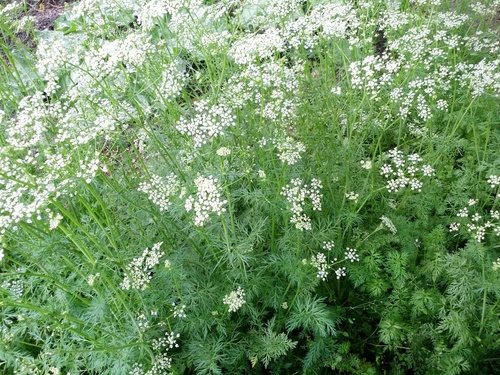
Verbatim
e0“aqueous extract of cumin”
e1“there are 9 compounds, 2 of which are phenolic and 7 of which are fatty acids”
The same questions in other papers
Cuminum cyminum · growth · Hordeum vulgare (barley)Positive and negative results
1 in the opposite direction
- negative
botanical · growth · Hordeum vulgare (barley)Positive and negative results
47 papers in the same direction as this paper · 35 in the opposite direction · 1 reporting no difference from an alternative
- no effect
- negative
- negative
80 papers more in this group
See all 84 papers →Claims are grouped by organism, treatment and what was measured or targeted. A paper counts as positive when any of its claims in the group is positive.