Abstract
In this study, we evaluated the allelopathic effects of essential oils (EOs) from six different plant species, namely, lavender (Lavandula angustifolia), hyssop (Hyssopus officinalis), English thyme (Thymus vulgaris), lovage (Levisticum officinale), costmary (Chrysanthemum balsamita), and cumin (Cuminum cyminum), on seed germination and seedling growth of barley (Hordeum vulgare) and wheat (Triticum aestivum). The main constituents of the EOs of L. angustifolia were 47.0% linalool acetate and 28.4% linalool; H. officinalis’ main constituents were 39.8% cis-pinocamphone, 9.8% trans-pinocamphone, 11.4% β-pinene, and 7.5% β-phellandrene; T. vulgaris’ were 38.2% para-cymene, 25.6% thymol, and 13.6% γ-terpinene; L. officinale’s were 64.8% α-terpinyl acetate and 14.7% β-phellandrene; C. balsamita’s were 43.7% camphor, 32.4% trans-thujone, and 11.6% camphene; C. cyminum’s were 49.6% cumin aldehyde, 10.4% para-cymene, 11.6% α-terpinen-7-al, and 9.1% β-pinene. All six EOs exhibited an allelopathic effect and suppressed the seed germination and seedling development of wheat and barley; however, the concentrations that exhibited a suppressing effect were different among the plants. C. cyminum EO completely suppressed both barley and wheat germination at 10-, 30-, and 90-µL application rates, making it the most effective treatment among the tested EOs. C. balsamita’s and H. officinalis’ EOs at 30 and 90 µL application rates completely suppressed barley and wheat radicles per seed, radicle length (mm), seedling height (mm), and germination (%). L. angustifolia’s EOs at 30- and 90-µL and T. vulgaris’ EO at 90 µL application rates also completely suppressed barley and wheat radicles per seed, radicle length (mm), seedling height (mm), and germination (%). C. balsamita’s, H. officinalis’, L. angustifolia’s, and T. vulgaris’ EOs at a 10 µL application rate reduced barley radicle length, seedling height, and % germination relative to the control. Wheat seed germination % was completely suppressed by the application of L. angustifolia’s and T. vulgaris’ EOs at 30 and 90 µL, while T. vulgaris’ EO at 10 µL rate reduced the germination relative to the control. Interestingly, C. balsamita and H. officinalis at 10 µL did not reduce wheat germination; however, they did reduce the number of radicles per seed, radicle length (mm), seedling height (mm), germination (%), and vigor index. Furthermore, L. officinale’s EO reduced the measured indices (radicles per seed, radicle length, seedling height, and vigor index) at the 10, 30, and 90 µL application rates relative to the non-treated control; however, none of the application rates of L. officinale’s EO had a suppression effect on wheat germination. This study demonstrated the allelopathic effects of the EOs of six different herbal plant species on seed germination of barley and winter wheat. The results can be utilized in the development of commercial products for controlling pre-harvest sprouting of wheat and barley. Further research is needed to verify the results under field conditions.
Abstract from the paper’s OpenAlex record; open copy licensed cc-by. Read at the source ↗
The text the model read, with the source record’s inline markup (italics, sub- and superscripts) rendered and its character entities decoded; quote offsets refer to the raw text.
Claims 12
Claim · model-written summary
Lavender oil contained 47.0% linalool acetate and 28.4% linalool.
- Taxon
- Lavandula angustifolia
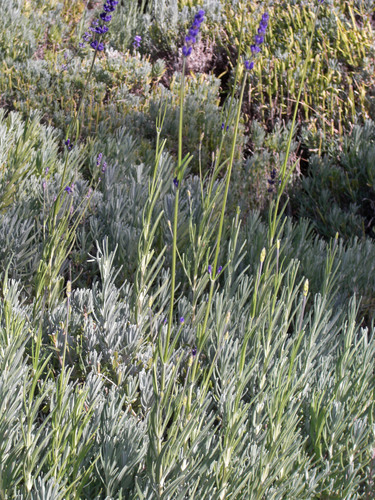
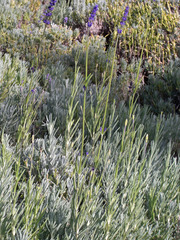 Lavandula angustifoliae1
- Outcome
- linalool acetate and 28.4% linaloole0
- Value
- 47.0%e0
Organisms pictured · Representative pictures of the matched species, not figures from the paper.
Verbatim
e0“L. angustifolia were 47.0% linalool acetate and 28.4% linalool”
e1“lavender (Lavandula angustifolia)”
Claim · model-written summary
Hyssop oil contained cis-pinocamphone, trans-pinocamphone, beta-pinene and beta-phellandrene as main constituents.
- Taxon
- Hyssopus officinalis
 Dracocephalum officinalee1
- Outcome
- cis-pinocamphone, 9.8% trans-pinocamphone, 11.4% β-pinene, and 7.5% β-phellandrenee0
- Value
- 39.8%e0
Organisms pictured · Representative pictures of the matched species, not figures from the paper.

Verbatim
e0“H. officinalis’ main constituents were 39.8% cis-pinocamphone, 9.8% trans-pinocamphone, 11.4% β-pinene, and 7.5% β-phellandrene”
e1“hyssop (Hyssopus officinalis)”
Claim · model-written summary
All six essential oils suppressed wheat seed germination and seedling development.
- Taxon
- wheat
 Triticum aestivume0
- Treatment
- All six EOse0
- Outcome
- seed germination and seedling developmente0
- Direction
- suppressede0
Not reportedComparator
Organisms pictured · Representative pictures of the matched species, not figures from the paper.

Verbatim
e0“All six EOs exhibited an allelopathic effect and suppressed the seed germination and seedling development of wheat and barley”
Claim · model-written summary
All six essential oils suppressed barley seed germination and seedling development.
- Taxon
- barley
 Hordeum vulgaree0
- Treatment
- All six EOse0
- Outcome
- seed germination and seedling developmente0
- Direction
- suppressede0
Not reportedComparator
Organisms pictured · Representative pictures of the matched species, not figures from the paper.

Verbatim
e0“All six EOs exhibited an allelopathic effect and suppressed the seed germination and seedling development of wheat and barley”
Claim · model-written summary
Cumin oil completely suppressed barley germination at 10, 30 and 90 µL.
- Taxon
- barleyHordeum vulgaree0
- Treatment
- C. cyminum EOe0
- Interactor
- Cuminum cyminum
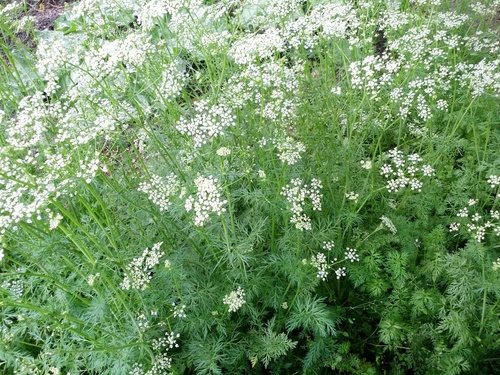
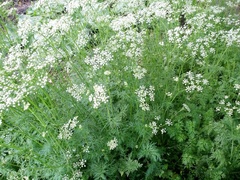 Cuminum cyminume1other
- Outcome
- barley and wheat germinatione0
- Direction
- completely suppressede0
- Qualifier
- 10-, 30-, and 90-µL application ratese0
Not reportedComparator
Organisms pictured · Representative pictures of the matched species, not figures from the paper.
Verbatim
e0“C. cyminum EO completely suppressed both barley and wheat germination at 10-, 30-, and 90-µL application rates”
e1“cumin (Cuminum cyminum)”
Claim · model-written summary
Cumin oil completely suppressed wheat germination at 10, 30 and 90 µL.
- Taxon
- wheatTriticum aestivume0
- Treatment
- C. cyminum EOe0
- Interactor
- Cuminum cyminumCuminum cyminume1other
- Outcome
- barley and wheat germinatione0
- Direction
- completely suppressede0
- Qualifier
- 10-, 30-, and 90-µL application ratese0
Not reportedComparator
Organisms pictured · Representative pictures of the matched species, not figures from the paper.
Verbatim
e0“C. cyminum EO completely suppressed both barley and wheat germination at 10-, 30-, and 90-µL application rates”
e1“cumin (Cuminum cyminum)”
Claim · model-written summary
Costmary oil at 30 and 90 µL completely suppressed barley radicles, seedling height and germination.
- Taxon
- barleyHordeum vulgaree0
- Treatment
- C. balsamita’se0
- Outcome
- radicles per seed, radicle length (mm), seedling height (mm), and germination (%)e0
- Direction
- completely suppressede0
- Qualifier
- 30 and 90 µL application ratese0
Not reportedComparator
Organisms pictured · Representative pictures of the matched species, not figures from the paper.
Verbatim
e0“C. balsamita’s and H. officinalis’ EOs at 30 and 90 µL application rates completely suppressed barley and wheat radicles per seed, radicle length (mm), seedling height (mm), and germination (%)”
Claim · model-written summary
Hyssop oil at 30 and 90 µL completely suppressed wheat radicles, seedling height and germination.
- Taxon
- wheatTriticum aestivume0
- Treatment
- H. officinalis’ EOse0
- Outcome
- radicles per seed, radicle length (mm), seedling height (mm), and germination (%)e0
- Direction
- completely suppressede0
- Qualifier
- 30 and 90 µL application ratese0
Not reportedComparator
Organisms pictured · Representative pictures of the matched species, not figures from the paper.
Verbatim
e0“C. balsamita’s and H. officinalis’ EOs at 30 and 90 µL application rates completely suppressed barley and wheat radicles per seed, radicle length (mm), seedling height (mm), and germination (%)”
Claim · model-written summary
Lavender oil at 30 and 90 µL completely suppressed barley and wheat seedling indices.
- Taxon
- barleyHordeum vulgaree0
- Treatment
- L. angustifolia’s EOs at 30- and 90-µLe0
- Outcome
- radicles per seed, radicle length (mm), seedling height (mm), and germination (%)e0
- Direction
- completely suppressede0
Not reportedComparator
Organisms pictured · Representative pictures of the matched species, not figures from the paper.
Verbatim
e0“L. angustifolia’s EOs at 30- and 90-µL and T. vulgaris’ EO at 90 µL application rates also completely suppressed barley and wheat radicles per seed, radicle length (mm), seedling height (mm), and germination (%)”
Claim · model-written summary
Thyme oil at 90 µL completely suppressed wheat seedling indices.
- Taxon
- wheatTriticum aestivume0
- Treatment
- T. vulgaris’ EO at 90 µLe0
- Outcome
- radicles per seed, radicle length (mm), seedling height (mm), and germination (%)e0
- Direction
- completely suppressede0
Not reportedComparator
Organisms pictured · Representative pictures of the matched species, not figures from the paper.
Verbatim
e0“T. vulgaris’ EO at 90 µL application rates also completely suppressed barley and wheat radicles per seed, radicle length (mm), seedling height (mm), and germination (%)”
Claim · model-written summary
Lovage oil reduced measured wheat seedling indices at all tested rates, without suppressing wheat germination.
- Taxon
- wheatTriticum aestivume1
- Treatment
- L. officinale’s EOe0
- Outcome
- radicles per seed, radicle length, seedling height, and vigor indexe0
- Direction
- reducede0
- Comparator
- non-treated controle0
Organisms pictured · Representative pictures of the matched species, not figures from the paper.
Verbatim
e0“L. officinale’s EO reduced the measured indices (radicles per seed, radicle length, seedling height, and vigor index) at the 10, 30, and 90 µL application rates relative to the non-treated control”
e1“suppression effect on wheat germination”
Claim · model-written summary
Lovage oil did not suppress wheat germination at any application rate.
- Taxon
- wheatTriticum aestivume0
- Treatment
- L. officinale’s EOe0
- Outcome
- wheat germinatione0
- Direction
- none of the application rates of L. officinale’s EO had a suppression effecte0
Not reportedComparator
Organisms pictured · Representative pictures of the matched species, not figures from the paper.
Verbatim
e0“none of the application rates of L. officinale’s EO had a suppression effect on wheat germination”
The same questions in other papers
Cuminum cyminum · growth · Hordeum vulgare (barley)Positive and negative results
1 in the opposite direction
- positive
Dracocephalum officinale · growth · Triticum aestivum (wheat)Positive and negative results
1 paper in the same direction as this paper · 1 in the opposite direction
- positive
- negative
botanical · growth · Hordeum vulgare (barley)Positive and negative results
35 papers in the same direction as this paper · 48 in the opposite direction
- positive
- positive
- negative
80 papers more in this group
See all 84 papers →botanical · growth · Triticum aestivum (wheat)Positive and negative results
228 papers in the same direction as this paper · 206 in the opposite direction
- positive
- negative
- positive
431 papers more in this group
See all 435 papers →Claims are grouped by organism, treatment and what was measured or targeted. A paper counts as positive when any of its claims in the group is positive.