Abstract
Paraphoma radicina is a new pathogen that causes alfalfa paraphoma root rot (APRR), leading to alfalfa production losses. The resistance levels of 30 alfalfa cultivars to APRR have already been characterized. However, the pathogenic mechanism of P. radicina is still unclear. This study aimed to assess the effects of a crude toxin extracted from P. radicina cell-free culture filtrate (CFCF) on susceptible and resistant cultivars of alfalfa. Meanwhile, the crude toxin components were detected using gas chromatography-mass spectrometry (GC-MS) analysis. CFCF cultured in MEB medium for 14 days and crude toxin extracted by ethyl acetate induced significant phytotoxicity caused the average lesion areas of 5.8 and 3.9 mm2, respectively, on alfalfa leaves. The crude toxin exhibited resistance to high temperature, as shown by a lesion area of 3.6 mm2 when treated at 120 °C for 30 min. Different concentrations of the crude toxin in water and MS medium had different effects on susceptible and resistant cultivars. Moreover, the crude toxin affected the plasma membrane, mitochondria, and nuclear membranes of alfalfa root cortical cells. Further, it induced significant phytotoxicity on Sonchus oleraceus L., Capsella bursa-pastoris (Linn.) Medic, and Chenopodium album L. Agropyron cristatum L. (average lesion areas; 11.6, 15.8, 21.4, and 6.2 mm2, respectively), indicating that the crude toxin of P. radicina is a non-host-selective toxin. GC-MS analysis detected four possible active substances in the toxin (3-hydroxypyridine, 5-methylresorcinol, 3-Hydroxypropionic acid, and 4-Hydroxyphenylethanol). Therefore, this study may provide insight into the pathogenic mechanism of P. radicina to alfalfa.
Abstract from the paper’s OpenAlex record; open copy licensed cc-by. Read at the source ↗
The text the model read, with the source record’s inline markup (italics, sub- and superscripts) rendered and its character entities decoded; quote offsets refer to the raw text.
Claims 9
Claim · model-written summary
Culture filtrate caused alfalfa leaf lesions averaging 5.8 mm2.
- Taxon
- alfalfa
 Medicago sativae0t0
- Interactor
- P. radicinaParaphoma radicinae0t0pathogen
- Direction
- inducede0
Not reportedComparator
Organisms pictured · Representative pictures of the matched species, not figures from the paper.

Verbatim
e0“CFCF cultured in MEB medium for 14 days and crude toxin extracted by ethyl acetate induced significant phytotoxicity caused the average lesion areas of 5.8 and 3.9 mm2, respectively, on alfalfa leaves.”
t0“crude toxin of P. radicina”
Claim · model-written summary
Extracted crude toxin caused alfalfa leaf lesions averaging 3.9 mm2.
- Taxon
- alfalfaMedicago sativae0
- Treatment
- crude toxin extracted by ethyl acetatee0
- Outcome
- lesion arease0
- Direction
- inducede0
- Value
- 3.9 mm2e0
Not reportedComparator
Organisms pictured · Representative pictures of the matched species, not figures from the paper.
Verbatim
e0“CFCF cultured in MEB medium for 14 days and crude toxin extracted by ethyl acetate induced significant phytotoxicity caused the average lesion areas of 5.8 and 3.9 mm2, respectively, on alfalfa leaves.”
Claim · model-written summary
The toxin remained phytotoxic after treatment at 120 °C for 30 min.
- Taxon
- alfalfaMedicago sativae0t0
Not reportedDirection
Organisms pictured · Representative pictures of the matched species, not figures from the paper.
Verbatim
e0“The crude toxin exhibited resistance to high temperature, as shown by a lesion area of 3.6 mm2 when treated at 120 °C for 30 min.”
t0“on alfalfa leaves”
Claim · model-written summary
The toxin affected membranes and mitochondria of alfalfa root cortical cells.
- Taxon
- alfalfaMedicago sativae0
- Organ / stage
- root cortical cellse0
- Outcome
- plasma membrane, mitochondria, and nuclear membranese0
Not reportedDirection
Organisms pictured · Representative pictures of the matched species, not figures from the paper.
Verbatim
e0“the crude toxin affected the plasma membrane, mitochondria, and nuclear membranes of alfalfa root cortical cells.”
Claim · model-written summary
The toxin produced lesions on Sonchus oleraceus averaging 11.6 mm2.
- Taxon
- Sonchus oleraceus L.
 Sonchus oleraceuse0e1
- Direction
- inducede0
Not reportedComparator
Organisms pictured · Representative pictures of the matched species, not figures from the paper.

Verbatim
e0“it induced significant phytotoxicity on Sonchus oleraceus L., Capsella bursa-pastoris (Linn.) Medic, and Chenopodium album L. Agropyron cristatum L. (average lesion areas; 11.6, 15.8, 21.4, and 6.2 mm2, respectively)”
e1“Further, it induced significant phytotoxicity on Sonchus oleraceus L., Capsella bursa-pastoris (Linn.) Medic, and Chenopodium album L. Agropyron cristatum L. (average lesion areas; 11.6, 15.8, 21.4, and 6.2 mm2, respectively), indicating that the crude toxin of P. radicina is a non-host-selective toxin.”
Claim · model-written summary
The toxin produced lesions on Capsella bursa-pastoris averaging 15.8 mm2.
- Taxon
- Capsella bursa-pastoris (Linn.) Medic
 Capsella bursa-pastorise0e1
- Direction
- inducede0
Not reportedComparator
Organisms pictured · Representative pictures of the matched species, not figures from the paper.

Verbatim
e0“it induced significant phytotoxicity on Sonchus oleraceus L., Capsella bursa-pastoris (Linn.) Medic, and Chenopodium album L. Agropyron cristatum L. (average lesion areas; 11.6, 15.8, 21.4, and 6.2 mm2, respectively)”
e1“Further, it induced significant phytotoxicity on Sonchus oleraceus L., Capsella bursa-pastoris (Linn.) Medic, and Chenopodium album L. Agropyron cristatum L. (average lesion areas; 11.6, 15.8, 21.4, and 6.2 mm2, respectively), indicating that the crude toxin of P. radicina is a non-host-selective toxin.”
Claim · model-written summary
The toxin produced lesions on Chenopodium album averaging 21.4 mm2.
- Taxon
- Chenopodium album L.
 Chenopodium albume0e1
- Direction
- inducede0
Not reportedComparator
Organisms pictured · Representative pictures of the matched species, not figures from the paper.

Verbatim
e0“it induced significant phytotoxicity on Sonchus oleraceus L., Capsella bursa-pastoris (Linn.) Medic, and Chenopodium album L. Agropyron cristatum L. (average lesion areas; 11.6, 15.8, 21.4, and 6.2 mm2, respectively)”
e1“Further, it induced significant phytotoxicity on Sonchus oleraceus L., Capsella bursa-pastoris (Linn.) Medic, and Chenopodium album L. Agropyron cristatum L. (average lesion areas; 11.6, 15.8, 21.4, and 6.2 mm2, respectively), indicating that the crude toxin of P. radicina is a non-host-selective toxin.”
Claim · model-written summary
The toxin produced lesions on Agropyron cristatum averaging 6.2 mm2.
- Taxon
- Agropyron cristatum L.
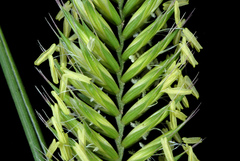 Agropyron cristatume0e1
- Direction
- inducede0
Not reportedComparator
Organisms pictured · Representative pictures of the matched species, not figures from the paper.

Verbatim
e0“it induced significant phytotoxicity on Sonchus oleraceus L., Capsella bursa-pastoris (Linn.) Medic, and Chenopodium album L. Agropyron cristatum L. (average lesion areas; 11.6, 15.8, 21.4, and 6.2 mm2, respectively)”
e1“Further, it induced significant phytotoxicity on Sonchus oleraceus L., Capsella bursa-pastoris (Linn.) Medic, and Chenopodium album L. Agropyron cristatum L. (average lesion areas; 11.6, 15.8, 21.4, and 6.2 mm2, respectively), indicating that the crude toxin of P. radicina is a non-host-selective toxin.”
Claim · model-written summary
GC-MS detected four possible active toxin substances.
- Taxon
- alfalfaMedicago sativae0t0
Not reportedDirection
Organisms pictured · Representative pictures of the matched species, not figures from the paper.
Verbatim
e0“GC-MS analysis detected four possible active substances in the toxin (3-hydroxypyridine, 5-methylresorcinol, 3-Hydroxypropionic acid, and 4-Hydroxyphenylethanol).”
t0“on alfalfa leaves”
The same questions in other papers
ethyl acetate · disease · Medicago sativa (alfalfa)Results agree
1 paper in the same direction as this paper
- negative
pathogen product · disease · Medicago sativa (alfalfa)Positive and negative results
1 in the opposite direction
- positive
Claims are grouped by organism, treatment and what was measured or targeted. A paper counts as positive when any of its claims in the group is positive.