Abstract
In this study, a fungal plant growth promoter Penicillium oxalicum T4 isolated from non-rhizosphere soil of Arunachal Pradesh, India, was screened for different plant growth promoting traits in a gnotobiotic study. Though inoculation improved the overall growth of the plants, critical differences were observed in root architecture. Confocal Laser Scanning Microscope, Scanning electron microscope and the stereo microscopic study showed that inoculated wheat plants could develop profuse root hairs as compared to control. Root scanning indicated improvement in cumulative root length, root area, root volume, number of forks, links, crossings, and other parameters. A confocal scanning laser microscope indicated signs of endophytic colonization in wheat roots. Gene expression studies revealed that inoculation of T4 modulated the genes affecting root hair development. Significant differences were marked in the expression levels of TaRSL4, TaEXPB1, TaEXPB23, PIN-FORMED protein, kaurene oxidase, lipoxygenase, ACC synthase, ACC oxidase, 9-cis-epoxycarotenoid dioxygenase, and ABA 8'-hydroxylase genes. These genes contribute to early plant development and ultimately to biomass accumulation and yield. The results suggested that P. oxalicum T4 has potential for growth promotion in wheat and perhaps also in other cereals.
Abstract from the paper’s OpenAlex record, shown for indexing and research. Copyright remains with the authors or the publisher. Read at the source ↗
The text the model read, with the source record’s inline markup (italics, sub- and superscripts) rendered and its character entities decoded; quote offsets refer to the raw text.
Claims 12
Claim · model-written summary
Inoculation with P. oxalicum T4 improved the overall growth of wheat plants.
- Taxon
- wheat
 Triticum aestivumt0
- Treatment
- inoculatione1
- Interactor
- Penicillium oxalicum
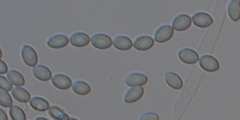 Penicillium oxalicumt1symbiont
- Outcome
- overall growth of the plantse1
- Direction
- improvede1
Not reportedComparator
Organisms pictured · Representative pictures of the matched species, not figures from the paper.


Verbatim
t0“wheat (Triticum aestivum L.)”
t1“Penicillium oxalicum”
e1“Though inoculation improved the overall growth of the plants”
Claim · model-written summary
Inoculated wheat plants developed more root hairs than control plants.
- Taxon
- wheatTriticum aestivume2
- Treatment
- inoculatede2
- Interactor
- Penicillium oxalicumPenicillium oxalicumt1symbiont
- Outcome
- root hairse2
- Direction
- increaseinferrede2
- Comparator
- controle2
Organisms pictured · Representative pictures of the matched species, not figures from the paper.
Verbatim
t0“wheat (Triticum aestivum L.)”
t1“Penicillium oxalicum”
e2“inoculated wheat plants could develop profuse root hairs as compared to control”
Claim · model-written summary
Inoculation with P. oxalicum T4 improved cumulative root length, root area and root volume of wheat.
- Taxon
- wheatTriticum aestivumt0
- Treatment
- inoculatione1
- Outcome
- cumulative root length, root area, root volumee3
- Direction
- improvemente3
Not reportedComparator
Organisms pictured · Representative pictures of the matched species, not figures from the paper.
Verbatim
t0“wheat (Triticum aestivum L.)”
e1“Though inoculation improved the overall growth of the plants”
e3“Root scanning indicated improvement in cumulative root length, root area, root volume, number of forks, links, crossings, and other parameters”
Claim · model-written summary
Inoculation with P. oxalicum T4 improved number of forks, links and crossings of wheat roots.
- Taxon
- wheatTriticum aestivumt0
- Treatment
- inoculatione1
- Outcome
- number of forks, links, crossingse3
- Direction
- improvemente3
Not reportedComparator
Organisms pictured · Representative pictures of the matched species, not figures from the paper.
Verbatim
t0“wheat (Triticum aestivum L.)”
e1“Though inoculation improved the overall growth of the plants”
e3“Root scanning indicated improvement in cumulative root length, root area, root volume, number of forks, links, crossings, and other parameters”
Claim · model-written summary
Confocal microscopy indicated endophytic colonization of wheat roots by the inoculated fungus.
- Taxon
- wheatTriticum aestivume4
- Interactor
- Penicillium oxalicumPenicillium oxalicumt1symbiont
- Outcome
- endophytic colonizatione4
Organisms pictured · Representative pictures of the matched species, not figures from the paper.
Verbatim
t0“wheat (Triticum aestivum L.)”
t1“Penicillium oxalicum”
e4“signs of endophytic colonization in wheat roots”
Claim · model-written summary
Inoculation with T4 modulated the expression of genes affecting root hair development in wheat.
- Taxon
- wheatTriticum aestivumt0
- Treatment
- inoculation of T4e5
- Interactor
- Penicillium oxalicumPenicillium oxalicumt1symbiont
- Outcome
- genes affecting root hair developmente5
- Direction
- modulatede5
Not reportedComparator
Organisms pictured · Representative pictures of the matched species, not figures from the paper.
Verbatim
t0“wheat (Triticum aestivum L.)”
t1“Penicillium oxalicum”
e5“inoculation of T4 modulated the genes affecting root hair development”
Claim · model-written summary
Inoculation with T4 gave significant differences in expression levels of TaRSL4, TaEXPB1 and TaEXPB23 in wheat.
- Taxon
- wheatTriticum aestivumt0
- Treatment
- inoculation of T4e5
- Gene
- TaRSL4, TaEXPB1, TaEXPB23e7
- Outcome
- expression levelse6
Not reportedComparatorDirection
Organisms pictured · Representative pictures of the matched species, not figures from the paper.
Verbatim
t0“wheat (Triticum aestivum L.)”
e6“Significant differences were marked in the expression levels of”
e5“inoculation of T4 modulated the genes affecting root hair development”
e7“TaRSL4, TaEXPB1, TaEXPB23”
Claim · model-written summary
Inoculation with T4 gave significant differences in expression levels of PIN-FORMED protein, kaurene oxidase and lipoxygenase in wheat.
- Taxon
- wheatTriticum aestivumt0
- Treatment
- inoculation of T4e5
- Gene
- PIN-FORMED protein, kaurene oxidase, lipoxygenasee7
- Outcome
- expression levelse6
Not reportedComparatorDirection
Organisms pictured · Representative pictures of the matched species, not figures from the paper.
Verbatim
t0“wheat (Triticum aestivum L.)”
e6“Significant differences were marked in the expression levels of”
e5“inoculation of T4 modulated the genes affecting root hair development”
e7“PIN-FORMED protein, kaurene oxidase, lipoxygenase”
Claim · model-written summary
Inoculation with T4 gave significant differences in expression levels of ACC synthase, ACC oxidase and 9-cis-epoxycarotenoid dioxygenase in wheat.
- Taxon
- wheatTriticum aestivumt0
- Treatment
- inoculation of T4e5
- Gene
- ACC synthase, ACC oxidase, 9-cis-epoxycarotenoid dioxygenasee7
- Outcome
- expression levelse6
Not reportedComparatorDirection
Organisms pictured · Representative pictures of the matched species, not figures from the paper.
Verbatim
t0“wheat (Triticum aestivum L.)”
e6“Significant differences were marked in the expression levels of”
e5“inoculation of T4 modulated the genes affecting root hair development”
e7“ACC synthase, ACC oxidase, 9-cis-epoxycarotenoid dioxygenase”
Claim · model-written summary
Inoculation with T4 gave significant differences in expression levels of ABA 8'-hydroxylase in wheat.
- Taxon
- wheatTriticum aestivumt0
- Treatment
- inoculation of T4e5
- Gene
- ABA 8'-hydroxylasee7
- Outcome
- expression levelse6
Not reportedComparatorDirection
Organisms pictured · Representative pictures of the matched species, not figures from the paper.
Verbatim
t0“wheat (Triticum aestivum L.)”
e6“Significant differences were marked in the expression levels of”
e5“inoculation of T4 modulated the genes affecting root hair development”
e7“ABA 8'-hydroxylase”
Claim · model-written summary
The expressed genes contribute to early plant development and ultimately to biomass accumulation and yield in wheat.
- Taxon
- wheatTriticum aestivumt0
- Outcome
- biomass accumulation and yielde7
- Qualifier
- early plant developmente7
Organisms pictured · Representative pictures of the matched species, not figures from the paper.
Verbatim
t0“wheat (Triticum aestivum L.)”
e7“These genes contribute to early plant development and ultimately to biomass accumulation and yield”
Claim · model-written summary
P. oxalicum T4 has potential for growth promotion in wheat and perhaps other cereals.
- Taxon
- wheatTriticum aestivume0
- Interactor
- P. oxalicum T4Penicillium oxalicume0symbiont
- Outcome
- growth promotione0
Organisms pictured · Representative pictures of the matched species, not figures from the paper.
Verbatim
e0“The results suggested that P. oxalicum T4 has potential for growth promotion in wheat and perhaps also in other cereals”
The same questions in other papers
inoculation · growth · Triticum aestivum (wheat)Positive and negative results
475 papers in the same direction as this paper · 55 in the opposite direction · 1 reporting no difference from an alternative
- positive
- positive
- no effect
528 papers more in this group
See all 532 papers →Claims are grouped by organism, treatment and what was measured or targeted. A paper counts as positive when any of its claims in the group is positive.