Abstract
Crop plants encounter a variety of biotic challenges in the field and faces significant reduction in crop yield. In the current scenario of an ever increasing global population, there is an urgent need to protect plant health by using sustainable approach to maximize the crop productivity and to mitigate the food demands. Nowadays, we mostly rely on chemical crop protection techniques, which are causing a number of environmental and health difficulties. Defence priming is a chemical-free, eco-friendly, and sustainable strategy of crop protection, which is also called “green vaccination. In the present study, for the first time, we used Trichoderma as a priming agent to protect wheat crop from spot blotch disease. We have established Trichoderma -mediated defence priming in wheat against Bipolaris sorokiniana for sustainable crop improvement. We have characterised the morphological, disease phenotype, biochemical and yield parameters of Trichoderma -primed and non-primed wheat under disease pressure. Trichoderma -primed plants were found to be more protected against B. sorokiniana as compared to non-primed plants. Biochemical studies indicated that there is no direct defence response after priming stimulus but the defence response was activated only after triggering stimulus in terms of enhanced defence metabolites in primed plants as compared to non-primed plants. In the present study, since defence was activated only when required, that is under disease pressure, there was no unnecessary allocation of resources towards defence. Hence, no yield penalty was shown in primed plants as compared to control. We further evaluated the inheritance of primed state to the next generation and found that progeny of primed parents also performed better than progeny of non-primed parents under disease pressure in terms of protection from B. sorokiniana as well as yield performance. This strategy has the potential to protect crop without any yield penalty and causing environmental degradation. Our research findings indicate that Trichoderma -mediated defence priming could be an alternative approach for improving wheat productivity under biotic stress. To be our best knowledge, this is the first documented report for the Trichoderma- mediated defence priming and induced inheritance in wheat plant. This study will open new arenas in sustainable crop protection strategies for the exploitation of defence priming in crop plants.
Abstract from the paper’s OpenAlex record; open copy licensed cc-by. Read at the source ↗
The text the model read, with the source record’s inline markup (italics, sub- and superscripts) rendered and its character entities decoded; quote offsets refer to the raw text.
Claims 6
Claim · model-written summary
Trichoderma priming improved protection from B. sorokiniana relative to unprimed plants.
- Taxon
- wheat
 Triticum aestivumt0
- Treatment
- Trichoderma -primede0
- Interactor
- B. sorokiniana
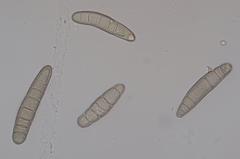 Bipolaris sorokinianae0pathogen
- Second interactor
- Trichoderma
 Trichodermae0biocontrol_agent
- Outcome
- protected against B. sorokinianae0
- Direction
- more protectede0
- Comparator
- non-primed plantse0
Organisms pictured · Representative pictures of the matched species, not figures from the paper.

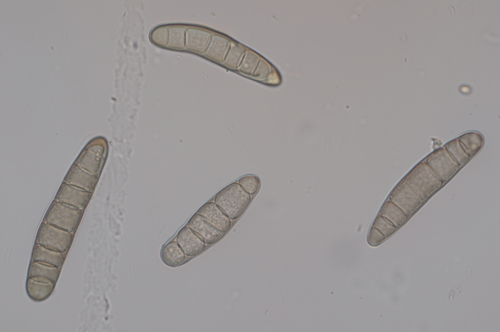

Verbatim
e0“Trichoderma -primed plants were found to be more protected against B. sorokiniana as compared to non-primed plants”
t0“wheat”
Claim · model-written summary
Priming alone did not produce a direct defence response.
- Taxon
- wheatTriticum aestivumt0
- Treatment
- priming stimuluse0
- Outcome
- direct defence responsee0
- Direction
- noe0
Not reportedComparator
Organisms pictured · Representative pictures of the matched species, not figures from the paper.
Verbatim
e0“there is no direct defence response after priming stimulus”
t0“wheat”
Claim · model-written summary
After disease triggering, primed plants had enhanced defence metabolites relative to unprimed plants.
- Taxon
- wheatTriticum aestivumt0
- Treatment
- primed plantse0
- Outcome
- defence metabolitese0
- Direction
- enhancede0
- Comparator
- non-primed plantse0
Organisms pictured · Representative pictures of the matched species, not figures from the paper.
Verbatim
e0“enhanced defence metabolites in primed plants as compared to non-primed plants”
t0“wheat”
Claim · model-written summary
Primed plants showed no yield penalty relative to controls.
- Taxon
- wheatTriticum aestivumt0
- Treatment
- primed plantse0
- Outcome
- yield penaltye0
- Direction
- noe0
- Comparator
- controle0
Organisms pictured · Representative pictures of the matched species, not figures from the paper.
Verbatim
e0“no yield penalty was shown in primed plants as compared to control”
t0“wheat”
Claim · model-written summary
Progeny of primed parents had better protection from B. sorokiniana than progeny of unprimed parents.
- Taxon
- wheatTriticum aestivumt0
- Treatment
- progeny of primed parentse0
- Interactor
- B. sorokinianaBipolaris sorokinianae0pathogen
- Outcome
- protection from B. sorokinianae0
- Direction
- bettere0
- Comparator
- progeny of non-primed parentse0
Organisms pictured · Representative pictures of the matched species, not figures from the paper.
Verbatim
e0“progeny of primed parents also performed better than progeny of non-primed parents under disease pressure in terms of protection from B. sorokiniana as well as yield performance”
t0“wheat”
Claim · model-written summary
Progeny of primed parents had better yield performance under disease pressure.
- Taxon
- wheatTriticum aestivumt0
- Treatment
- progeny of primed parentse0
- Interactor
- B. sorokinianaBipolaris sorokinianae0pathogen
- Outcome
- yield performancee0
- Direction
- bettere0
- Comparator
- progeny of non-primed parentse0
Organisms pictured · Representative pictures of the matched species, not figures from the paper.
Verbatim
e0“progeny of primed parents also performed better than progeny of non-primed parents under disease pressure in terms of protection from B. sorokiniana as well as yield performance”
t0“wheat”
The same questions in other papers
Trichoderma · Bipolaris sorokiniana · Triticum aestivum (wheat)Results agree
1 paper in the same direction as this paper
- positive
seed treatment · disease · Triticum aestivum (wheat)Positive and negative results
64 papers in the same direction as this paper · 4 in the opposite direction · 1 reporting no difference from an alternative
- no effect
- no effect
- no effect
66 papers more in this group
See all 70 papers →seed treatment · yield · Triticum aestivum (wheat)Positive and negative results
30 papers in the same direction as this paper · 270 in the opposite direction
- positive
- positive
- positive
297 papers more in this group
See all 301 papers →Claims are grouped by organism, treatment and what was measured or targeted. A paper counts as positive when any of its claims in the group is positive.