Abstract
The transoceanic disjunct distributions between Australasia and Austral America have been observed in many plant groups. The processes behind these disjunct distributions remain a source of debate due to differences in species vagility, biogeographical history, and complex geological and climatic changes. We address the phylogenetic relationships and biogeographical history of the austral hornwort genus Phaeomegaceros based on eight molecular markers from the three genomes (nuclear: phytochrome, mitochondrial: nad5, and chloroplast: rbcL, trnL intron, trnL-trnF spacer, rps4 gene, rps4-trnS spacer, and matK gene). With ten taxa based on morphological and molecular data, the three phylogenetic analyses supported the genus Phaeomegaceros as monophyletic. Phaeomegaceros is composed of two major clades corresponding to the New Zealand species, which presents a conspicuous trilete mark with one depression in the middle of the spore’s proximal face, and the Austral American species, which lack this middle depression. Dating and biogeographical analyses indicate that the Phaeomegaceros ancestral area was New Zealand and Antarctica in the Late Cretaceous (53.51 Ma, HPD 95% = 31.64–72.63). While Austral American species diverged during the Eocene. We speculate that climatic fluctuations in the Antarctic continent during the middle to late-Miocene led to the isolation of Phaeomegaceros taxa with both processes (dispersal events and vicariance) acting on the independent evolution of the disjunct clades. Furthermore, recent diversification of Phaeomegaceros taxa in Austral America and range expansion to northern Andes and oceanic islands, are explained by dispersal events and subsequent cladogenesis coinciding with the uplift of the Andes and the formation of volcanic oceanic islands (Juan Fernandez and Tristan da Cunha).
Abstract from the paper’s OpenAlex record, shown for indexing and research. Copyright remains with the authors or the publisher. Read at the source ↗
The text the model read, with the source record’s inline markup (italics, sub- and superscripts) rendered and its character entities decoded; quote offsets refer to the raw text.
Claims 6
Claim · model-written summary
Phylogenetic analyses supported Phaeomegaceros monophyly.
- Taxon
- Phaeomegaceros
 Phaeomegacerose0
- Outcome
- monophyletice0
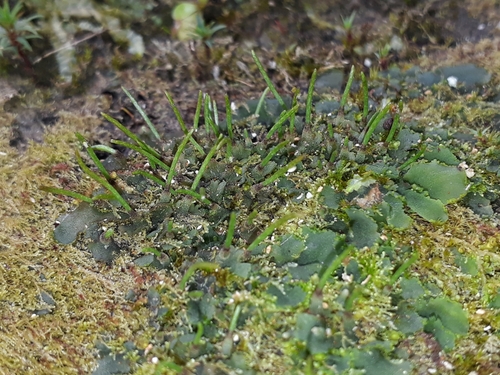
Organisms pictured · Representative pictures of the matched species, not figures from the paper.
Verbatim
e0“the three phylogenetic analyses supported the genus Phaeomegaceros as monophyletic”
Claim · model-written summary
Phaeomegaceros comprises New Zealand and Austral American clades differing in a spore-face depression.
- Taxon
- PhaeomegacerosPhaeomegacerose0
- Organ / stage
- spore’s proximal facee0
- Outcome
- two major cladese0
- Setting
- New Zealande0
Organisms pictured · Representative pictures of the matched species, not figures from the paper.
Verbatim
e0“Phaeomegaceros is composed of two major clades corresponding to the New Zealand species, which presents a conspicuous trilete mark with one depression in the middle of the spore’s proximal face, and the Austral American species, which lack this middle depression.”
Claim · model-written summary
Biogeographical analyses inferred a New Zealand and Antarctic ancestral area in the Late Cretaceous.
- Taxon
- PhaeomegacerosPhaeomegacerose0
- Outcome
- ancestral areae0
- Value
- 53.51 Mae0
- Qualifier
- HPD 95% = 31.64–72.63e0
- Setting
- New Zealand and Antarcticae0
Organisms pictured · Representative pictures of the matched species, not figures from the paper.
Verbatim
e0“the Phaeomegaceros ancestral area was New Zealand and Antarctica in the Late Cretaceous (53.51 Ma, HPD 95% = 31.64–72.63)”
Claim · model-written summary
Austral American Phaeomegaceros species diverged during the Eocene.
- Taxon
- PHAEOMEGACEROSPhaeomegacerost0
- Outcome
- divergede0
- Qualifier
- during the Eocenee0
- Setting
- Austral Americane0
Organisms pictured · Representative pictures of the matched species, not figures from the paper.
Verbatim
e0“Austral American species diverged during the Eocene”
t0“PHAEOMEGACEROS”
Claim · model-written summary
The authors speculate that Antarctic climatic fluctuations isolated Phaeomegaceros taxa through dispersal and vicariance.
- Taxon
- PhaeomegacerosPhaeomegacerose0
- Outcome
- isolation of Phaeomegaceros taxae0
- Qualifier
- dispersal events and vicariancee0
- Setting
- Antarctic continente0
Organisms pictured · Representative pictures of the matched species, not figures from the paper.
Verbatim
e0“climatic fluctuations in the Antarctic continent during the middle to late-Miocene led to the isolation of Phaeomegaceros taxa with both processes (dispersal events and vicariance) acting on the independent evolution of the disjunct clades”
Claim · model-written summary
The authors attribute recent Austral American diversification and range expansion to dispersal and cladogenesis associated with geological changes.
- Taxon
- PhaeomegacerosPhaeomegacerose0
- Outcome
- recent diversificatione0
- Qualifier
- dispersal events and subsequent cladogenesise0
- Setting
- Austral Americae0
Organisms pictured · Representative pictures of the matched species, not figures from the paper.
Verbatim
e0“recent diversification of Phaeomegaceros taxa in Austral America and range expansion to northern Andes and oceanic islands, are explained by dispersal events and subsequent cladogenesis coinciding with the uplift of the Andes and the formation of volcanic oceanic islands (Juan Fernandez and Tristan da Cunha)”